Last updated: June 2026 — transport and prices verified June 2026.
Right. I’ll admit I nearly skipped Sighnaghi the first time — it felt like exactly the kind of place that gets overhyped and underdelivers. It doesn’t. The views are as good as the photos. The wine is the point. And Giorgi, the winemaker who first brought me to Kakheti, would never forgive me if I told people to skip it.
What Sighnaghi Actually Is
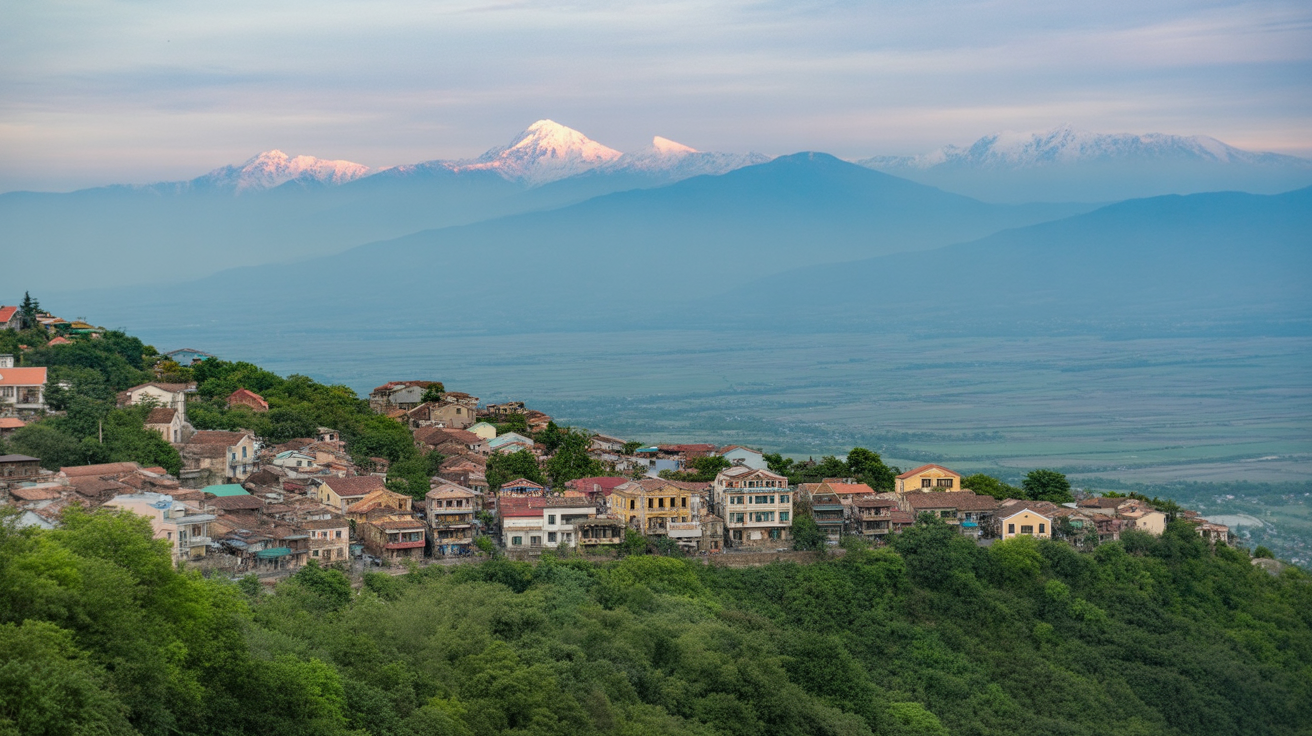
Sighnaghi (say: sig-NAH-ghee — locals also call it Signagi) is a small hilltop town in the Kakheti region — Georgia’s main wine-producing area, running east from Tbilisi to the Alazani River. Population is around 1,200 people, which makes it feel more like a large village than a town. The core is the old town: walled, cobbled, overlooking a valley that on a clear day stretches to the mountains of Azerbaijan.
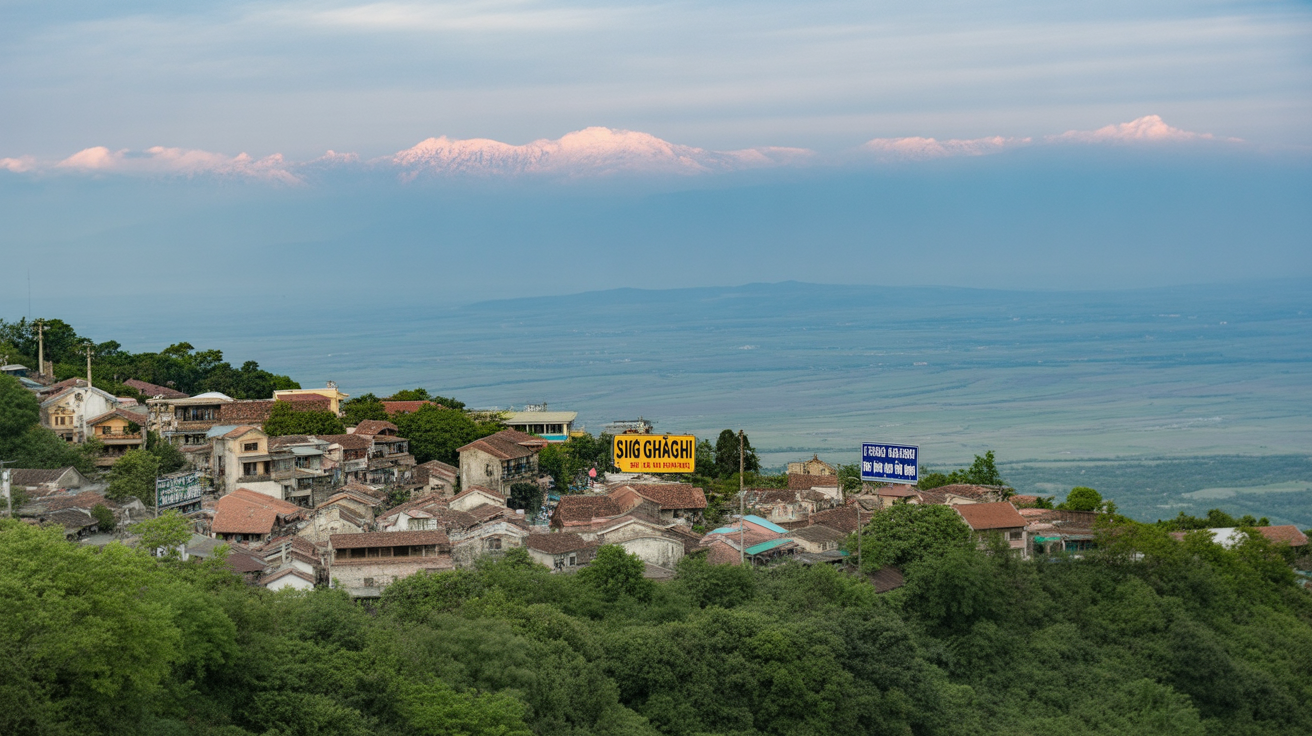
The specific character of the place comes from a post-independence renovation that restored the old buildings, cobbled the streets, and turned what was a fairly run-down Soviet-era town into something that looks, unusually for the Caucasus, like it was designed. The wooden balconies are real; the renovation is also real; the combination works.
It’s called the “City of Love” in Georgia — partly because of the 24/7 registry office (you can get married in Sighnaghi at any hour, any day; this is not a joke; people come specifically for this). The wine is more relevant to most visitors, but the registry office is worth knowing about.
Getting to Sighnaghi from Tbilisi
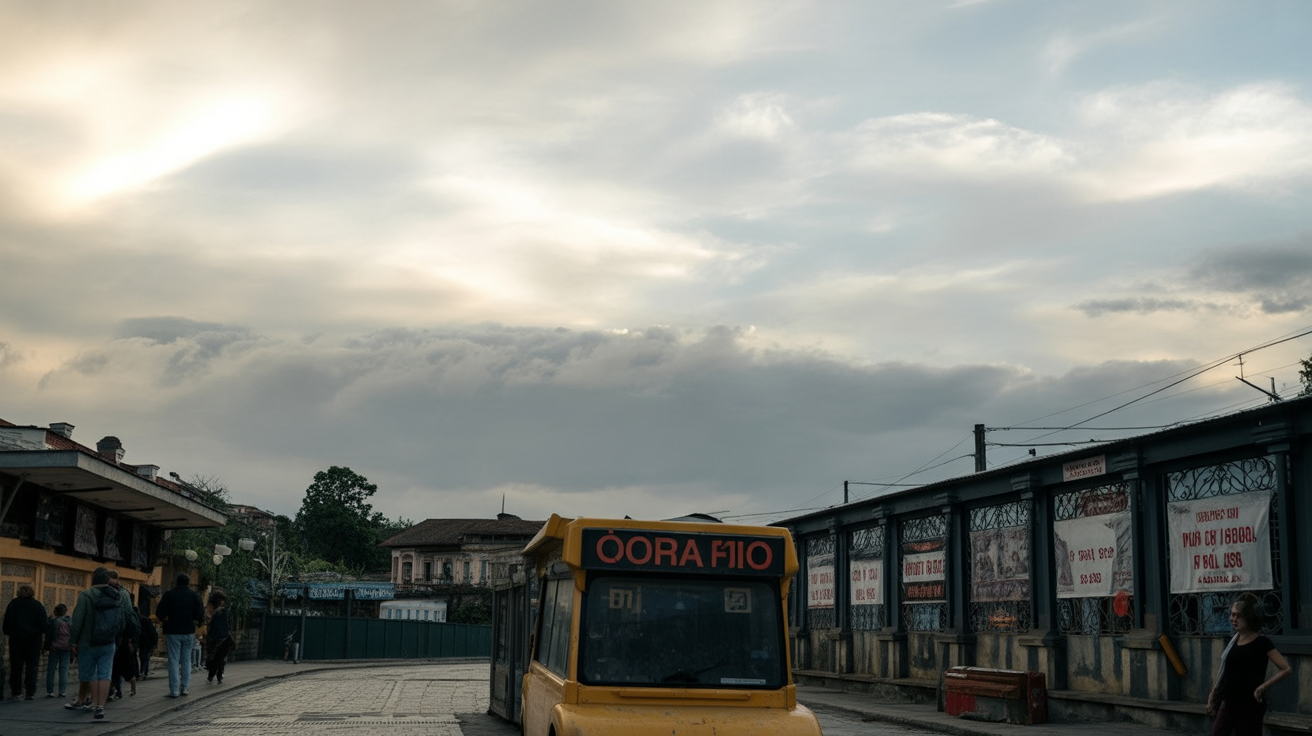
By marshrutka (cheapest, most authentic): From Tbilisi’s Samgori metro station (end of the red line), shared minibuses to Sighnaghi depart throughout the morning. Cost: approximately 8 GEL (~£2.30 / ~$2.90). Journey: 3–3.5 hours. The marshrutka leaves when it’s full — usually every hour or so in the morning, less frequently in the afternoon. Arrive at Samgori station early (8–9am) to be sure of a seat.
By Bolt/taxi: A Bolt from central Tbilisi to Sighnaghi costs approximately 150–180 GEL (~£42–50 / ~$54–65) and takes 2.5–3 hours. If you’re splitting with two or three people, this becomes competitive with an organised tour. Negotiate a return trip with the driver if you want flexibility — drivers often give a day rate for the round trip.
Organised tour from Tbilisi: Full-day group tours typically cost $35–80 per person and usually include transport, a guide, and often a winery visit and lunch. If you want the wine context explained properly, a guide adds real value — Kakheti’s wine history is deep enough that standing in a cellar without someone to explain the qvevri method is a missed opportunity. Private tours with a driver run double the group rate.
•BEN’S PICK
Go independently by marshrutka if you’re comfortable navigating on your own — it’s by far the cheapest, and Sighnaghi is small enough that you don’t need a guide to find things. If you want a proper wine experience (cellar visits, qvevri explanation, winery lunch), book a tour. The in-between option — Bolt or shared taxi, no guide — works for the town but misses the wine depth.
Bodbe Monastery: Don’t Skip This
Two kilometres from Sighnaghi town, Bodbe Monastery is where St. Nino — who brought Christianity to Georgia in the 4th century — is buried. The monastery has been active continuously since the 6th century. The frescoes inside the main church date from multiple periods of Georgian Christian art. The garden paths leading down to St. Nino’s Spring are lined with old trees and complete quiet.
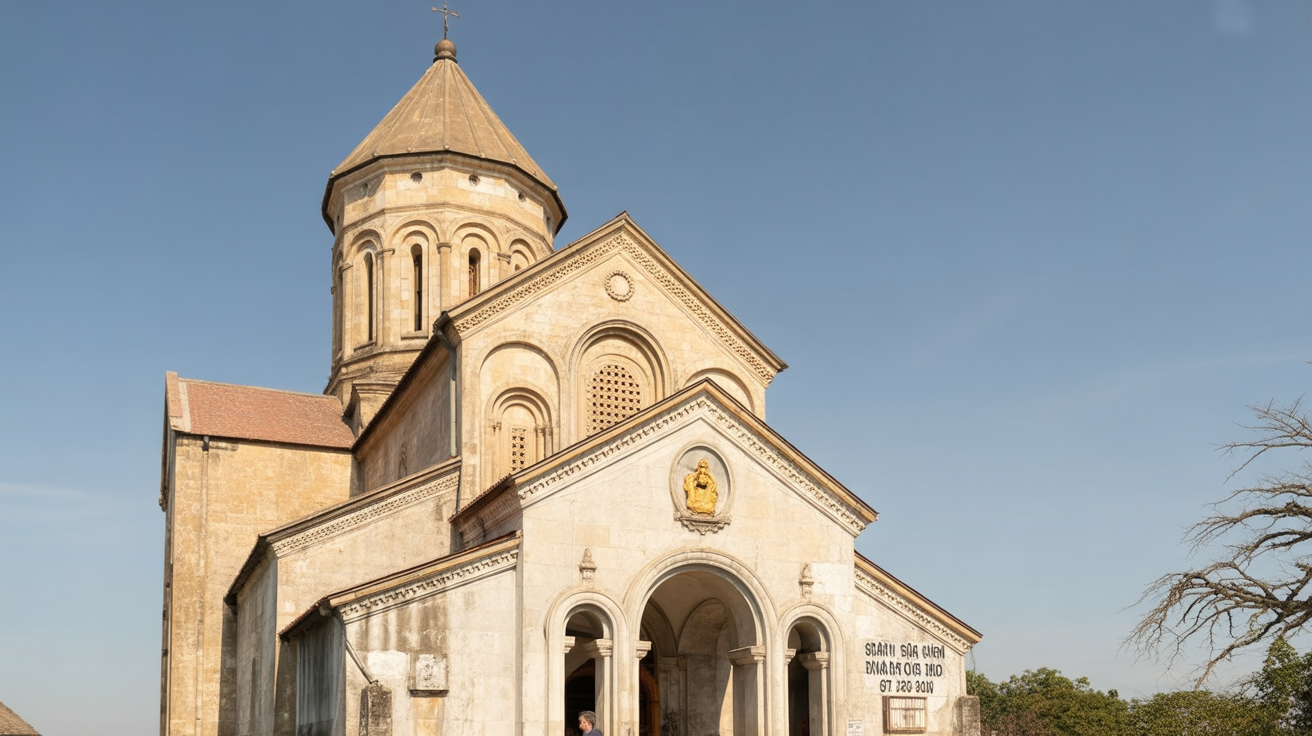
I’ll be direct: most guides mention Bodbe as an afterthought. It’s not an afterthought. If you’re in Sighnaghi and you don’t go to Bodbe, you’ve missed the most historically significant site within walking distance. The monastery is free to enter; donations are welcome. Opening hours are typically 9am–6pm but monks keep their own schedule — it’s usually accessible outside those hours as well.
The walk from Sighnaghi to Bodbe is about 30–40 minutes on foot down a road with some traffic. A taxi from the town square costs around 5–10 GEL (~£1.40–2.80). If you’re doing a full day in Sighnaghi, walk down in the morning and take a taxi back uphill. The path down through the monastery gardens to St. Nino’s Spring is worth the extra 20 minutes even if your knees complain about the return.
The Great Wall of Georgia
Sighnaghi is enclosed by a defensive wall — 4.5km long, 23 towers — built in the 18th century under Erekle II (King Heraclius II) to protect the town from raids. The wall is the most visible landmark from the valley below and can be walked along its length from the inside.
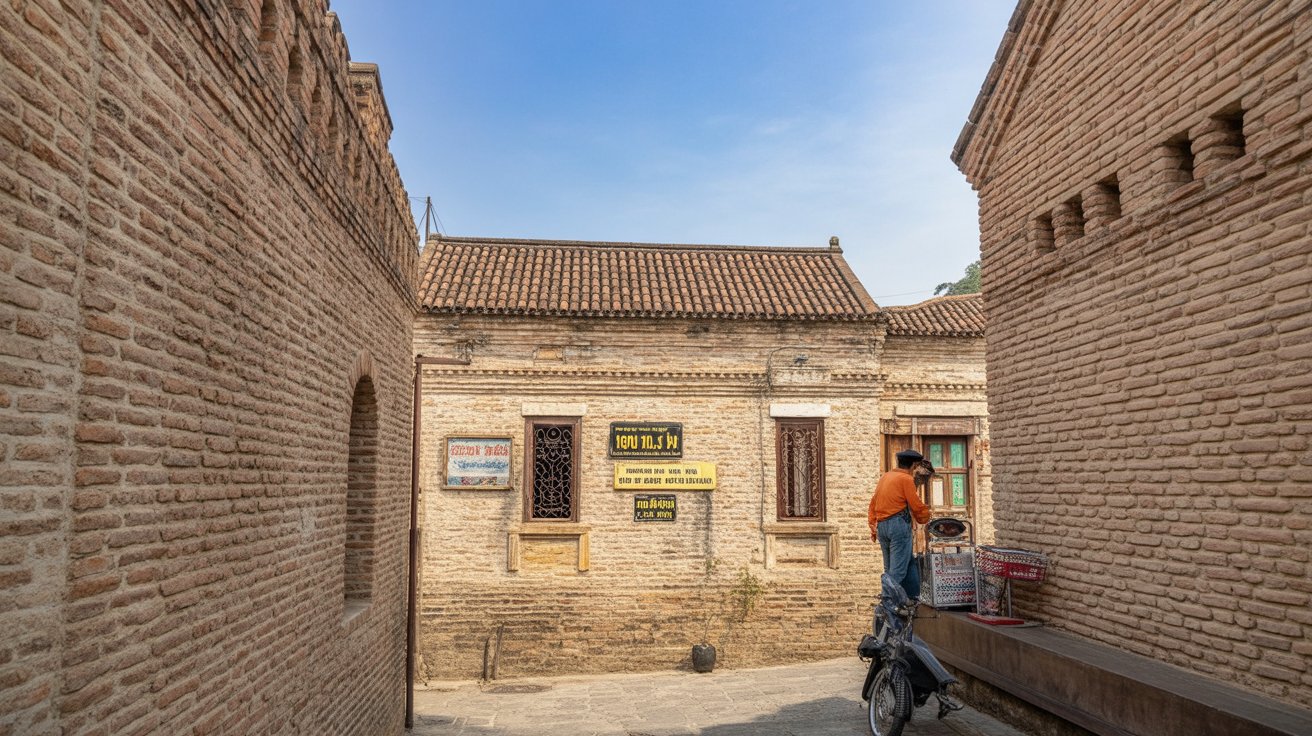
The geography teacher in me needs to say: the wall is genuinely impressive in its scale relative to the town it protects. This was not a garrison — it’s a civilian fortification. Every house was expected to retreat inside during a raid. The logic of the wall layout, following the ridge contour and using the natural topography, is the kind of thing that rewards walking it slowly.
Walking the wall circuit takes about 1.5–2 hours at a comfortable pace, with stops at the towers for views. There’s no entry fee for the public sections. Some towers are closed but the main wall walk is accessible.
Wine in Sighnaghi: Where to Actually Drink
Sighnaghi is not a town that needs help selling its wine. Every second building has a wine tasting sign. The question is which ones are worth your time.
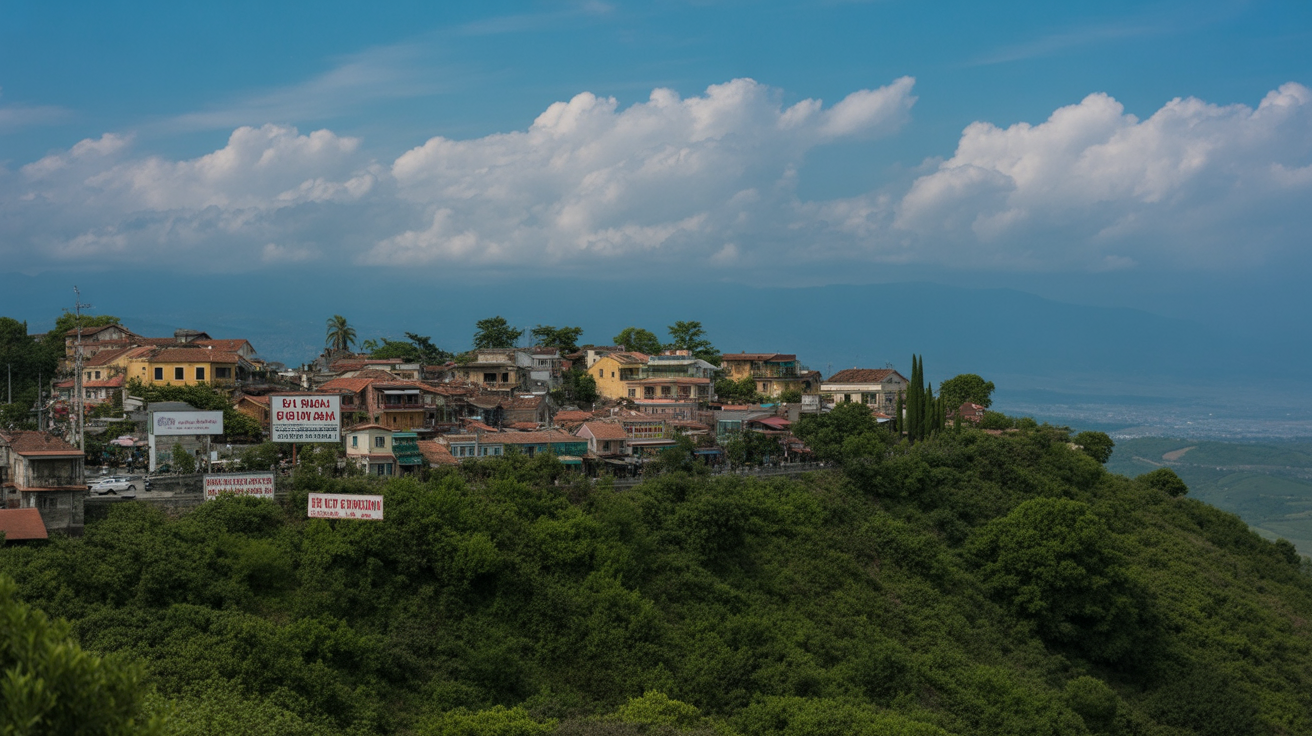
Okro’s Wines: The most-recommended natural wine producer in the area. Giorgi Rukhadze’s qvevri wines are the real thing — amber wine made from Rkatsiteli and Mtsvane grapes with extended skin contact, completely unlike anything you’d buy from a European supermarket. Tasting is possible on site; call or message ahead to arrange. This is the visit worth planning your day around if you care about wine at a deeper level than ‘I like the taste.’
The Terrace Signagi: The restaurant with the best valley views in town. The wine list focuses on Kakhetian producers; the food is Georgian standards done well. Come for an afternoon glass and stay for the light on the Alazani Valley. Expect to pay approximately 15–25 GEL for a glass of quality local wine (~£4–7).
Amo: A smaller wine bar in the old town, focused on natural and biodynamic Georgian producers. Good for a longer tasting session if you want to work through different styles rather than just drink with a view. The owner knows what he’s pouring.
One thing to know about Georgian wine pricing: in Sighnaghi, the tourist premium is real. A bottle of good Kakhetian qvevri wine from the producer in the cellar might cost 20–35 GEL (~£6–10). The same wine in a Tbilisi wine bar costs 40–60 GEL. In London it costs £30+. Buy from producers when you can. Your bag will be heavier. Worth it.
Sighnaghi Ethnographic Museum and Town Highlights
The Sighnaghi History Museum sits in the main square. Entry is approximately 5–7 GEL (~£1.40–2) and covers the regional history — the Kakheti kingdom, the periods of Persian and Ottoman pressure, the Russian annexation, the Soviet decades. Small but well-organised. Worth an hour if history contextualises travel for you (it should; the Kakheti valleys have absorbed more invasions per square kilometre than most of Europe).
The main square itself is the obvious gathering point — café tables, wine bars, the views. The registry office is here (the 24/7 marriage building, identifiable by the couples who appear at unexpected hours).
Walk the streets in the early morning before the day-trippers arrive. The wooden balconies, the cats, the sound of a church bell coming from somewhere below — Sighnaghi at 7am before the marshrutkas arrive from Tbilisi is worth getting up for.
Where to Stay in Sighnaghi
There are no large hotels in Sighnaghi. The accommodation is guesthouses, family homes with rooms, and small boutique properties — all of which is correct for the size and character of the town.
Budget guesthouses: From approximately 60–90 GEL/night (~£17–25) for a private room. Many include breakfast. The ones in the old town charge more than those on the outskirts; the difference is worth it for the access to evening and morning walks.
Mid-range: 100–150 GEL/night (~£28–42) gets you a guesthouse with wine cellar access, better rooms, and usually a terrace. Several guesthouses in Sighnaghi include a wine tasting as part of the stay — a qvevri of the family’s own wine opened in the cellar after dinner. This is not a tourist experience; it’s just how Kakhetian hospitality works.
When to book: Weekends in May, June, September, and October fill up. Georgian national holidays (especially the New Year period and Easter) book out weeks ahead. Mid-week in shoulder season (April, late October) you’ll have no trouble walking in.
Sighnaghi as a Base for Kakheti Day Trips
Sighnaghi works well as a base for two or three days exploring Kakheti rather than as a single stop. Within an hour by car or taxi:
Gremi Fortress and Church (35km, ~40 min): The ruins of the medieval Kakhetian capital. The church tower is intact and gives context to what the Kakheti kingdom actually was before the Russian annexation — a sovereign state with a royal city, not just a wine-producing province. Entry fee approximately 3–5 GEL.
Alaverdi Cathedral (50km, ~1 hour): The largest medieval cathedral in the Caucasus, built in the 11th century and still an active monastery. The scale of it in the middle of the agricultural plain is disorienting in the best way. Monks make wine here that you can buy at the gates. Free entry; donations welcome.
Kvareli (25km, ~30 min): A small town with several wine producers, including Kvareli Cellar, which ages wine in caves cut into the mountain. Less photogenic than Sighnaghi but more working-winery atmosphere. Worth it if you want to see wine production at scale.
How Long to Spend in Sighnaghi
Day trip from Tbilisi: perfectly doable. The marshrutka at 8–9am gets you there by noon, you have a full afternoon, and you’re back in Tbilisi by evening. You’ll see the wall, the museum, the main square, and have time for one wine stop. You won’t see Bodbe in any depth and you’ll miss the evening and morning light.
One night: the correct amount. You get Bodbe properly, the wall walk, the evening in the square, the morning before the coaches arrive. If you’re combining with a Kakheti circuit (Telavi, Gremi, Alaverdi), one night in Sighnaghi plus one night in Telavi covers the region without feeling rushed.
FAQ: Sighnaghi Georgia
- How do you get from Tbilisi to Sighnaghi?
- Marshrutka from Samgori metro station, approximately 8 GEL (~£2.30), 3–3.5 hours. Departs when full, usually several times per morning. Bolt taxi direct costs 150–180 GEL (~£42–50). Organised tours from Tbilisi typically $35–80/person including guide and sometimes a winery visit.
- Is Sighnaghi worth visiting?
- Yes. The combination of the old town walls, the valley views, Bodbe Monastery, and the Kakheti wine context makes it one of the genuinely distinctive stops in Georgia. The renovation has made it more polished than most Georgian towns, which some people find slightly artificial — the photogenic result is real regardless. Don’t skip Bodbe.
- What is Sighnaghi known for?
- Wine (it’s in the heart of Kakheti, Georgia’s primary wine region), Bodbe Monastery (burial site of St. Nino, who brought Christianity to Georgia), the 18th-century defensive wall, and valley views over the Alazani River to the Greater Caucasus. Also the 24/7 marriage registry, which is a real thing that people actually use.
- Can you do Sighnaghi as a day trip from Tbilisi?
- Yes. The marshrutka from Samgori gets you there by noon; afternoon for the town, wall, and wine; evening marshrutka back. One night is better — you get Bodbe properly and the early morning before day-trippers arrive. The journey each way is 3–3.5 hours, so build that into your day.
- What wine should you try in Sighnaghi?
- Qvevri-made amber wine from Rkatsiteli grapes — the traditional Kakhetian style where white grapes ferment with extended skin contact in buried clay amphorae. The result is orange-to-amber coloured, tannic, oxidative, completely unlike European white wine. Okro’s Wines is the producer worth seeking out specifically. Buy bottles from producers, not gift shops.
- How much does Sighnaghi cost?
- Transport from Tbilisi: 8 GEL marshrutka or 150–180 GEL Bolt. Accommodation: 60–150 GEL/night depending on standard. Museum entry: 5–7 GEL. Wine glass at a restaurant: 15–25 GEL. Bodbe Monastery: free. A day in Sighnaghi on a medium budget runs 80–150 GEL per person excluding transport (~£22–42).
Sighnaghi vs Telavi: Which to Base Yourself In
If you’re spending two or more nights in Kakheti, the question comes up: Sighnaghi or Telavi? They’re different towns serving different purposes.
Sighnaghi is the photogenic choice — the walls, the views, the restored old town. It’s smaller, more orientated toward tourists, and the wine scene is more concentrated. The accommodation is characterful. The downside: it can feel like a stage set if you stay too long, and the day-trip coaches from Tbilisi arrive mid-morning and fill the streets until 4pm.
Telavi is the working city of Kakheti — the regional capital, larger, less polished, more Georgian in the way that means functional-rather-than-aesthetic. The Ikalto Monastery is nearby, Tsinandali Estate (the historic wine estate of the Chavchavadze family, now a hotel and museum) is 10km out. Telavi has better transport connections within the region and is a better base if you want to cover multiple wineries in a day by car.
The combination that works: one night Sighnaghi (for the views, Bodbe, and the wine bars in the evening), one night Telavi (for the wider Kakheti circuit — Ikalto, Alaverdi, Gremi by car). That two-night structure covers the region properly without either town getting stale.
Practical Notes: What to Know Before You Go
Currency: Georgian Lari (GEL). 1 GEL ≈ £0.28 / $0.36 at the time of writing. ATMs in Sighnaghi are limited — one on the main square, not always reliable. Bring cash from Tbilisi or Telavi if you’re staying more than a night. Most guesthouses and restaurants take cash only; the few card-accepting places have been increasing but it’s not universal.
Phone signal: Reasonable in town, patchy on the wall walk and around Bodbe. Download offline maps before you leave Tbilisi. Georgian mobile networks (Magti, Geocell, Beeline) all work in the town; the wall circuit on the outer edges drops out.
Language: Georgian. The script is not Latin, Cyrillic, or anything you’ve seen before, which makes reading signs an adventure. Restaurant owners and guesthouse staff speak English at varying levels. A few words of Georgian go a long way: gamarjoba (gah-mar-JO-bah — hello), madloba (mad-LO-bah — thank you). Giorgi, who taught me most of my Georgian, says the attempt matters more than the accuracy.
Getting back to Tbilisi: Marshrutkas run until approximately 5–6pm from the main square. Don’t miss them unless you’ve arranged a taxi. The evening Bolt fare from Sighnaghi to Tbilisi (if available) will be significantly higher than the morning rate — 200–250 GEL (~£56–70) after dark when demand spikes. If you’re sharing a car back with other travellers (the guesthouse can help arrange this), split cost makes the return trip very reasonable. It’s worth asking at check-in about shared rides back to Tbilisi — the guesthouse owners usually know who’s leaving when.
The Bottom Line on Sighnaghi
The wine region of Kakheti deserves more than a rushed afternoon, and Sighnaghi is the best base to explore it from. The town itself is genuinely good — the views deliver, Bodbe is extraordinary, the wine bars know what they’re pouring. One night minimum, two if you’re doing the wider Kakheti circuit. Three days in Kakheti — one in Sighnaghi, one for winery visits in the valley, one for Alaverdi and Gremi — is the Caucasus itinerary I’d recommend to anyone who asks. The geography teacher in me insists the context makes the wine better. He’s not wrong.
What Ben Got Wrong in Sighnaghi
First visit, I arrived on a Saturday afternoon at 2pm in June. The main square was — and this is the correct word — heaving. Day-trippers from Tbilisi, tour coaches, a wedding party using the 24-hour registry office, three separate groups following guides with umbrellas raised for visibility. The wine bars had queues. The guesthouses I’d meant to walk into were full. I ate at the first restaurant I found that had a table, which was one of the tourist-facing places near the main square, and it was adequate.
The lesson, which I have applied to every subsequent Sighnaghi visit: arrive Sunday morning, or midweek, or late afternoon on any day. The coaches leave by 5pm. The square becomes a different place by 6pm — locals on the benches, a couple of guesthouse owners arguing about something across the square, the evening light doing what it does to the Alazani Valley below. That is the Sighnaghi worth planning for.
The second mistake was skipping Bodbe because I “didn’t have time.” I had walked the wall and done two wine tastings and it was 4pm and Bodbe was 2km down the hill and I was tired. I went back the following year specifically to do Bodbe properly. Don’t make this mistake. Budget Bodbe from the start. Walk down in the morning when you’re fresh and can spend time at the spring. Take a taxi back uphill.
Sighnaghi’s Defensive Wall: The Geography Behind It
The geography teacher in me wants to spend two minutes on the wall, because most visitors walk it without understanding why it’s there or why it takes this particular shape.
Sighnaghi sits on a ridge of the Tsiv-Gombori range — a spur of high ground that projects south into the Alazani Valley. The ridge offered three things that mattered in the 18th century: visibility (you could see raiding parties coming across the valley floor for miles), defensibility (attackers had to come uphill on narrow paths), and water (springs on the lower slopes). King Erekle II ordered the wall built in the 1760s–1780s specifically to create a fortified civilian refuge — somewhere the population of the surrounding villages could shelter when Dagestani raiders crossed the Caucasus into Kakheti.
The wall follows the ridge contour exactly, using the natural slope as part of the defence. The 23 towers are positioned at the points where the ground becomes more accessible — the approaches where a raiding party could make progress. Walking the wall with this in mind makes the circuit feel less like a tourist attraction and more like an 18th-century military decision that you can still read in the landscape.
Which brings me to the view from Tower 14 (roughly the midpoint of the eastern wall): the Alazani Valley spread below, the Greater Caucasus in the distance, the ridge visible in both directions. Erekle II picked this spot for the same reason you’re photographing it. Some views are canonical because the geography is genuinely right.
One final thing worth saying about Kakheti as a whole: the guesthouse tradition of opening the family wine at dinner is not performance for tourists — it’s just how Kakhetian hospitality works. You’ll be handed a glass of something from the basement qvevri and the host will say cheers in Georgian (gaumarjos — gow-mar-JOS) and expect you to respond in kind. Accept this. It is one of the genuinely unreplicable things about travelling in the South Caucasus. Giorgi first did this for me in 2022 and I’ve been coming back to Kakheti ever since.
Safe travels. Drink the qvevri wine. For the full Tbilisi context before you head east: Things to Do in Tbilisi. For Georgia’s wine in full depth: Georgian Orange Wine: What It Is and Where to Try It.