Last updated: June 2026 — logistics and prices verified June 2026.
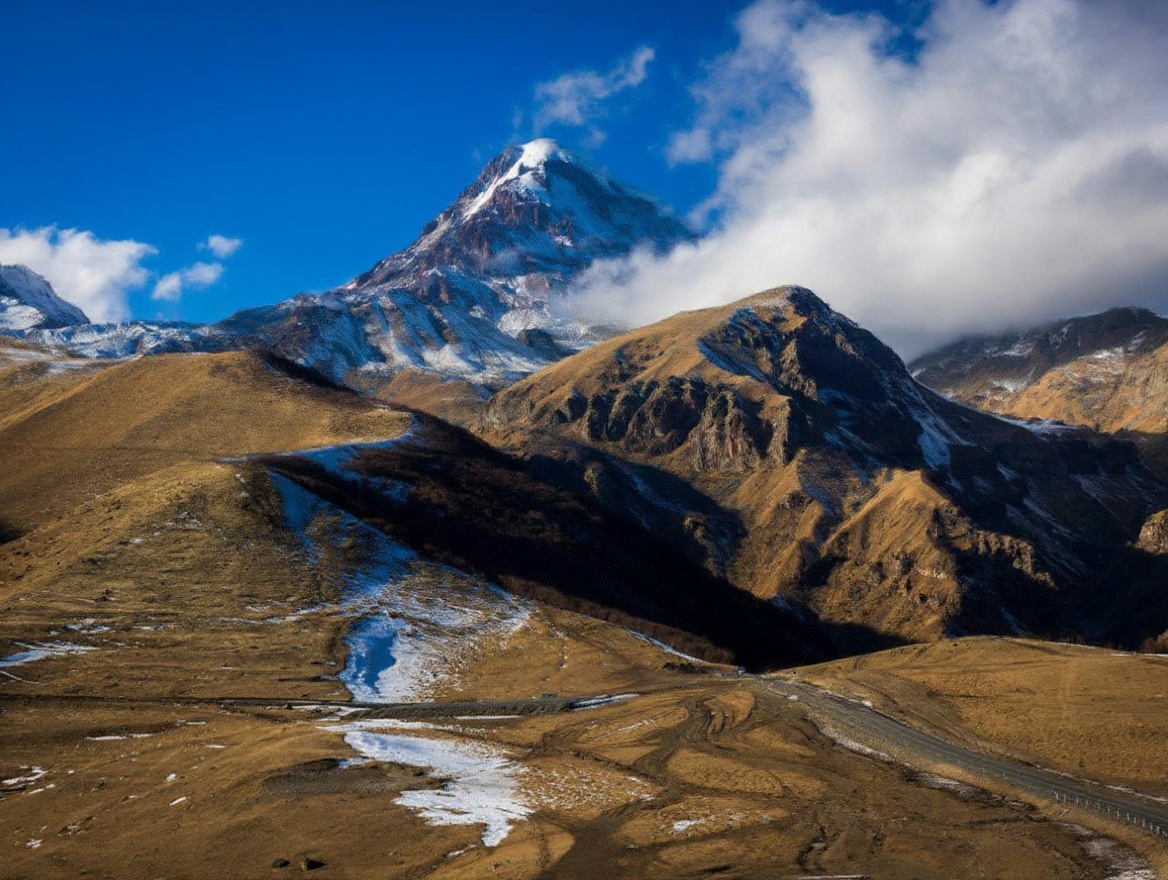
Kazbegi is the place in Georgia that makes people extend their trips. They come for a night and stay three. It sits at 1,750 metres in the Greater Caucasus range, 11 kilometres from the Russian border, at the point where the Georgian Military Highway runs out of altitude and confidence. Above the town, the Gergeti Trinity Church stands on a ridge at 2,170 metres with Mount Kazbek (5,047 metres) directly behind it. This is one of those photographs that is accurately represented in photographs, which is rarer than it sounds.
I’ve been to Kazbegi four times since moving to Tbilisi. I’m a geography teacher by background. Kazbegi is the kind of place where the geology, the history, the architecture, and the hiking all demand explanation simultaneously, and I mean that as a compliment. Here is everything you need.
Getting There from Tbilisi
The marshrutka from Tbilisi is the right way to do this.
Marshrutka: departs from Didube bus station in Tbilisi (not Ortachala — Didube). Take the metro to Didube station, walk through the market to the marshrutka bays. The Kazbegi marshrutka leaves when full, with reliable departures between 8am and 11am. The fare is 15 GEL (~£4.20) per person. Journey time: 3 hours to Stepantsminda (the town officially renamed from Kazbegi — locals use both names interchangeably).
I once got on the wrong marshrutka at Didube. I was heading north; I ended up going east. The destination board is in Georgian script. Learn the number of your marshrutka — the Kazbegi service uses the number 34 in the windscreen — or ask specifically: “Kazbegi?” works universally.
What happens on the drive: the Georgian Military Highway north from Tbilisi passes through increasingly dramatic terrain. After Mtskheta (the ancient capital visible from the highway — the churches and the Jvari Monastery on the cliff above are worth knowing about), the road enters the Dariali Gorge where cliffs rise almost vertically from the river. The Russia–Georgia Friendship Monument — a circular mosaic structure on a ridge above the gorge, built in 1983 to celebrate 200 years of the Georgievsk Treaty — is visible from the road. It’s worth stopping if you’re driving.
Private driver: taxi from Tbilisi to Kazbegi runs 120–180 GEL (~£33–50). Worth it if there are two or more of you splitting the cost, or if you want to stop at Ananuri Fortress en route (2 hours south of Kazbegi — see the Day Trips section below).
By car: the drive is straightforward on a paved highway. The tunnel at Gudauri (the Jvari Pass alternative) means the road is usable year-round. In winter (November–March), the mountain sections above Gudauri can have ice and snow — drive accordingly.
The Gergeti Trinity Church Hike
This is the reason everyone comes to Kazbegi. The church stands on a ridge at 2,170 metres above sea level, 420 metres above the town. Built in the 14th century, it has been used as a place of refuge during invasions — the national treasures of Georgia were hidden here when Tbilisi fell to the Persians in the 18th century. The church is still active; services are held on Sundays.
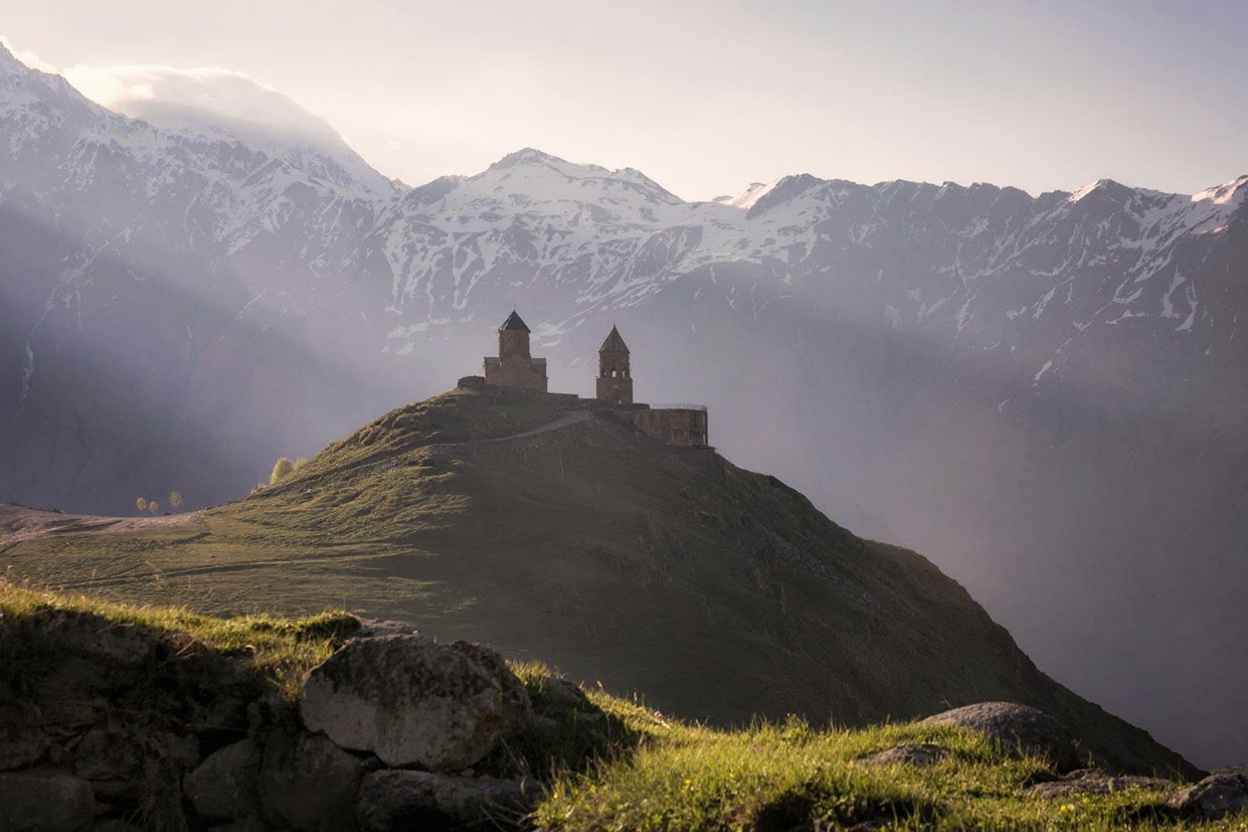
The hike: the main trail from the town centre takes approximately 45 minutes at a steady pace. The path is clear, signed, and well-worn. The first section crosses the river on a bridge and climbs through open fields; the upper section steepens with loose stone and some scrambling near the ridge.
When to go: the genuinely correct answer is before 9am, in any season. The church at dawn — cloud sitting in the valley below, the Caucasus ridge catching the first light from the east, a sound that is roughly equivalent to total silence — is the experience for which people say they’d do the whole trip again. By 10am, the day-tour groups from Tbilisi start arriving. By 11am, the ridge has 50 people on it. Both are fine; one is better.
The view: at the top, the town of Stepantsminda sits directly below. Behind the church, the Gergeti Glacier descends from Mount Kazbek’s shoulder. On a clear day (September and October are the most reliably clear months), you can see the full 5,047-metre summit. This is one of the highest peaks in the Greater Caucasus. The church, the glacier, and the summit in the same frame is the specific composition most people photograph and then fail to explain adequately to anyone who wasn’t there.
Driving up: a 4WD taxi from town to the church costs 30–40 GEL (~£8.40–11.20) return. This is the option for people who genuinely can’t do the hike. The road is rough and steep; regular cars are not advised. The hike is the better version.
•BEN’S PICK
September dawn at Gergeti. The month before, the alpine meadows are still green from summer rains. The temperature at 5am is 8–10°C. You leave at 4:30am with a headtorch. You reach the ridge as the sky starts to lighten. The glacier turns pink. The church bell doesn’t ring at 5am, but the silence is almost the same thing. This is why I keep going back.
Gveleti Waterfalls
Two waterfalls in a side valley north of Stepantsminda, reached by a 3km walk from the Gveleti village turn-off. The lower waterfall (about 30 metres high) is the accessible one; the upper waterfall requires additional scrambling that rewards the effort.
The trail is rocky but clear. Allow 1.5–2 hours return for both waterfalls.
Getting there: taxi from Stepantsminda to the Gveleti turn-off: 15–20 GEL (~£4.20–5.60). Walk from town along the highway: 4km each way (doable, but the highway shoulder is narrow and the trucks are large). The taxi is the sensible option.
The waterfalls are fed by glacial melt and are cold in all seasons. The setting — narrow gorge, forest, the rush of the water — is a contrast to the open alpine landscape of the Gergeti hike. Worth doing as an afternoon activity on the day you arrive or on a second day.
Truso Valley
This is the Kazbegi area’s less-visited outstanding attraction and the one most guides underserve. The Truso Valley runs west from the main Georgian Military Highway, towards the South Ossetia administrative boundary line — don’t cross it; the valley reaches impressive natural features well before the border.
The valley contains:
– Mineral springs: sulphur and carbon dioxide springs emerging from the earth, staining the rocks orange and creating travertine formations. The smell is immediate and distinctive — you know you’re near a sulphur spring before you see it.
– Abandoned Ossetian villages: the Ossetian population of the Truso Valley largely left during the Soviet period and the subsequent conflicts. Stone towers, churches, and farmhouses remain — the same architectural tradition as the tower houses in Svaneti, several centuries old and substantially intact.
– Ketrisi village: the furthest point of practical access, with a church that still holds services. The landscape around it is high alpine — meadows, peaks above 3,000 metres, the cold clean air of the Greater Caucasus at altitude.
Getting there: taxi from Stepantsminda to Truso Valley (to the main sulphur spring area): 60–80 GEL (~£17–22) return including wait time. The road into the valley is rough; a 4WD is advised. Organised tours from Stepantsminda run about 80–100 GEL (~£22–28) per person.
Allow a full day for Truso Valley. It is not a quick stop — the landscape rewards time.
Juta Village and Alpine Hiking
Juta is a small village at 2,160 metres, reached by a rough road 12km south of Stepantsminda. It is the starting point for serious alpine hiking in the Chaukhi mountain area — granite towers that resemble a smaller, more accessible version of the Dolomites or the Torres del Paine.
The main hike from Juta goes to Lake Abudelauri (three lakes — white, green, and black — in a high cirque beneath the Chaukhi peaks). The distance to the lakes is approximately 10km each way, with 800 metres of elevation gain. Allow 6–8 hours return.
Getting to Juta: taxi from Stepantsminda: 60 GEL (~£17). The road is rough; 4WD required.
Juta itself has a handful of guesthouses for those doing multi-day treks. Prices: 50–70 GEL/person half board. The village is quieter than Stepantsminda even in peak season — it attracts hikers rather than day visitors.
The Chaukhi towers: if you see one photograph of the Juta area and want to know what mountain range it is, the answer is the Greater Caucasus. The towers are granite peaks rising from a glacier, dramatically lit in the morning and evening. Most visitors come for the Gergeti Church and don’t make it to Chaukhi. This is, from a hiking perspective, the wrong priority — Juta earns the extra day.
Where to Stay in Kazbegi
Stepantsminda has a good range of guesthouses. The luxury option (Rooms Hotel Kazbegi, famous for the views from the terrace) is at the high end of the market; most visitors are better served by the family guesthouses that define the accommodation landscape here.
Guesthouses: 50–80 GEL/person/night including dinner and breakfast (~£14–22). The food at the better guesthouses — khinkali, mtsvadi (shashlik), lobiani, fresh vegetables from the garden — is genuinely good. Mountain village guesthouse food in Georgia operates at a different level from the tourist restaurant circuit.
Red Stone Guest House: one of the established names in Stepantsminda, run by a local family. Consistently recommended. Book by email or WhatsApp.
Booking ahead: July and August fill quickly — the Gergeti church day-tour crowd is supplemented by multi-night visitors. Book 2–3 weeks ahead for peak summer. In September and October, a week ahead is usually sufficient. In spring (April–May) and winter, you can often show up without a booking.
Hotels: Rooms Hotel Kazbegi is the aspirational option — the terrace bar has the definitive view of Gergeti Church and Mount Kazbek. Prices: 200–400 GEL/night (~£56–112). Worth it for a special occasion; the guesthouses are better value for a standard visit.
What to Eat in Stepantsminda
The guesthouse food is where you’ll eat best. The restaurant scene in Stepantsminda is limited and, as the research notes, “more expensive than most of Georgia” — which in practice means paying Tbilisi prices rather than the discounted village prices that usually apply outside the capital.
Khinkali: the soup dumplings that are eaten by holding the top knot, biting, slurping the broth, then eating the rest. The khinkali in the mountain areas of Georgia — Kazbegi, Svaneti, the Racha region — are made with local mountain beef and pork and have a distinctive character from the valley versions. In Stepantsminda, a khinkali costs 1.5–2 GEL each.
Guda cheese: a local hard cheese aged in sheepskin. Different from the sulguni (fresh, slightly salty) you get in Tbilisi. Served in most guesthouses as part of the meal. Worth seeking out.
Chacha: grape spirit, the Georgian equivalent of grappa. Offered at guesthouses, sometimes from the family’s own distillation. A small glass before dinner is the correct approach.
Kazbegi in Different Seasons
June to September: the hiking window. All trails are accessible. The Gergeti Church hike is straightforward. Truso Valley and Juta are fully open. August is peak season — the most visitors, the warmest days (15–20°C at 1,750m), and the highest prices. September is the month I’d choose: the summer crowds thin, the light turns golden in the afternoons, the meadows have the last of the green before the autumn colour begins. The Caucasus ridge in September clear mornings, from the Gergeti ridge, looks like a geography teacher’s idealised diagram of a mountain range.
October to November: transitional. The first snow can appear on the peaks from mid-October. The Gergeti Church hike is still possible. Juta and Truso become more weather-dependent. The town is much quieter. Accommodation is cheaper.
December to February: winter in Kazbegi. Snow covers the town and the surrounding landscape. The Gergeti Church in snow, with the frozen glacier behind it, is a completely different photograph from the summer version. The hike to the church becomes more demanding — ice on the upper section, proper winter footwear required. Gudauri ski resort is 30km south and worth knowing about if skiing is part of the plan.
March to May: spring. The snow is melting. The first green appears. Wildflowers cover the meadows by late April. The trails are opening but can be muddy. A good month for those who want the landscape without the crowds and can tolerate variable weather.
Day Trips From Kazbegi
Ananuri Fortress (2 hours south on the Georgian Military Highway): a 17th-century hilltop fortress complex above the Zhinvali reservoir. Two churches, defensive towers, and views across the water. Worth stopping on the drive from Tbilisi — ask your marshrutka driver to stop or arrange a private car. Entry is free.
Gudauri (30km south): Georgia’s main ski resort, operating December through March. Day-trip skiing from Kazbegi is possible; the road connects them in 40 minutes. In summer, Gudauri has paragliding.
The Russian Border (11km north): the Georgian Military Highway runs to the Dariali Gorge and the Russian border checkpoint — the Friendship Bridge crossing between Georgia and Russia. The crossing is closed to most nationalities. You can drive or walk to the Georgian checkpoint and see the border infrastructure. The gorge itself is spectacular.
Practical Information
Currency: Georgia uses the Georgian Lari (GEL). 1 GEL ≈ £0.28 / $0.36. ATMs in Stepantsminda are limited — there is one Bog Bank ATM in town that is generally reliable, but it runs out of cash on peak summer weekends. Withdraw GEL in Tbilisi before you travel. Cash is required at guesthouses, marshrutka drivers, and most small restaurants.
Mobile signal: Magti and Geocell both have coverage in Stepantsminda town. Signal on the Gergeti Church trail is intermittent above mid-slope. In Truso Valley and on the Juta trails, coverage is unreliable — download offline maps (Maps.me has the trails) before you leave town.
Altitude: Stepantsminda sits at 1,750 metres. The Gergeti Church at 2,170 metres. The Juta trailhead at 2,160 metres, with the Abudelauri Lakes above 2,500 metres. Most visitors from sea level notice no significant acclimatisation issues at these altitudes. Those coming directly from low altitude who intend to hike at pace on day one should drink more water than usual and allow for slower going on the first morning. Altitude headache at 2,000+ metres is common for those ascending quickly — it resolves with rest.
What to pack: layers, regardless of the month. Even in August, the temperature at the Gergeti ridge at dawn is 5–10°C. Afternoon temperatures in town in summer reach 18–22°C. A wind layer, sunscreen, and adequate water (500ml minimum for the church hike) cover the basics. For Truso Valley and Juta, add solid footwear — trail runners at minimum, hiking boots preferred.
- How do I get from Tbilisi to Kazbegi?
- By marshrutka from Didube bus station in Tbilisi — 15 GEL per person (~£4.20), 3 hours, departing when full between 8am and 11am. This is the standard route and the correct one. The drive through the Dariali Gorge on the Georgian Military Highway is itself worth the journey. Alternative: private taxi (120–180 GEL) or hire car. Marshrutka destination board is in Georgian script; look for the number 34 in the windscreen or ask — “Kazbegi?” is universally understood.
- How hard is the Gergeti Trinity Church hike?
- Moderate. The trail from Stepantsminda town centre to the church is approximately 4km return, with 420 metres of elevation gain. Allow 45–60 minutes up and 30–40 minutes down at a steady pace. The path is clear and well-worn. The upper section has some loose stone and steeper gradient but no technical scrambling. Good walking shoes are sufficient; proper boots are not required. The hike is accessible for most adults with a reasonable fitness level. Avoid attempting it in icy conditions without appropriate footwear.
- What is the best time to visit Kazbegi?
- September is optimal — clear skies, thinner crowds than July–August, golden afternoon light, and all hiking routes fully accessible. June through September is the full hiking window. July and August are peak season: warmest, busiest, and most expensive. October has the first snow on the peaks and quiet trails. Winter (December–February) offers a dramatically different landscape — snow-covered, demanding for the church hike, but extraordinary for those who prepare for it.
- What is Truso Valley and is it worth visiting?
- Truso is a side valley west of the Georgian Military Highway with sulphur springs, abandoned Ossetian stone villages, and high alpine scenery. It runs toward (but does not reach) the South Ossetia administrative boundary line. Worth visiting as a full-day trip from Stepantsminda — the combination of the orange-stained mineral spring formations, the centuries-old village ruins, and the mountain setting is unlike anything else in the Kazbegi area. Taxi return: 60–80 GEL. 4WD advised for the rough valley road.
- How many days should I spend in Kazbegi?
- Two nights minimum: one full day for the Gergeti Church hike and Gveleti waterfalls, one full day for Truso Valley or Juta. Three nights is comfortable and allows for the Gergeti dawn hike on the first morning, a full Truso Valley day, and a Juta/Chaukhi half-day. A single day trip from Tbilisi is possible but limits you to the church hike — that’s fine if it’s all you have time for, but the area rewards staying.
- Is Kazbegi safe to visit?
- Yes. The town is safe and hospitable. The one genuine safety consideration is the proximity to South Ossetia — the administrative boundary line runs through the mountains north and west of Stepantsminda. Do not approach or attempt to cross the boundary. The Truso Valley road and all standard hiking routes are well clear of the boundary; stay on established trails and you have no proximity to it. The Russian border (11km north via the Georgian Military Highway) is marked and monitored — you can approach the Georgian checkpoint from the Georgian side without issue.
The Geopolitical Context: South Ossetia and the Russian Border
The geography teacher in me needs to say this before you stand on the Gergeti ridge and look north: you are 11km from Russia. The Russian–Georgian border runs through the Dariali Gorge just north of Stepantsminda. The Georgian Military Highway ends at the Gudauri tunnel and the Dariali Gorge border crossing — which is closed to most travellers. You cannot enter Russia from Kazbegi.
More immediately relevant: South Ossetia’s administrative boundary line runs through the mountains to the west and northwest of Stepantsminda. The exact location is not marked on the ground in all places. The Truso Valley road runs west but stays clear of the boundary; standard hiking routes in the Kazbegi area are well away from it. Stay on established trails and you have no proximity concerns.
This context matters because Kazbegi is not a resort bubble disconnected from geopolitics — it is a Georgian mountain town 11km from a country that invaded Georgia in 2008, with an occupied territory nearby whose boundary is visible on maps as a line that shouldn’t exist. The Gergeti Trinity Church has been here since the 14th century through Mongol invasions, Persian raids, Russian annexation, Soviet collectivisation, and the 2008 war. The landscape is extraordinary partly because so much happened in it and it is still here. Knowing that doesn’t make the view worse. It makes the view different.
Where to Stay in Kazbegi: Ben’s Picks
Ben’s honest take on guesthouses: The family guesthouses with meals included are the correct choice for Kazbegi. The dinner is home-cooked Georgian mountain food — khinkali, Georgian stews, fresh vegetables from the garden, whatever the family made — eaten at a communal table with other travellers and often with the family. This is a better version of the Kazbegi experience than eating alone in a self-catering room. Ask your Tbilisi hostel or guesthouse for a recommendation before you go — the word-of-mouth network for Kazbegi guesthouses is more reliable than booking platforms for this tier.