
Last updated: June 2026 — prices and information verified June 2026.
Tbilisi is the second most trending travel destination in the world for 2026, according to TripAdvisor data. It was ranked second. The number one slot went to somewhere you’ve probably already been.
I’ve been here three years. I moved for six weeks to photograph the mountain landscapes and ended up signing a lease in the old city. The apartment has a wooden balcony that overhangs a lane so narrow you can almost touch the building opposite. The sulfur springs run under the neighbourhood. I can smell them faintly on warm mornings.
Here’s what’s worth your time.
Abanotubani — The Sulfur Bath District
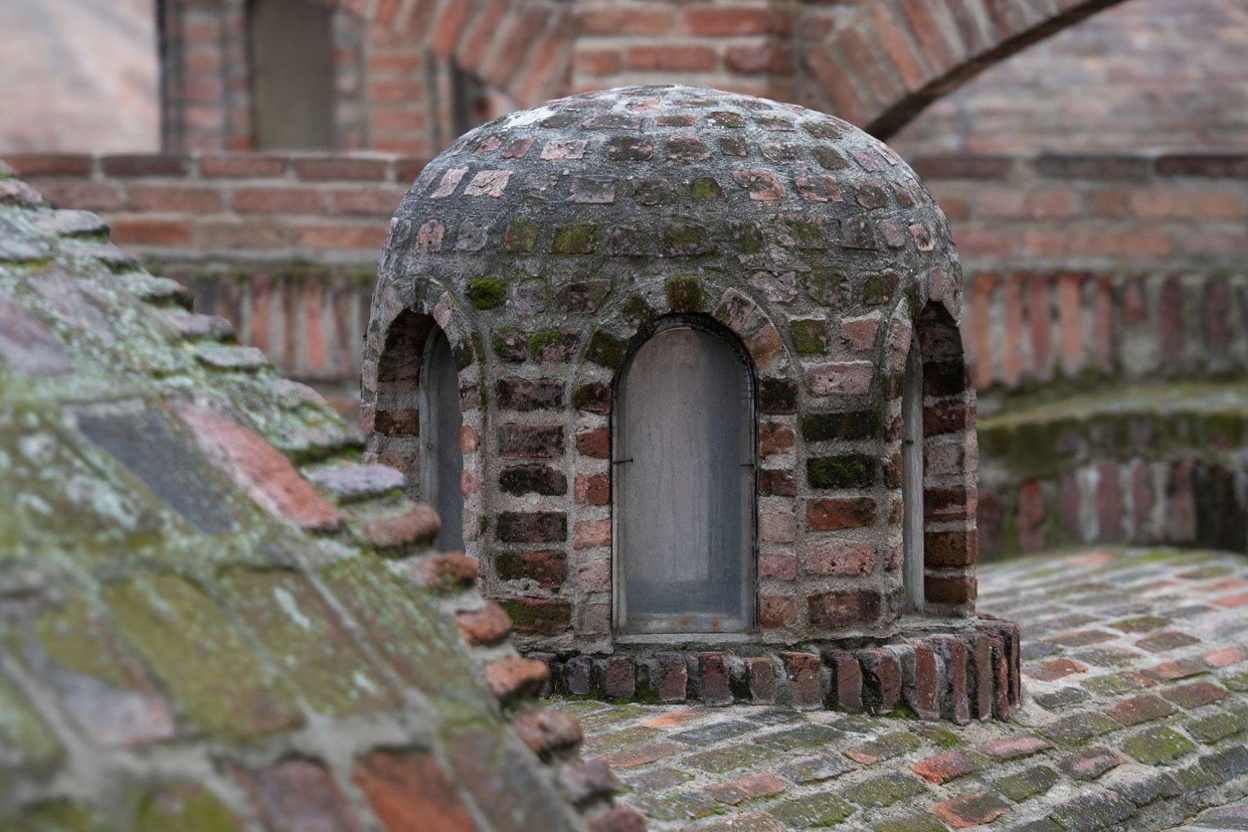
Abanotubani (say: ah-bah-no-too-BAH-nee) is the oldest part of Tbilisi — the district where natural sulfur springs feed bathhouses that have operated for at least 1,500 years. The name means “bath district.” The springs are real, the smell is real (sulfurous, distinctively mineral, not unpleasant once you’re in it), and the experience is unlike anything else in Georgia.
There are public baths and private baths. Go private.
A private bath room is typically 30–50 GEL per hour (~$11–18 USD), hired by the room rather than per person — so a group of two or four shares the same cost. You get a tiled room, a deep pool of naturally heated sulfur water (around 37–40°C), and a marble table if you want the kese (scrub/massage) service, which costs an additional 20–30 GEL and is worth it.
The most photographed bathhouses — the ornate domed structures on the district’s main street — charge a premium. Walk past them to the quieter establishments on the side lanes. Same water, same experience, half the price.
•BEN’S PICK
The sulfur bath experience is best in the morning — go before 10am when the water is freshest and the attendants are not yet dealing with 15 other groups. Two hours is enough: one hour soaking, one hour for the kese, time to dry off. Leave feeling like you’ve been wrung out and reassembled correctly.
The Dry Bridge Market
Every day of the year, weather permitting, a flea market spreads across the Dry Bridge and along the river embankment below it. This is where Tbilisi’s attics have been quietly emptying since the Soviet collapse.
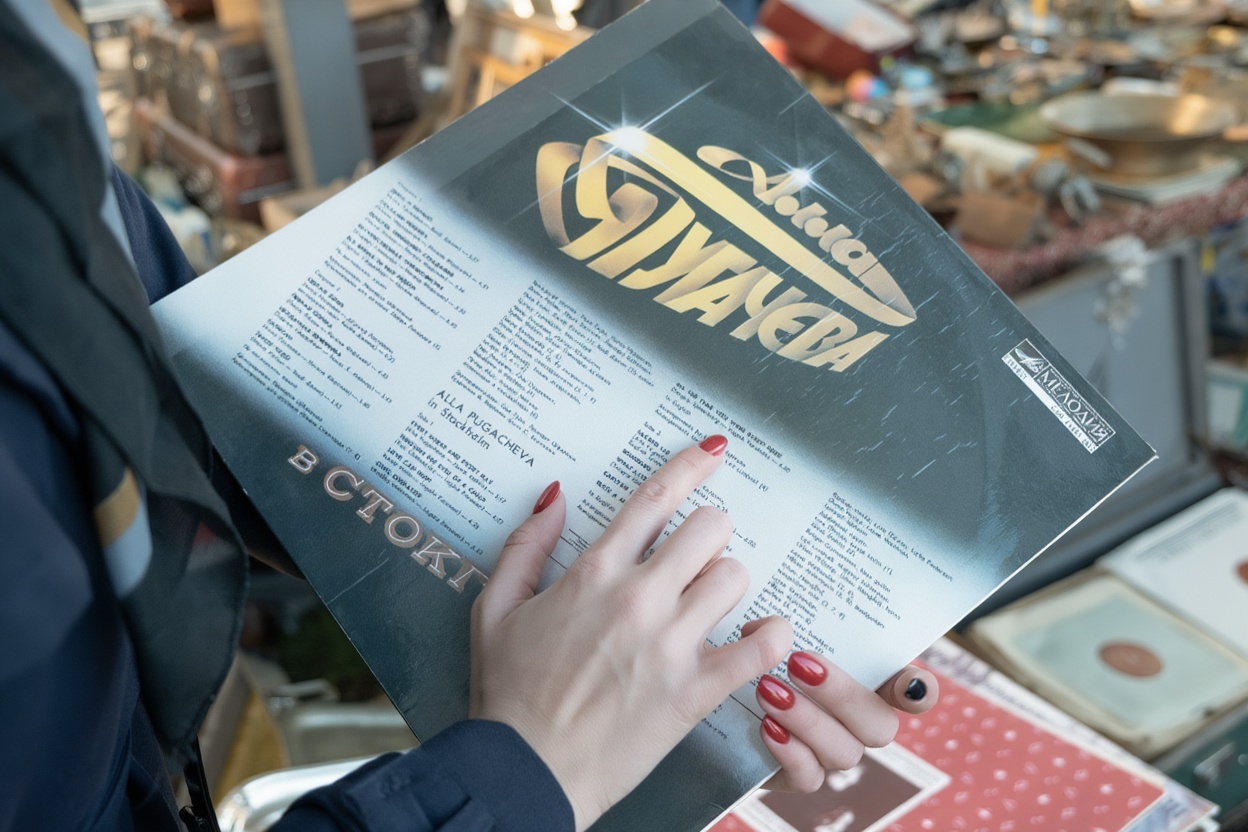
You’ll find: Soviet-era cameras, military medals, Georgian silver filigree, Caucasian rugs, old maps, Orthodox icons, communist-period artwork, samovars, typewriters, and things you cannot immediately identify. The quality ranges from genuine antique to tourist-market reproduction — learn to tell the difference by handling things and asking prices rather than accepting the first number offered.
Saturday morning is the most active. Come between 8am and 11am before the best pieces go. Bring cash in small denominations (GEL preferred, USD accepted for larger items). Negotiation is expected. Start at 60% of the asking price for antiques; the final number is usually around 70–75%.
The market is free to browse. Budget a couple of hours and plan to carry something back.
Old Tbilisi: Kala and Sololaki
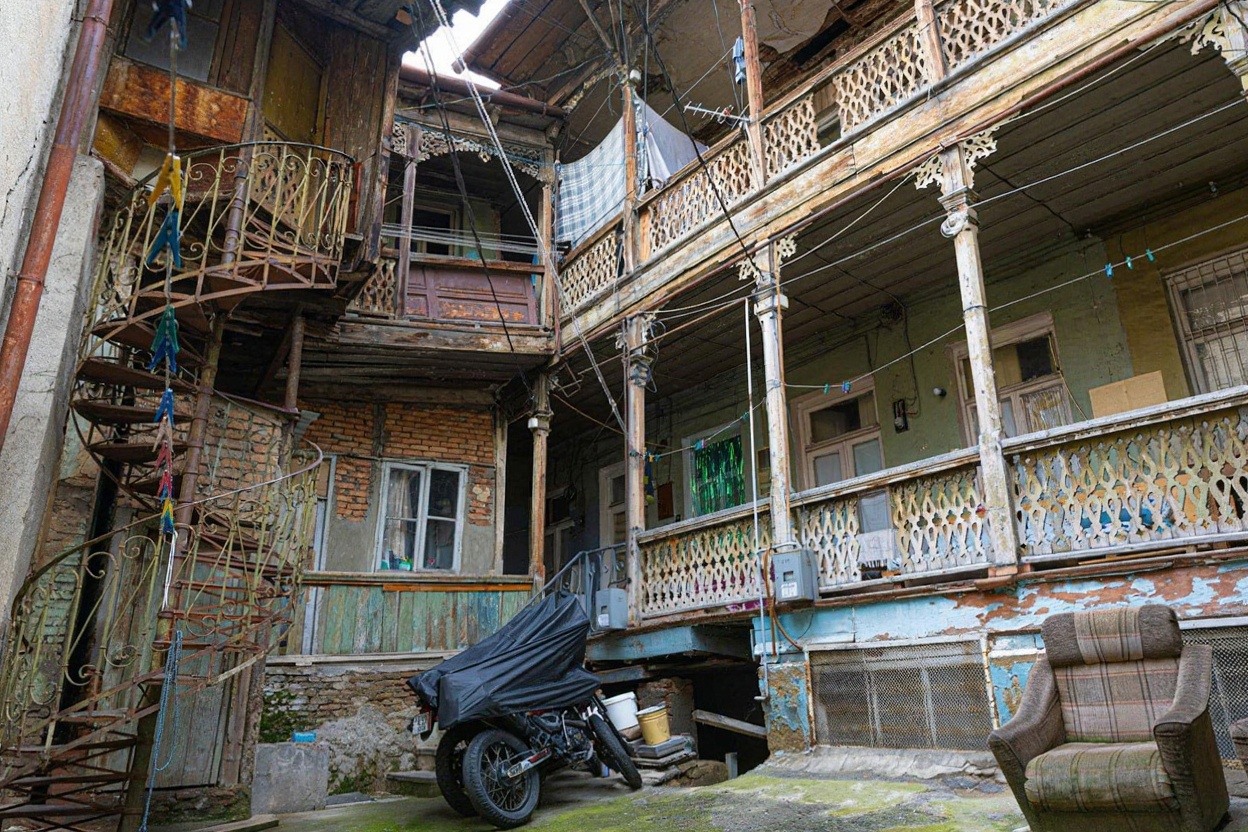
Kala is the oldest core of Tbilisi — the area around Narikala Fortress and the sulfur baths, dense with carved wooden balconies, Orthodox churches, and lanes narrow enough that you can touch both walls simultaneously.
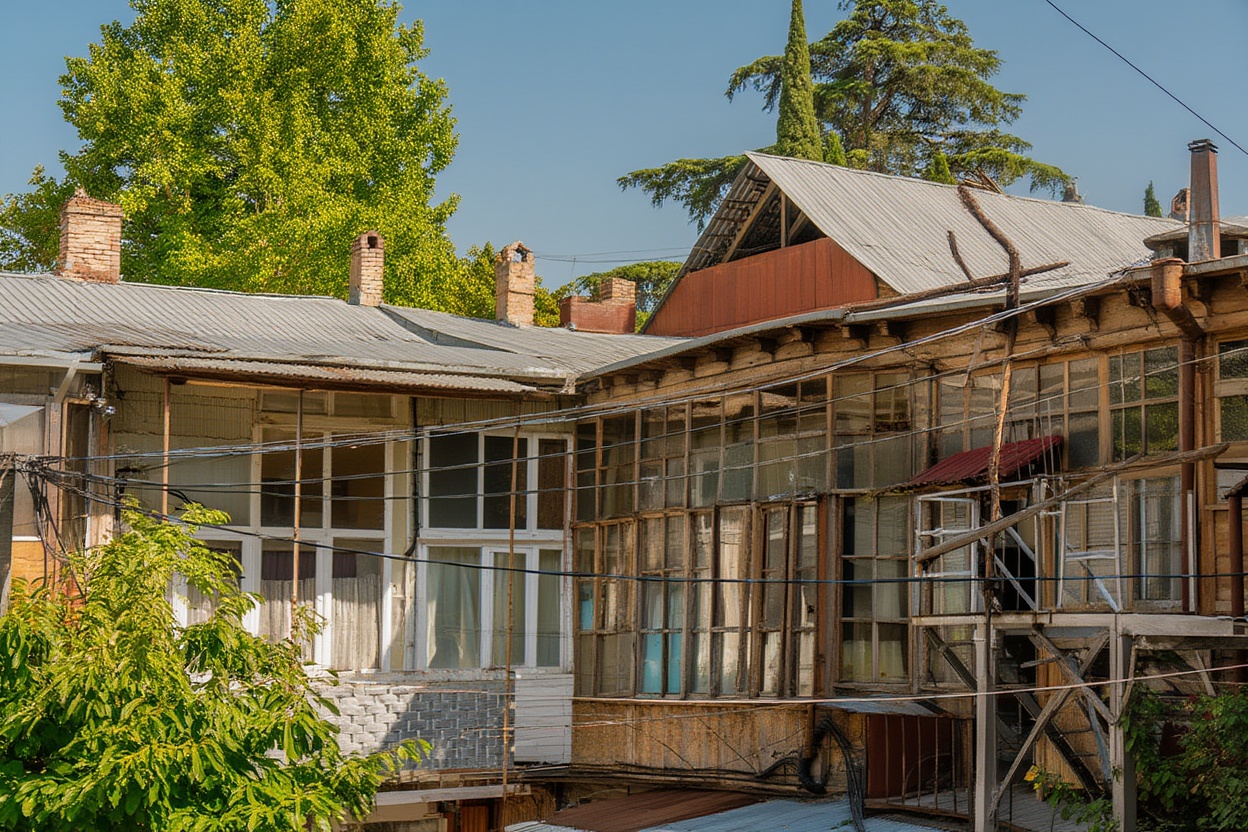
Sololaki (say: SO-lo-lah-kee) is the 19th-century neighbourhood that climbs the hill south of the main Rustaveli Avenue. This is the area with the painted entryways — carved wooden doorways in deep colours that one travel writer accurately described as feeling like the entrance to a different era. Every building is different. Walk it without a destination.
The best time for Kala and Sololaki: early morning, before 9am, when the lanes are quiet and the light is good for photography. By 11am the tour groups arrive. By 2pm in summer it’s hot and crowded. Get there early, drink a coffee on a rooftop terrace, walk down when you’re ready.
Specific points worth finding:
Narikala Fortress — the ruined fortress above Abanotubani, accessible on foot via a steep path or by cable car (2 GEL from Rike Park). The ruins themselves are unremarkable; the view over old Tbilisi from the walls is not.
Metekhi Church — on the cliff above the Kura river, visible from almost everywhere in old Tbilisi. 5th-century foundation, current structure 13th century. Free to enter. Go at sunset when the light on the cliff face is correct.
Anchiskhati Basilica — Tbilisi’s oldest surviving church, 6th century, in the heart of Kala. Quieter than Metekhi, worth 20 minutes inside.
Fabrika and the Natural Wine Scene
Fabrika is a former Soviet sewing factory converted into a complex of bars, cafés, co-working spaces, hostels, and restaurants. It is where Tbilisi’s creative class has its first coffee and its last glass of wine, and it is excellent in a way that would be annoying if the wine weren’t so good.
The natural wine bars here — and in the surrounding Marjanishvili neighbourhood — represent something genuinely unusual: Georgian wine made in the traditional qvevri (clay amphora) method, which predates French winemaking by several thousand years. The amber wines and the skin-contact whites are unlike what most Western palates expect from a wine glass. They can be challenging. They are often extraordinary.
Start with a glass of Rkatsiteli or Kisi. Tell the bar staff you want something from the Kakheti region made in traditional method. They’ll know what you mean. Budget 15–25 GEL per glass (~$5.50–$9 USD) at the better natural wine bars. This is cheaper than the same quality in Paris, London, or New York.
Fabrika itself is free to walk into. The container market along the outer wall has independent shops selling Georgian textiles, ceramics, and jewellery — better quality and lower tourist markup than the Dry Bridge market for new items.
Rustaveli Avenue and the Surrounding Area
Rustaveli Avenue is Tbilisi’s main boulevard — wide, tree-lined, running 1.4km from Liberty Square to the Rustaveli Theatre. It’s where the major cultural institutions cluster.
Georgian National Museum — the main history museum, covering prehistoric Georgia (including some extraordinary gold work from the Colchian civilisation), medieval history, and Soviet-period documentation. Entry around 15 GEL (~$5.50 USD). Budget two hours.
Rustaveli Theatre — if there’s a production running during your visit, go. Georgian theatre has a strong tradition and the Rustaveli company is the best in the country. Tickets are 20–50 GEL. Even without Georgian the staging is usually worth it.
Tbilisi History Museum — in a converted caravanserai in the Old Town, covering the city’s history from its 5th-century foundation through to the 20th century. Smaller and more curated than the National Museum.
Getting Around Tbilisi
Tbilisi is manageable on foot for the old city area. For wider movement, the metro and buses are cheap and functional.
Metro: 1 GEL per ride, valid for 90 minutes, covers most of the city’s main areas. Buy a Metromoney card (2 GEL deposit, load as needed) at any metro station. The system is clean, frequent, and air-conditioned.
Bolt (ridehailing): 7–15 GEL for rides within Tbilisi, max 20 GEL to get anywhere in the city. More reliable than street taxis and metered — no negotiation required.
Walking: Old Tbilisi (Kala, Sololaki, Abanotubani, along the Kura) is compact and walkable. Rustaveli to Abanotubani is about 15 minutes. Fabrika to Dry Bridge is 20 minutes. Wear comfortable shoes — the cobbles in Kala are genuinely uneven.
What to Eat in Tbilisi
Georgian food is one of the most underrated cuisines in Europe. Three things you need to eat while you’re here:
Khachapuri (say: kha-cha-POO-ree) — bread baked with cheese, in several regional variations. The Adjarian version (boat-shaped, filled with cheese and a raw egg dropped in at the table) is the most famous and the most filling. One is usually enough for two people. 15–25 GEL at a decent place.
Khinkali (say: KHEEN-kah-lee) — Georgian dumplings with a soup filling inside. You eat them by holding the knotted top (which you don’t eat — it’s the handle), biting into the side, drinking the broth that spills out, then eating the rest. Six is a portion. Eight if you’re hungry. 1–1.50 GEL each.
Churchkhela — walnuts threaded on string and dipped repeatedly in grape juice until they form a long sausage-shaped candy. Every market in the country sells them. They look like candles and taste unlike anything else. Buy one, eat it over the course of a day.
My Mistake in Tbilisi
My first week in Tbilisi, I tried to see everything in two days before my photography work started. I did the Narikala Fortress, the National Museum, Fabrika, the Dry Bridge, and the sulfur baths in 48 hours.
I saw all of it and experienced none of it properly. The sulfur bath was cut short because I had somewhere to be. The Dry Bridge I walked through at speed. The wine I had while thinking about the next morning’s shoot.
Three years later, my standard Tbilisi day is: coffee on the balcony, market or walk in the morning, long lunch, sulfur bath, wine in the evening. There’s no hurry. The city doesn’t reward hurry.
How many days do you need in Tbilisi?
Three full days for the city itself — Abanotubani and the sulfur baths, old city walking, Dry Bridge market, Fabrika and the wine scene. Add a fourth day for Mtskheta (30 minutes by marshrutka, Georgia’s ancient capital), and a fifth for a day trip to Kazbegi. Most people find they want more time than they planned.
Is Tbilisi worth visiting?
Significantly yes. Tbilisi is one of the most interesting cities in Europe for the combination of: genuinely distinct culture (Georgian, not Russian, not European, not Middle Eastern — specifically Georgian), extraordinary food and wine, visible history in the old city fabric, and a creative scene that feels current without being performative. It ranked second globally for trending destinations for 2026. This is a city with momentum.
Are the Tbilisi sulfur baths worth it?
Yes, without hesitation. The Abanotubani sulfur springs are what the city was built around — they’ve fed bathhouses here for 1,500 years. The private bath experience (30–50 GEL per hour for the room, not per person) is genuinely distinct from any other bathing experience you’ll find in Europe. The water is naturally heated, naturally sulfurous, and noticeably different in feel from regular water. The kese (scrub/massage) is an add-on worth having. Go in the morning before it gets busy.
Is Georgia safe to visit?
Yes. Georgia has a low crime rate and Tbilisi is a safe city to walk around at all hours. The South Ossetia border area in the north should be avoided — the occupied region and its boundary with Georgia proper carries risk. Nagorno-Karabakh in Azerbaijan is separately a no-go area. Within Georgia’s recognized territory, including Tbilisi, Kazbegi, Kakheti, and the Black Sea coast, normal travel safety awareness applies and serious incidents involving tourists are rare.
What is the best thing to eat in Tbilisi?
Khinkali (Georgian dumplings with soup inside) and Adjarian khachapuri (boat-shaped cheese bread with egg). The khinkali ritual — hold the knot, bite the side, drink the broth, eat the rest — is something that takes one dumpling to understand and becomes muscle memory by the third. A full order of eight khinkali costs about 8–12 GEL and constitutes a meal. Start there.
Day Trips from Tbilisi
Tbilisi earns three days on its own. After that, the region earns more. These are the three day trips that make the most sense from the city.
Mtskheta (say: mts-KHEH-ta — yes, all those consonants): Georgia’s ancient capital, 20km from Tbilisi, is a UNESCO World Heritage Site and takes about 30 minutes by marshrutka from Didube metro station (1 GEL). The Svetitskhoveli Cathedral is the main draw — an 11th-century church on the site where, according to Georgian tradition, Christ’s robe is buried. The Jvari Monastery on the hill above the junction of the Mtkvari and Aragvi rivers is the view that matters: two rivers meeting, the valley opening out, Mtskheta below. Half a day is plenty. Go on a weekday morning before the tour buses arrive at Svetitskhoveli.
Kazbegi (3 hours north): The mountain town beneath the Caucasus ridge, at 1,750 metres, with the Gergeti Trinity Church visible on its hilltop from the centre of the village. The marshrutka from Didube costs 15 GEL (~£4.20) and leaves when full — usually 8–10am. The hike to the church takes 45 minutes up and is straightforward. The view from the church — the Caucasus ridge above, the Dariali Gorge below — is the best single hour in Georgia. A day trip from Tbilisi is possible but tight; one night in Kazbegi is the honest recommendation. Full guide at the Kazbegi travel guide.
Kakheti wine region (1.5–2 hours east): Sighnaghi, Telavi, and the family wineries of the Alazani Valley. A day tour from Tbilisi costs 100–150 GEL per person for a group tour. Going independently — marshrutka to Telavi (7 GEL from Ortachala bus station, 2 hours) — is cheaper and allows more control over timing. The wine is the point. The Rkatsiteli amber wine from a family qvevri in Kvareli is the thing that kept me in Georgia. That’s not a metaphor. I moved here partly because of a Tuesday afternoon in Giorgi’s cellar. Full guide at the Kakheti guide.
Getting There: Tbilisi Airport to the City
Tbilisi Shota Rustaveli International Airport (TBS) is 17km from the Old Town. The options:
Bolt/taxi (recommended): 15–25 GEL (~£4–7) to the city centre. Takes 25–35 minutes depending on traffic. Book via the Bolt app before you leave arrivals — the official taxi queue quotes significantly more. This is the correct option after a long flight.
Bus 37: 1 GEL to Liberty Square. Takes 40–50 minutes, stops running late at night (roughly 11pm last service). Fine if you arrive in daylight and aren’t carrying too much luggage.
Metro: The airport is not directly connected to the metro — you get the bus to Isani metro station (Tsotne Dadiani Street) or Liberty Square. The bus+metro combination costs 2 GEL total and takes about an hour. Practical if you know where you’re going; confusing with luggage on the first visit.
What to avoid: The taxi touts at the arrivals exit will quote you 80–100 GEL for a journey that costs 20 GEL on Bolt. Walk past them. Seriously — walk directly past without making eye contact and open the app before you reach the exit.
Where to Stay in Tbilisi
The neighbourhood you stay in shapes the experience. These are the three neighbourhoods worth targeting:
Sololaki and the Old Town (Kala): The right choice for a first visit. You’re within walking distance of the sulfur baths, the Dry Bridge market, Narikala Fortress, and the best wine bars. The streets are atmospheric — carved wooden balconies, narrow lanes, the sound of the Mtkvari river below. Guesthouses: 80–110 GEL/night for a private room. Hostels: 25–38 GEL for a dorm bed.
Vera district: Where I live. Ten minutes walk from Liberty Square, quieter than the Old Town, more residential and creative. Better café scene. Nino at the guesthouse on Irakli Abashidze (the street two blocks north of the main park) knows every restaurant in the area and is right about most of them. Guesthouses here run 90–120 GEL/night.
Vake: The upscale residential district west of the centre — quieter, greener, and more expensive. Right for longer stays or if you want distance from the Old Town bustle. Restaurants in Vake are the pricier end of Tbilisi’s scene. Hotels run 150–250 GEL/night at the mid-range.
What Ben Got Wrong: My first visit, I stayed in a hostel on the Dry Bridge side of the Old Town. Fine location. The hostel itself was fine. The problem was I didn’t factor in that the Dry Bridge market starts at 8am right outside and the sound of vendors arranging merchandise is not compatible with sleeping past 7:30am. If you want to sleep in: Vera or Vake. If you want the market experience: the Old Town, but accept the 8am alarm clock you didn’t book.
Frequently Asked Questions
- How many days do you need in Tbilisi?
- Three days minimum for the city itself — sulfur baths, Old Town walking, Dry Bridge market, Fabrika and the wine scene. Add a fourth day for Mtskheta (30 minutes by marshrutka) and a fifth for a day trip to Kazbegi or Kakheti. Most people find they want more time than planned. The city reveals itself slowly: the right wine bar, the right morning walk, the afternoon that stretches into evening at a terrace in Sololaki.
- Is Tbilisi worth visiting in 2026?
- Yes — it ranked second globally for trending travel destinations in 2026 (TripAdvisor data). The combination of genuine culture, extraordinary food and wine, distinct architecture, and a creative scene that feels current without being manufactured is unusual at this price point. Budget 60–85 GEL/day on a dorm-and-local-food basis; 190–330 GEL/day mid-range. The city is more expensive than it was in 2019, and it’s still exceptional value.
- What neighbourhood should I stay in Tbilisi?
- First visit: Sololaki or the Old Town — within walking distance of the sulfur baths, Narikala, and the wine bars. If you want something quieter and more residential: Vera district. If you’re a longer-stay visitor wanting space from the tourist circuit: Vake. Avoid the cluster of tourist-facing hotels on Rustaveli Avenue itself — you’ll pay a location premium for a street that functions as a thoroughfare rather than a neighbourhood.
