Last updated: June 2026 — prices and logistics verified June 2026.
Most people come to Tbilisi for the nightlife — it has a legitimate claim to being one of Europe’s best electronic music destinations. They stay for the food. They come back for the wine and the mountains. That’s the correct order of operations.
Here’s the guide I wish existed when I arrived.
How Many Days Do You Need in Tbilisi?
Three days minimum. Two for the city itself — Old Town, sulphur baths, food, the modern districts — and one for a day trip to Mtskheta, the Kakheti wine region, or Kazbegi if you’re ambitious. One day is a highlights reel. Two is enough to understand the city. Three is where it starts to feel like somewhere you’ve actually been.
Rough shape of three days in Tbilisi:
Day 1: Sulphur baths in Abanotubani on arrival (best done before you’ve fully unpacked — more on this below). Old Town walk in the afternoon: Sololaki, the Metekhi Church, Narikala Fortress. Dinner in a restaurant that actually knows what it’s doing with khinkali.
Day 2: Mtatsminda funicular in the morning for the city view. Georgian National Museum if you want context for the history. Fabrika in the afternoon — the creative district. Wine bar in the evening. This is the Georgian amber wine conversation you’ve been building toward.
Day 3: Day trip to Mtskheta (20km, 30 minutes, ancient capital, Jvari Monastery on the hill) or Kakheti wine region (east of Tbilisi, 1.5–2 hours, the wine homeland). Both are doable in a day from Tbilisi.
The Sulphur Baths: Do This on Day One
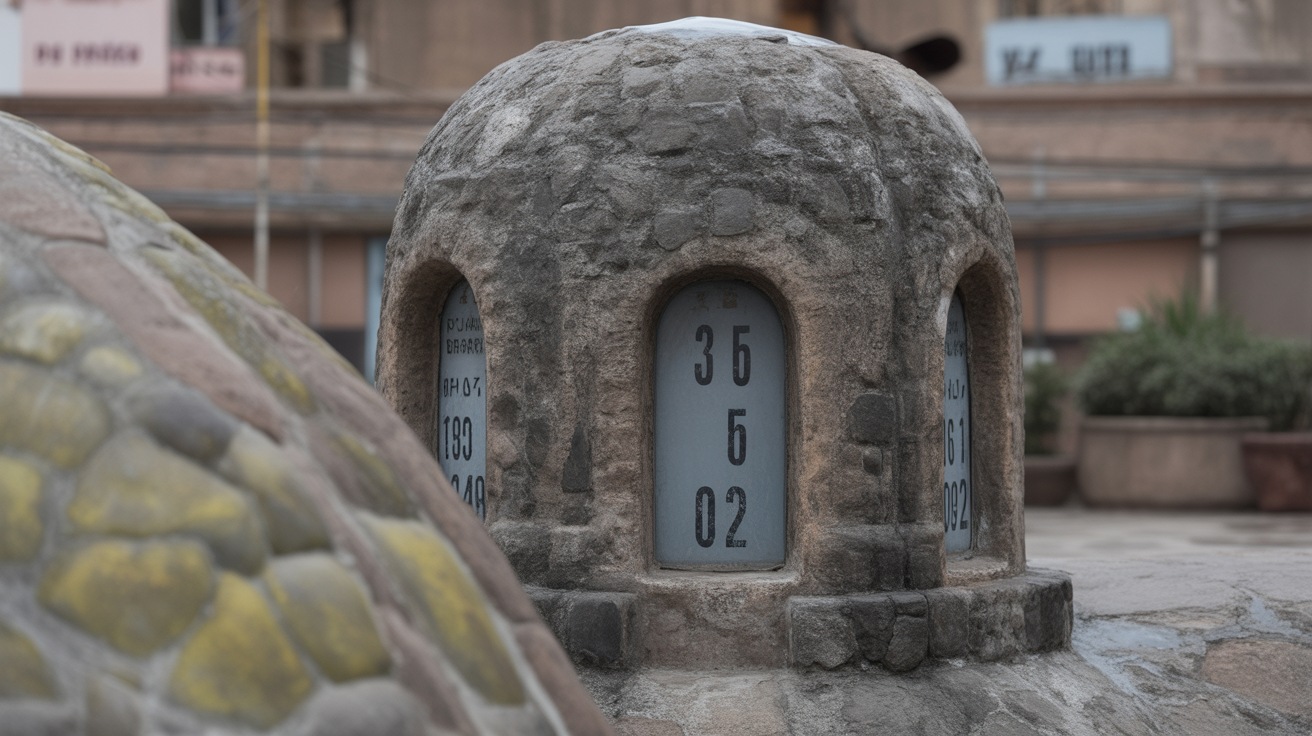
Tbilisi is literally built on sulphur springs. The Abanotubani district — the domed bath houses visible from the Old Town bridge — has been in use since at least the 5th century. The sulphur water smells exactly how you’d expect sulphur water to smell, and it’s the best thing you’ll do in Tbilisi.
There are two ways to do the baths:
Communal bath: Under 15 GEL (~£4.20 / ~$5.40). You share the pool with strangers. The pools are hot (36–40°C), the atmosphere is relaxed, and for the price it’s one of the most distinctive things you’ll do in the Caucasus. Men and women are separated. Bring your own towel or rent one.
Private room: 130–200 GEL/hour (~£36–56 / ~$47–72) for a group of 2–4 people. Your own pool, your own room, a kisi (scrub-down massage) available for an additional 50–70 GEL. This is the version I’d recommend for a first visit — more comfortable, more practical, and the room rate splits well across 2–3 people.
Recommended baths in Abanotubani: Chreli-Abano, Royal Bath, Orbeliani Baths (the one with the blue mosaic facade — you’ve seen the photos). Book ahead for a private room; walk-up is fine for communal.
GPS for Abanotubani: 41.6870° N, 44.8138° E.
•BEN’S PICK
Book a private room at Orbeliani Baths for the first afternoon — it’s the one with the elaborate Persian-style blue mosaic exterior, and worth seeing from the outside alone. Two people, one hour, 130–150 GEL split between you. Go early before 2pm when it’s quieter. Bring water — the heat dehydrates you faster than you expect.
Tbilisi Old Town: What’s Worth Your Time
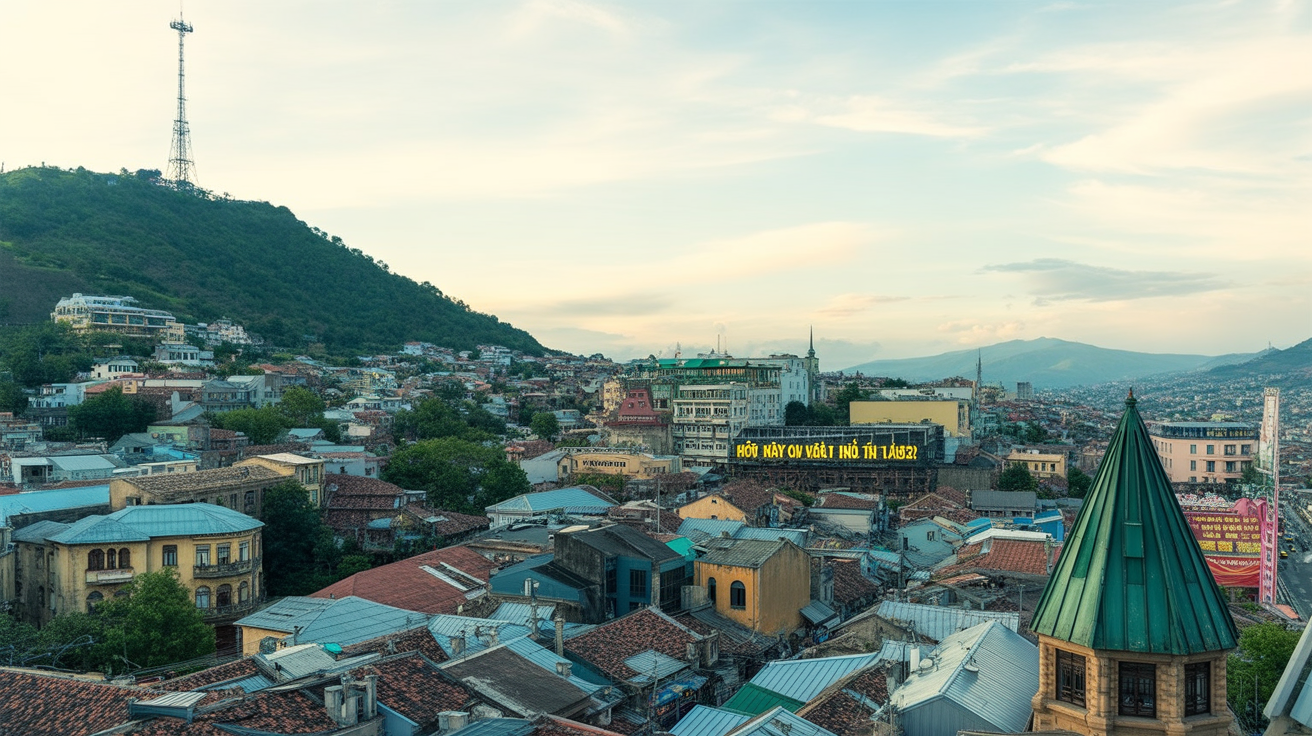
The Old Town covers the hillside above the Mtkvari River — Sololaki district, carved wooden balconies cantilevering out over steep lanes, the ruins of Narikala Fortress above it all. Most of it is free to walk. The fortress itself is free. The views from the top are the best in the city.
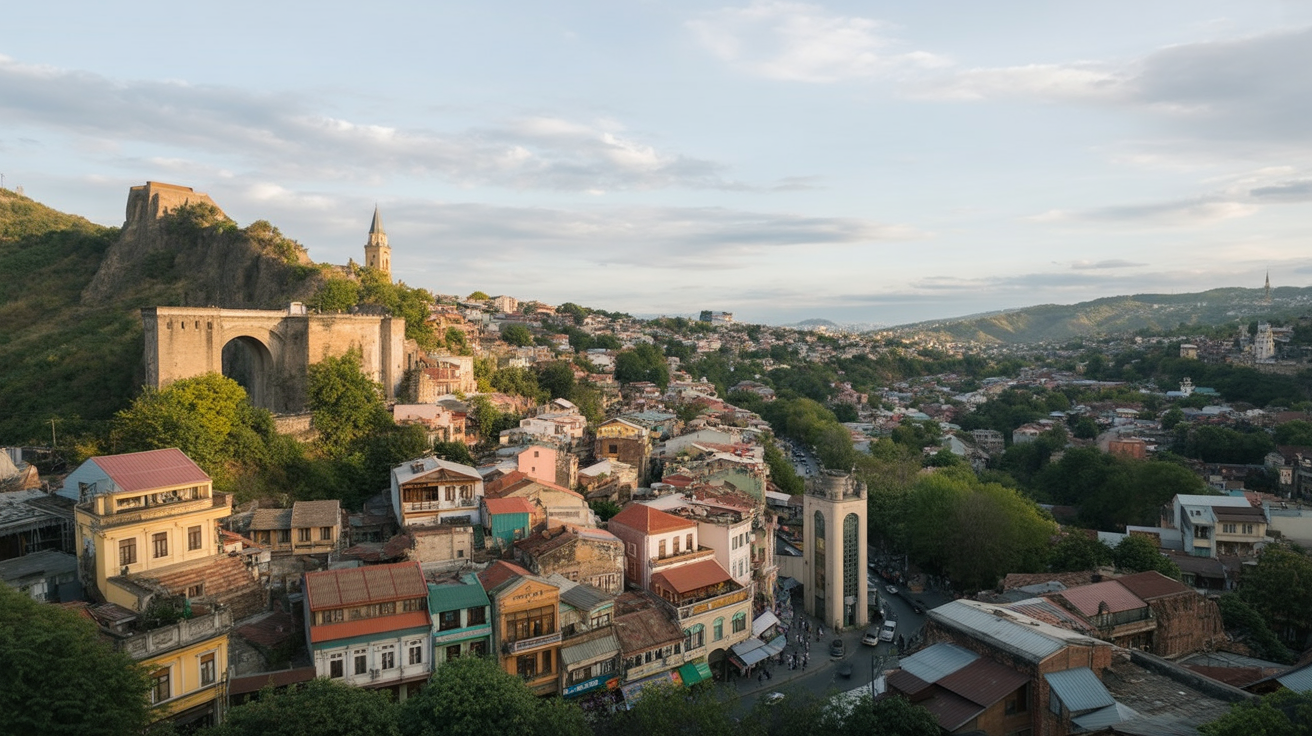
Walk up to Narikala from the Abanotubani side — the path from behind the baths takes about 20 minutes. The fortress dates to the 4th century AD, was destroyed by an earthquake in 1827, and has been partially restored. The view over the Old Town and the river is the one you’ll photograph most.
Metekhi Church — on the cliff opposite Narikala, across the river. 5th century, continuously functioning. The statue of King Vakhtang Gorgasali (the founder of Tbilisi) outside it is where most Old Town walking tours begin. Free to enter.
Bridge of Peace — the modern glass-and-steel pedestrian bridge that crosses the Mtkvari into Rike Park. Controversial when it was built in 2010, now just part of the city. Cross it in the evening when it lights up.
Sololaki — the residential neighbourhood immediately west of Narikala. The carved wooden balconies here are the ones from every Tbilisi photograph. Walking through Sololaki without a plan — just following the lanes — is more interesting than any specific attraction inside it.
Food: Khinkali, Khachapuri, and the Wine
This is the section of the guide that made me move to Tbilisi.
Khinkali (say: hin-KAH-lee): Georgian soup dumplings. A thick dough wrapper around seasoned meat and broth — you hold the pleated top, bite a hole, drink the broth without spilling it on your shirt (you will spill it on your shirt), then eat the rest. The top knot is left on the plate. Counting your tops at the end is how you keep score. Cost: 1.50–2.50 GEL each (~£0.42–0.70). Order ten. Eat eight. Order ten more.
Best khinkali: Pasanauri (on Melikishvili Avenue, mid-range), or any of the small family restaurants in Sololaki. Avoid places that list khinkali prominently in English outside tourist-facing restaurants — they’re usually fine but not the real thing.
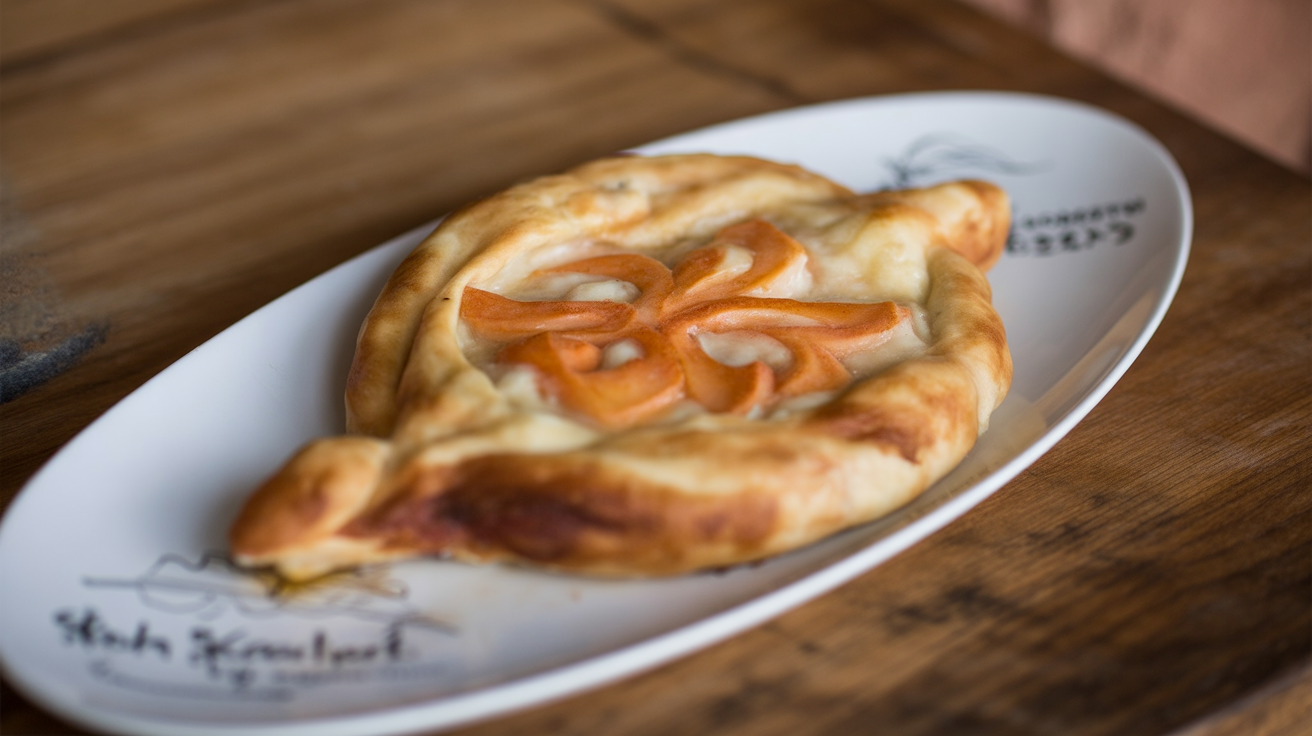
Khachapuri (say: kha-cha-POO-ree): Georgia’s national bread dish. Several regional variants, all worth trying. Imeruli (round, cheese-filled, baked) is the most common. Adjarian (boat-shaped, with egg and butter on top — you mix it in yourself) is the one worth ordering at least once. Cost: around 20 GEL (~£5.60 / ~$7.25) for the Adjarian version.
Georgian wine: Georgia has been making wine for 8,000 years — the qvevri (say: kVEH-vree) method, burying clay amphora in the earth to ferment, is UNESCO intangible heritage. The amber wines (white wine grapes fermented with the skins, producing an orange-amber colour and an oxidative, tannic character) are unlike anything made in Western Europe. A glass costs 12–15 GEL (~£3.35–4.20). A bottle at a wine bar: 40–80 GEL. I’m not objective about this — I’m the person who moved to Tbilisi partly because of a Kakheti winemaker. But I’m right.
Wine bar recommendation: Vino Underground on Freedom Square, or Wine Bar No. 9 in Sololaki. Both do by-the-glass service with genuinely knowledgeable staff.
Fabrika and Modern Tbilisi
Tbilisi is not just the Old Town. The city has a distinct creative district built inside a former Soviet textile factory — Fabrika, on Merab Kostava Street in the Chugureti district — that’s worth an afternoon.
Fabrika (say: fab-REE-ka) is a hostel, co-working space, street food market, container bar complex, and general social hub. In the evenings, the courtyard fills. On weekends, there’s usually a flea market. It captures something about modern Tbilisi — post-Soviet reinvention without erasing what came before — better than any Old Town walking tour.
Metro: Marjanishvili station on the Akhmeteli–Varketili line, then a short walk. Alternatively, 15 minutes walk from Liberty Square through Vera district.
Getting Around Tbilisi
The metro and your feet cover most of what you need. Taxis and Bolt for everything else.
Metro: 1 GEL per ride (~£0.28) — you need a Metromoney card (2 GEL to buy, refundable). Two lines, 22 stations, covers the main city areas. The system is simple enough to understand in an hour and cheap enough to use without thinking about it.
Bolt/Yandex Go: The app-based taxi services run reliably in Tbilisi and are significantly cheaper than street taxis. A cross-city ride typically costs 5–12 GEL (~£1.40–3.35). Download Bolt before you arrive — it works across Georgia and is the practical solution for anything the metro doesn’t reach.
Funicular: The Mtatsminda funicular (say: mtat-SMEEN-da) runs from Chonkadze Street up to the TV tower and park — 3 GEL per trip (~£0.84) plus 2 GEL for the card. The view from the top at dusk is the second-best in the city after Narikala. Worth the trip once.
Day Trips from Tbilisi
Tbilisi works as a hub for the surrounding region. These are the three day trips worth your time.
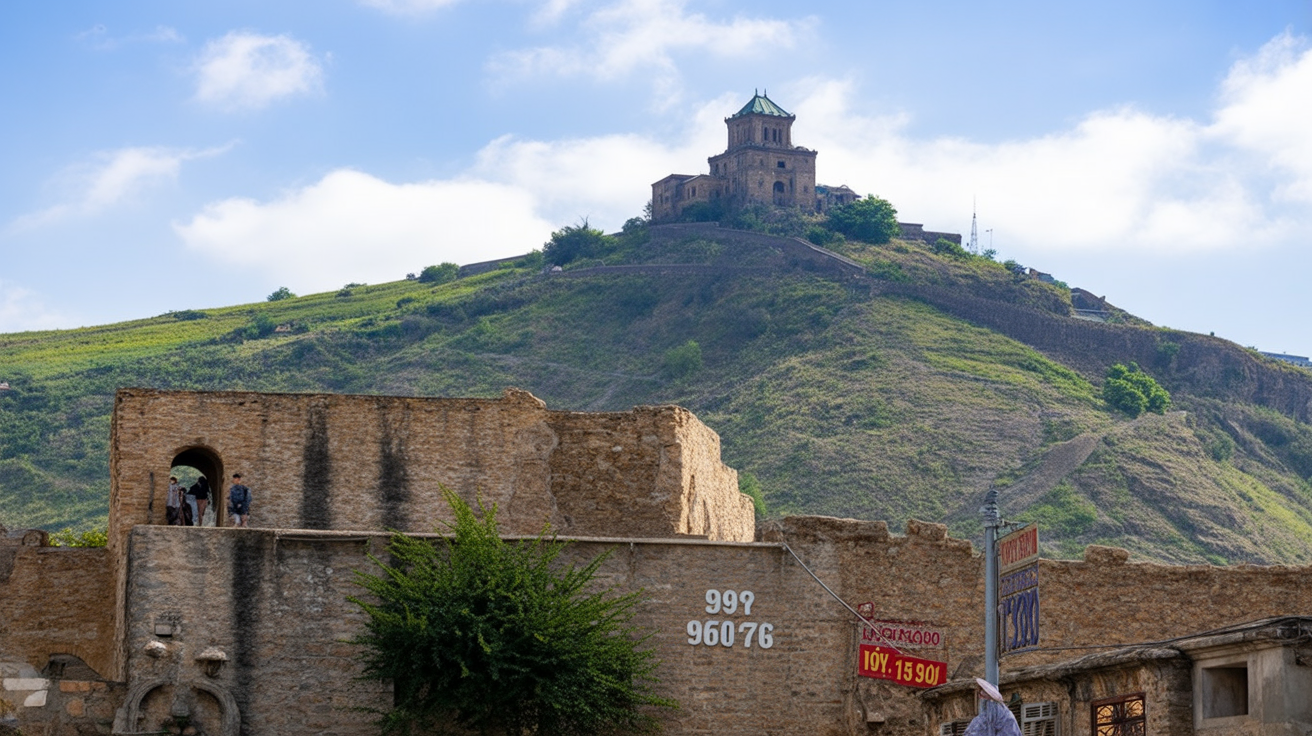
Mtskheta (say: mts-KHEH-ta — yes, all those consonants together): The ancient capital of the Kartli kingdom — 3km of UNESCO-listed city, the Svetitskhoveli Cathedral (11th century, the burial site of Christ’s robe according to Georgian tradition), and the Jvari Monastery on the hill above. About 20km from Tbilisi. Marshrutka (say: mar-SHRUT-ka — shared minibus) from Didube metro station costs around 1 GEL. A Bolt there and back runs roughly 35 USD round trip. Budget half a day. Go in the morning before tour groups arrive at Svetitskhoveli.
Kakheti wine region: Georgia’s wine country, 1.5–2 hours east of Tbilisi on the A2 highway. The towns of Sighnaghi, Telavi, and Kvareli are the main stops. A day tour from Tbilisi runs 100–150 GEL per person (~£28–42) for a group tour including wine tasting. A Bolt to Sighnaghi costs around 80–100 GEL one-way. For the winery experience specifically — Giorgi in Kvareli makes qvevri wines that are the reason I can’t leave. I’m not objective, as noted. But go to Kakheti.
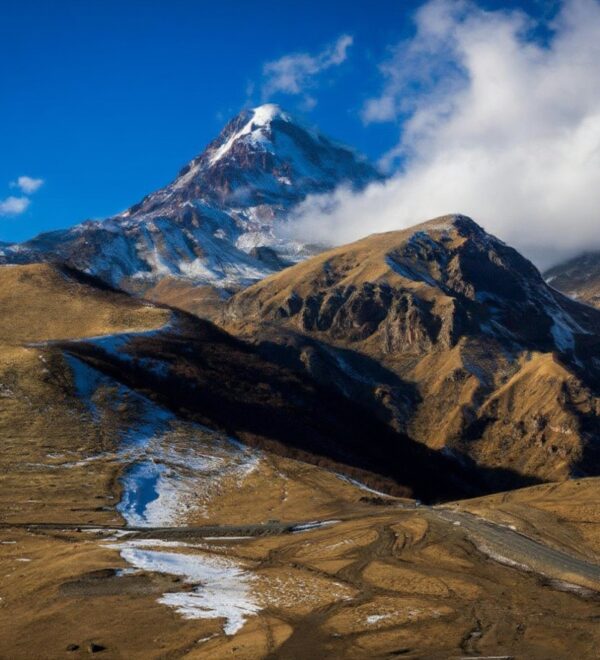
Kazbegi: The mountain town 3 hours north of Tbilisi, 1,750 metres altitude, with the Gergeti Trinity Church at 2,170m above it. The marshrutka from Didube metro station costs around 10–15 GEL. The walk up to the church takes 45–60 minutes. The view of the Caucasus ridge from the church at dawn — before the tour groups arrive — is the best single hour in Georgia. Full guide at Kazbegi Travel Guide.
Tbilisi Nightlife: The Part That Gets Its Own Section
Tbilisi has a legitimate claim to being one of Europe’s best cities for electronic music. This is not hype — it is a fact that has been independently verified by enough people that the city now appears on lists it would not have appeared on ten years ago.
The clubs that drive this reputation are in the Old Town and the areas around it — Bassiani (in the basement of a former swimming pool, widely considered the best club in the city), Khidi (under a bridge over the Mtkvari River), and the smaller venues around Fabrika. Entry to Bassiani runs 25–40 GEL (~£7–11); the door policy is selective, and they do turn people away. Dress for a club night, not for a tourist. Don’t take photos on the dancefloor.
If clubs aren’t the reason you’re in Tbilisi, this section is not relevant to you and you can ignore it. The wine bars and the sulphur baths are sufficient for a very good time. But if you came specifically for the Tbilisi club scene, it’s real and it delivers.
Practical Information
Currency: Georgian Lari (GEL). 1 GEL ≈ £0.28 / $0.36 at the time of writing. ATMs are widely available in the Old Town and Vera district. Most restaurants and hotels accept card. Street food, marshrutkas, and small shops are cash-only. Bring GEL from an ATM; exchange desks offer worse rates.
Language: Georgian (ქართული) uses its own unique script — the Mkhedruli alphabet — which you will not be able to read on arrival and this is fine. English is widely spoken in tourist areas and by most young Georgians. The Georgian words worth learning: gamarjoba (say: gah-mar-JO-bah — hello), madloba (say: mad-LO-ba — thank you), and gaumarjos (say: gaw-mar-JOS — cheers, for toasting). This last one is the most important.
Visa: Citizens of most European, North American, and Australian nationalities can enter Georgia visa-free for up to 365 days. Check the current list at the Georgian Ministry of Foreign Affairs website — it’s one of the most permissive visa policies in the world. No visa on arrival queues, no forms to fill in on the plane. You simply arrive.
Safety: Georgia is very safe for independent travellers. For the full picture including specific regional considerations around South Ossetia: Is Georgia Safe?
The Confession: What I Got Wrong About Getting to Kazbegi
Right, this is the one I tell people before they go.
I boarded the 8am marshrutka from Didube metro station heading north. Confident. Had my bag. Had my trail shoes. Was mentally already at the Gergeti Trinity Church.
The marshrutka was going to Gudauri. Not Kazbegi. Gudauri is a ski resort 50km south of Kazbegi. These are not the same destination. The driver found my situation considerably funnier than I did. I got there eventually via a taxi that cost more than the entire original budget for the day.
The Kazbegi marshrutka leaves from Didube metro station, platform 5, destination board showing Kazbegi. The Gudauri marshrutka looks identical. Check the destination board. Check it when you get on. Check it when someone asks where you’re going and laughs before answering.
Where to Stay in Tbilisi
Stay in Sololaki, Vera, or the Old Town area. These three districts put you within walking distance of most of what matters and feel like actually living in the city rather than visiting it.
Nino at the guesthouse on Irakli Abashidze Street — my landlady from year one — has opinions about every restaurant in Vera district and is correct about most of them. Ask wherever you’re staying for the local restaurant recommendation. In Tbilisi, the answer will be specific and it will be good.
Tbilisi Budget: What Things Cost
Tbilisi is affordable by European standards but not as cheap as it used to be. Budget travellers can manage on 60–85 GEL/day (~£17–24 / ~$22–31) for a hostel dorm, street food, metro rides, and free sightseeing. Mid-range — guesthouse private room, sit-down meals, a wine bar evening — runs 190–330 GEL/day (~£53–92 / ~$68–119).
The main costs: accommodation is the biggest variable. Metro is negligible. Food is cheap if you’re eating Georgian (a full meal with wine for two: 80–120 GEL). The sulphur bath private room is expensive relative to everything else but worth it once.
For the full Georgia cost breakdown: Georgia Budget Per Day.
FAQ: Tbilisi Travel Guide
- How many days do you need in Tbilisi?
- Three days minimum — two for the city (Old Town, sulphur baths, food, Fabrika) and one for a day trip to Mtskheta or the Kakheti wine region. Two days is enough to see the main things; three is where Tbilisi starts to make sense as a place rather than a checklist of attractions.
- What is Tbilisi known for?
- Old Town with carved wooden balconies, sulphur baths built on natural sulphur springs, Georgian amber wine (the qvevri method, 8,000 years old, UNESCO heritage), khinkali dumplings, and — increasingly — a nightlife and electronic music scene that draws visitors specifically for the clubs. It also has one of the best day-trip networks in the region: Mtskheta, Kazbegi, and Kakheti wine country all within three hours.
- Is Tbilisi safe to visit?
- Very. Georgia consistently ranks among the safest countries for independent travel in the region — low violent crime, straightforward logistics, warm hospitality. The main practical caution is taking the right marshrutka (see above — the Kazbegi and Gudauri marshrutkas leave from the same station). For the full safety picture: Is Georgia Safe?
- How much does Tbilisi cost per day?
- Budget: 60–85 GEL/day (~£17–24) covers a hostel dorm, Georgian food, the metro, and free sightseeing. Mid-range: 190–330 GEL/day (~£53–92) for a guesthouse private room, sit-down meals at proper restaurants, and a wine bar evening. The sulphur bath private room (130–200 GEL/hour) sits outside the daily budget — factor it in separately for the day you go.
- What is the best time to visit Tbilisi?
- May–June and September–October. Spring is green and mild (18–24°C); autumn is warm and the wine harvest (rtveli) happens in Kakheti in September–October, which is the best possible time to visit the wine region. July and August are hot in the city (30–35°C); the mountains are excellent in summer. October brings Tbilisoba, a city festival worth being there for. Full breakdown: Best Time to Visit Georgia.
- Is Tbilisi worth visiting?
- Yes — it’s one of the most interesting capital cities in Europe and the Caucasus, with a genuine culture (food, wine, architecture, music) that isn’t a reconstruction for tourists. The combination of Old Town history, sulphur baths, and a legitimate wine tradition on the doorstep of the Caucasus mountains is unusual anywhere in the world. Budget three days and go.
Tbilisi’s Geopolitical Context: What You Should Know
Tbilisi is 80km south of South Ossetia — an occupied territory controlled by Russia since the 2008 war. Georgia considers it sovereign territory. Russia does not. This is not abstract: the conflict is still a political reality, South Ossetia’s administrative boundary is visible on maps as a line that shouldn’t exist, and Georgia’s ongoing EU accession talks (suspended by the government in late 2024, resulting in significant protests on Rustaveli Avenue) reflect a country still navigating its relationship with Russia, Europe, and its own political direction.
For the trip you’re actually taking — Tbilisi, Kazbegi, Kakheti — none of this changes the practical safety picture. Tbilisi is safe. The wine country is safe. Kazbegi is safe. South Ossetia is on the map; it is not on your itinerary.
What the context changes is what you understand when you look at the city. The sulphur baths have been here since the 5th century through empires, invasions, Soviet rule, and a 2008 war. The carved wooden balconies of Sololaki survived all of it. The qvevri wine method survived the Soviet period when collective farms tried to replace it with stainless steel. These things are still here not because nothing happened, but because what happened didn’t manage to stop them.
The Honest Summary
Tbilisi will keep you longer than you planned. Most people I know who came for a week extended to two. Some of them are still here. I’m still here.
Three days: Old Town, Abanotubani, khinkali, qvevri wine, Mtskheta. That’s the version that makes you understand why. The version that makes you extend the ticket is the part that happens after that — when you’ve found the wine bar, figured out the marshrutka system, and realised the khinkali broth technique is actually a skill.
Safe travels. Drink the qvevri wine. Don’t get on the Gudauri marshrutka.