Last updated: June 2026 — travel advisory status verified June 2026.
Georgia is safe to travel. Violent crime against tourists is rare. The US State Department rates it Level 2 (Exercise Increased Caution) — not because people are getting robbed on Rustaveli Avenue, but because of the frozen conflict zones in South Ossetia and Abkhazia, and the unpredictable regional situation near the Russian border. For the trip most people are actually taking — Tbilisi, Kazbegi, Kakheti wine country — the safety picture is genuinely reassuring.
I’ve lived in Tbilisi for three years. I walk home from Bassiani at 4am. I leave my laptop at wine bars in Vera district when I go to the bathroom. I’ve done solo day trips to Kakheti, solo marshrutka rides up the Georgian Military Highway, and one accidental overnight in Gudauri (long story). I have never felt unsafe in Georgia.
But the Level 2 rating exists for reasons, and you deserve the actual explanation — not a reassuring wave of the hand.
What the US Level 2 Rating Actually Means
The US State Department rates Georgia Level 2: Exercise Increased Caution. The UK Foreign, Commonwealth and Development Office is more granular — it grades different parts of the country differently, which is the honest approach.
The Level 2 rating is driven by three things:
1. South Ossetia and Abkhazia. These are occupied territories controlled by Russia following the 2008 war. South Ossetia declared independence with Russian backing. Abkhazia, on the Black Sea coast, has a similar status. The Georgian government considers both its sovereign territory. Russia doesn’t. The FCDO advises against all travel to both regions, and against all but essential travel to areas adjacent to the South Ossetian administrative boundary line.
This matters enormously for your trip planning. Do not attempt to enter South Ossetia or Abkhazia. Not because of crime — because you will be in a legal and jurisdictional grey zone with no consular protection.
2. The Russia proximity. Georgia and Russia have no diplomatic relations. The Georgian Military Highway runs from Tbilisi north to the Russian border through Kazbegi. You can travel this road freely — it’s the main road to Kazbegi and one of the great drives in the Caucasus. But the border crossing into Russia is closed to most travellers, and the geopolitical environment means situations can change.
3. Protests and civil unrest. Georgia had significant protests in late 2024 and into 2025, largely around the government’s decision to suspend EU accession talks. These were concentrated on Rustaveli Avenue in central Tbilisi. They were mostly peaceful. They were also, at times, met with water cannon and tear gas. If you’re in Tbilisi and see a large crowd gathering on Rustaveli, give it space.
•Ben’s Honest Take
The Level 2 rating sounds alarming. It shouldn’t. Level 1 is “normal precautions” — the same rating as France. Level 2 is “be aware of your context.” That’s the right call for a country with two occupied territories and ongoing geopolitical tensions. It doesn’t mean Tbilisi is dangerous. It means know where the conflict zones are. You’re planning a wine tour of Kakheti, not a geopolitical expedition to Tskhinvali.
Street Safety: What Tbilisi Is Actually Like
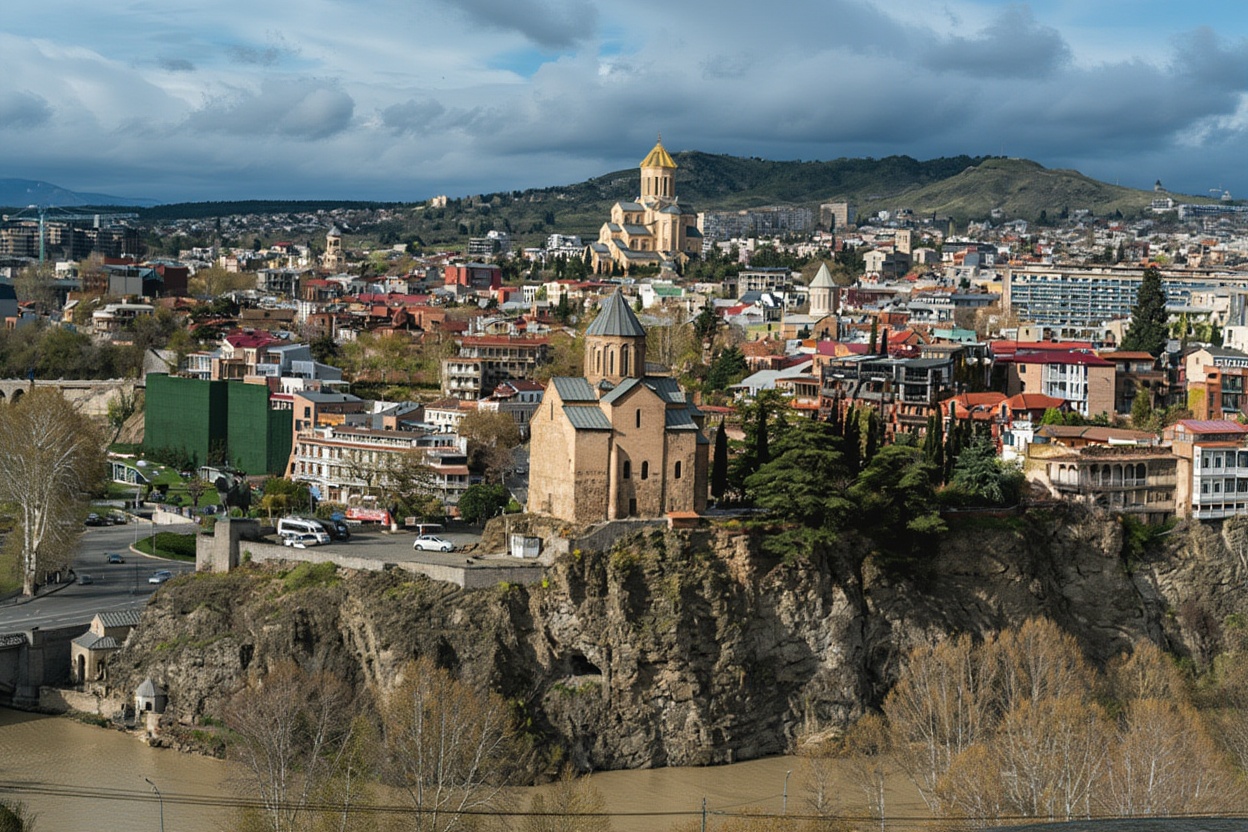
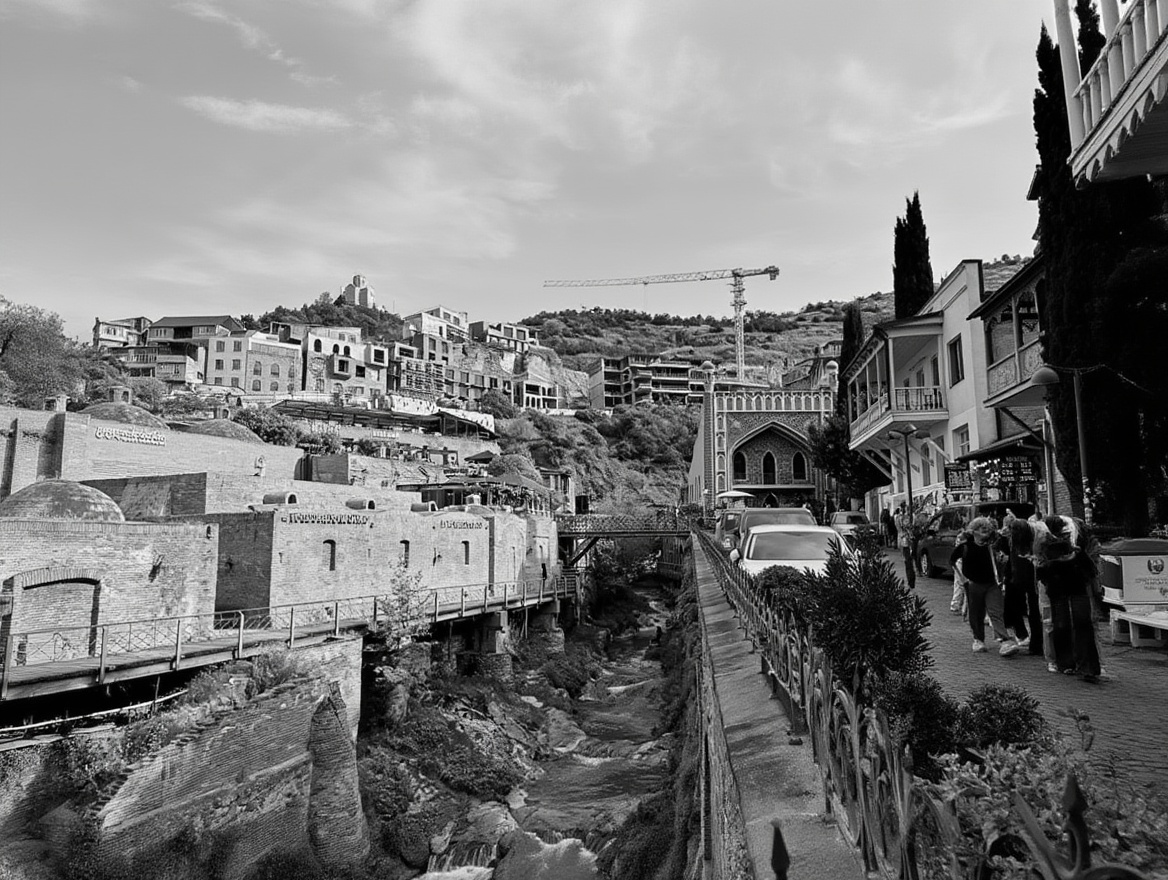
Tbilisi is walkable at night. The Old Town — Abanotubani, the sulphur baths district, Narikala fortress — is safe after dark. Rustaveli Avenue, the main thoroughfare, is busy until midnight. Vera district (where I live, ₾800/month for a one-bedroom) is quiet, residential, and fine.
Violent crime against tourists: rare. Georgia’s crime rate is one of the lower ones in the region. Pickpocketing exists in the Dry Bridge Market and Dezerter Bazaar in peak season — keep your phone in a front pocket, watch your bag in the market crush. That’s the level of vigilance required.
The nightlife zone — Fabrika (the old Soviet sewing factory repurposed as a creative hub), the clubs around Elia Chavchavadze Avenue — is busy on weekends. Bassiani is one of Europe’s better techno clubs. The scene is young, international, and normal. I have never seen a fight at Fabrika. I have seen many excellent natural wines.
The one Tbilisi safety note worth flagging: nightclubs with overcharging. A handful of venues — not the established ones — have been known to present inflated bills to tourists. The fix: check the menu prices before ordering, pay by card where possible, and stick to the well-known venues (Fabrika, Bassiani, Shavi Lomi for dinner).
The Taxi Trap at Tbilisi Airport
This is the one that catches people most reliably. Arrive at Tbilisi International Airport, walk through arrivals, and you will be approached by taxi drivers offering rides to the city. The quoted price is often 80–100 GEL (~£22–28). The actual reasonable price for a taxi from the airport to Tbilisi centre is 30–40 GEL (~£8–11).
What to do:
– Use Bolt — the app works at Tbilisi airport. A Bolt from the airport to central Tbilisi is typically 25–35 GEL (~£7–10). Call one from outside arrivals.
– Alternatively, the Bus 37 runs from the airport to Liberty Square for 1 GEL (~28p). It’s slow and doesn’t run late at night, but it works.
– If you want a traditional taxi, walk past the arrivals hall touts to the official taxi rank outside. Agree the price before the bags go in.
I took a tout taxi on my first night in Tbilisi. Paid 80 GEL for a journey worth 35. The driver was perfectly pleasant. I was just tired and didn’t know. Now you know.
Currency Exchange: The Old Trick
Georgia uses the GEL (Georgian lari). Rate at time of writing: 1 GEL ≈ £0.28 / $0.36.
Exchange bureaux are everywhere in Tbilisi — the best rates are typically at the currency exchange kiosks on Rustaveli Avenue and Freedom Square, not at the airport (predictably) and not in hotels. The Tbikreditbank ATMs generally give decent rates.
The old trick: an exchange booth advertises a favourable rate on a large sign, but the actual rate they apply when you hand over the cash is worse. Always check what you’re getting on the slip before they finalize. Or just use Revolut/Wise — the Georgian GEL is a supported currency on both.
•BEN’S PICK
The currency exchange kiosks on Rustaveli Avenue near the Marriott Hotel consistently offer competitive rates for GBP, EUR, and USD. Compared the rate there against three other kiosks in October 2025 — it was the best of the four.
Safety Outside Tbilisi
Kazbegi: Extremely safe. Small mountain town (population 1,500) at 1,750 metres. The main concern is altitude and weather — not crime. The Gergeti Trinity Church hike (45 minutes each way) involves a real path with some exposure. Go before 10am before the tour groups arrive. Take water.
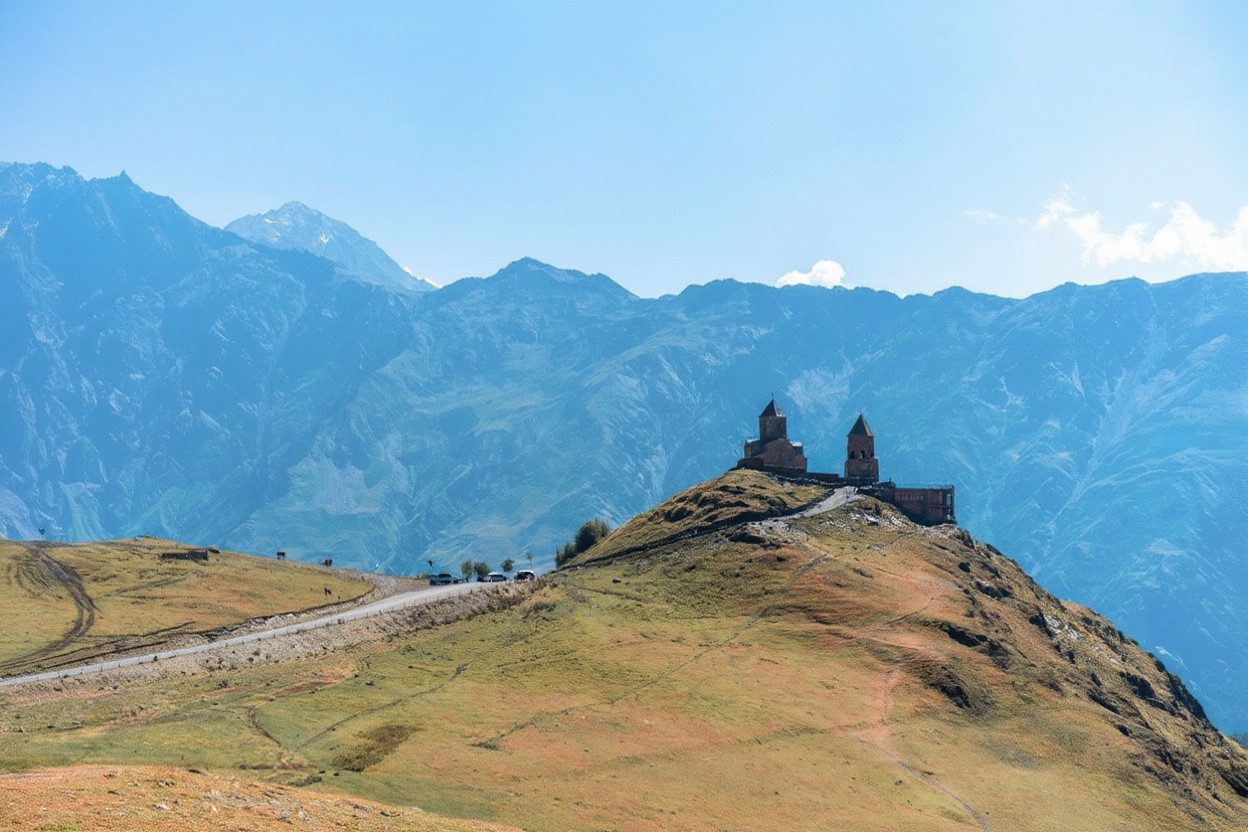
The Georgian Military Highway to Kazbegi passes through the Dariali Gorge. The road is fine in summer. In winter (November–March) it can be closed by snow — check conditions.
Kakheti wine country: The wine regions east of Tbilisi (Telavi, Sighnaghi, Kvareli) are quiet, rural, and safe. Giorgi — the winemaker in Kvareli who started this whole move to Georgia for me — has never mentioned a security concern in four years of conversations. The main risk in Kakheti is drinking too much excellent qvevri wine and missing the marshrutka back.
Batumi: Georgia’s Black Sea coast city is busier, more tourist-facing, and safe. The promenade is well-lit and populated. Standard coastal vigilance applies.
Border regions to note: The South Ossetia administrative boundary line runs roughly 80km north of Tbilisi. You are not near it in the normal Tbilisi–Kazbegi–Kakheti circuit. The Abkhazia administrative boundary is on the western Black Sea coast — again, not on most tourist routes. Stay aware of where these zones are, and don’t approach them.
Solo Female Travel in Georgia
Georgia is, in general, a safe destination for solo female travellers. I know multiple women who’ve done solo Georgia trips without incident — Tbilisi, Kakheti, Kazbegi, the full circuit.
Context worth having: Georgia is socially conservative in some respects, particularly outside Tbilisi. It’s a deeply Orthodox Christian country. This rarely translates into hostility towards foreign tourists, but it does mean that in rural areas, solo female travellers may attract more attention than in western European cities. Most of this attention is curiosity rather than anything threatening.
Tbilisi itself is cosmopolitan. The nightlife is genuinely mixed and international. The neighbourhood of Fabrika on a Friday evening has the same vibe as east London. Walking home from a bar in Vera at midnight is fine.
Practical notes for solo female travel:
– Book accommodation in advance for Kazbegi in July and August — guesthouses fill up and showing up without a booking leaves you with fewer options
– Use Bolt for airport and late-night transport
– The marshrutka to Kazbegi is fine — busy with backpackers and Georgian families
– Avoid accepting drinks from strangers in clubs you don’t know — the standard precaution anywhere
Health and Medical
Tbilisi has reasonable private hospitals — Aversi Clinic and Evex are the main private groups. In an emergency, these are functional. For anything serious, medical evacuation to a western European country is the correct call, which means travel insurance is not optional — it’s how you fund the evacuation if it happens.
Practical points:
– Water in Tbilisi is generally safe to drink. I drink it. In rural and mountain areas, use bottled.
– Food safety: Georgian food is fresh and the hygiene in restaurants is generally fine. Street food (churchkhela, bread from the tone oven) is safe and excellent.
– Altitude: Kazbegi sits at 1,750m. The Gergeti Trinity Church is at 2,170m. If you’ve come from sea level, take it easy on the first day. Headaches are common and normal.
– The summer heat in Tbilisi (July–August) is real — 35°C+. The Narikala fortress hike at noon is how tourists get heatstroke. Go before 9am or after 5pm.
The Azerbaijan Stamp Issue
If you’re planning to visit both Georgia and Azerbaijan, and then Armenia — or vice versa — you need to know this: Armenia and Azerbaijan have no diplomatic relations. There are no direct flights. The land border is closed. If you have an Azerbaijani stamp in your passport and arrive in Armenia, you may face questions. The reverse is also true.
The practical solution: visit Azerbaijan and Armenia on separate trips, or on the same trip but do not show stamps from one when entering the other. Many travellers do Georgia and Armenia together, then Georgia and Azerbaijan separately. This works cleanly.
BEN’S PICK: If forced to choose one trio trip, the correct order is Azerbaijan first (fly Baku → Tbilisi), then Georgia, then Armenia. Azerbaijan immigration sometimes refuses entry to people with Armenian stamps. Armenia doesn’t apply the same rule as strictly. But this changes — check current entry requirements before you book.
My Honest Assessment
Georgia is genuinely safe for the trips most people take. Tbilisi is walkable, the wine country is peaceful, and Kazbegi is the kind of place where the main drama is whether the clouds will clear in time to see the mountain.
The geopolitical context is real — South Ossetia, Abkhazia, the proximity to Russia, the 2024 protests — and you should understand it. But understanding it mostly means knowing which regions to avoid (the occupied territories) and staying aware of political developments when you’re there.
The practical watch list: airport taxis (use Bolt), currency exchange (use the Rustaveli kiosks), and a handful of tourist-trap nightclubs in Tbilisi. That’s it.
Georgia is one of those places that earns loyalty. People come for a week and start looking at flat prices. Giorgi warned me this would happen. He was right.
Right. Questions in the comments. Drink the qvevri wine. Go to Kakheti before Tbilisi — Tbilisi will still be there.
What to Do in an Emergency in Georgia
Georgia has functional emergency services in Tbilisi and, to a lesser extent, in the major regional centres. Understanding the system before you need it is sensible.
Emergency numbers:
– 112 — general emergency number. Connects to police, ambulance, fire.
– 122 — police specifically
– 111 — ambulance specifically
– 119 — mountain rescue. If you’re hiking in the Greater Caucasus — Kazbegi, Svaneti, the Borjomi-Kharagauli National Park — and something goes wrong, this is the number. Mountain rescue in Georgia has improved significantly over the past decade but response times in remote areas are still measured in hours, not minutes.
Hospitals in Tbilisi:
– Aversi Clinic — Tbilisi’s main private clinic network, several locations, English-speaking staff at the main Chavchavadze Ave branch.
– Evex Medical Centre — the other major private hospital group. Multiple locations including Vazha-Pshavela Ave.
– Iashvili Children’s Central Hospital — if travelling with children.
– For anything serious: the private hospitals handle most issues adequately for stabilisation. For complex surgery or specialist treatment, medical evacuation to a western European country or Turkey (Istanbul is 3 hours by flight) is the correct call.
Outside Tbilisi: Kutaisi has regional hospitals. Batumi has the Batumi Medical University Hospital. For Kazbegi — which is where emergencies are most likely given the hiking terrain — Stepantsminda has a basic clinic; serious cases get transferred to the military hospital in Kazbegi (the town) or Tbilisi.
Travel insurance: Georgia is not in the EU. There is no reciprocal healthcare agreement with the UK. Aversi and Evex are private hospitals that will bill you directly — a hospital stay for a serious injury runs into thousands of GEL very quickly. Buy comprehensive travel insurance with medical evacuation before you go. This is not a suggestion.
UK Embassy: 51 Krtsanisi Street, Tbilisi. +995 32 227 4747. The embassy offers emergency consular support for UK nationals — passport replacement, liaison with local authorities, next-of-kin notification.
Consular note on South Ossetia and Abkhazia: The UK Embassy in Tbilisi cannot provide consular assistance if you are in South Ossetia or Abkhazia. These are territories where the UK has no diplomatic presence and no access. This is one of the concrete reasons the FCDO advises against travel there, beyond the geopolitical risks.
Road Safety in Georgia — The Honest Version
Georgia’s road safety statistics deserve their own section because this is, genuinely, the safety issue most likely to affect tourists — more than crime, more than political instability.
Georgia has one of the higher road traffic fatality rates in Europe. The reasons are multiple: a driving culture that includes frequent overtaking on mountain roads, variable road quality, and a recent rapid increase in traffic that the road infrastructure hasn’t kept pace with.
What this means in practice:
The Georgian Military Highway to Kazbegi is one of the great drives in the Caucasus — through the Dariali Gorge, past the Ananuri Fortress, up to Gudauri and over the pass. It’s also a road where local drivers travel significantly faster than feels comfortable, where overtaking happens in places that make you grip the seat, and where the mountain weather can change conditions in 20 minutes. Drive this road in daylight, at a speed that feels controlled, and accept that the marshrutka driver coming the other way probably grew up on this road and isn’t worried.
Tbilisi city driving is chaotic but slow-speed chaos. The Rustaveli–Chavchavadze axis has heavy traffic, aggressive lane changes, and pedestrian crossings that local drivers treat as advisory. As a pedestrian: make eye contact, wait for a gap, don’t assume you have right of way even at a crossing.
Rental car advice: If you’re hiring a car for the Kakheti wine route or the Kazbegi drive, choose an automatic if you haven’t driven mountain roads before — the manual gearwork on steep descents in the Caucasus requires confidence. A basic sedan is fine for Kakheti. The road to Mestia in Svaneti requires something with better clearance in wet conditions.
The marshrutka option: for Kazbegi specifically, the marshrutka from Didube Bus Station in Tbilisi (4am–3pm departures, ~10 GEL) is driven by people who know every curve of that road. If you’re not confident driving it yourself, let them drive it. The same applies for Kutaisi and Batumi connections.
Drink driving: Georgia has a zero-tolerance drink drive policy — 0.0% blood alcohol limit for drivers. Enforcement is active, particularly on exit roads from Kakheti wine country on weekends. This is not the place to drive after wine tasting. Either appoint a designated driver, take a marshrutka, or arrange a driver for the day.
- Is Georgia safe for tourists in 2026?
- Yes. Georgia is safe for the trips most visitors take — Tbilisi, Kazbegi, Kakheti wine country. The US State Department Level 2 rating reflects the frozen conflict zones (South Ossetia, Abkhazia) and proximity to Russia, not street crime in tourist areas. Violent crime against tourists is rare. The main practical risks are airport taxi overcharging and a handful of nightclub scams in Tbilisi. Take normal precautions.
- Is Tbilisi safe at night?
- Yes. Tbilisi Old Town and the Vera/Vake districts are safe to walk at night. The nightlife scene (Fabrika, Bassiani, Rustaveli Avenue bars) is active and safe. Petty theft exists in busy market areas during the day — Dry Bridge Market, Dezerter Bazaar. Standard vigilance: phone in front pocket, bag worn in front in crowds. Walking home from a bar at midnight is not a concern.
- Is Georgia safe for solo female travellers?
- Generally yes. Solo female travellers complete Georgia trips regularly without significant incidents. Tbilisi is cosmopolitan and the nightlife is mixed and international. In rural areas, more conservative social norms mean more attention from locals — usually curiosity rather than hostility. Use Bolt for late-night transport, book accommodation in advance for Kazbegi, and apply the same awareness you’d use in any unfamiliar city.
- What is the US travel advisory for Georgia?
- Level 2: Exercise Increased Caution. The advisory flags the South Ossetia and Abkhazia conflict zones, and the generally tense regional geopolitical environment. It does not reflect high street crime. The UK FCDO advises against travel to South Ossetia and Abkhazia specifically, and against all but essential travel to areas near the South Ossetian administrative boundary line. For standard tourist destinations — Tbilisi, Kazbegi, Kakheti, Batumi — normal precautions apply.
- Can I visit both Armenia and Azerbaijan on the same trip?
- Technically yes, but it requires care. Armenia and Azerbaijan have no diplomatic relations — no flights between them, closed land borders, and both countries can question travellers about visits to the other. The practical solution is to do Georgia + Armenia on one trip, and Georgia + Azerbaijan on a separate trip. If combining all three, visit Azerbaijan first (before getting an Armenian stamp) and be prepared for questions at both borders.
- Should I avoid South Ossetia and Abkhazia?
- Yes — do not attempt to visit either. South Ossetia and Abkhazia are occupied territories with Russian backing. Georgia considers them its own sovereign territory. The UK FCDO advises against all travel to both. If you enter from the Russian side, Georgia may refuse you entry and consider it an illegal border crossing. There is no consular protection available in these territories. These are not obscure warnings — take them seriously.
Internet, SIM Cards, and Connectivity
This comes up constantly in the safety context because people worry about being out of contact in rural areas. The honest picture:
Tbilisi: Fast, reliable internet everywhere. 4G coverage throughout the city. Silknet and Magti are the main providers; Magti has slightly better rural coverage. A local SIM card costs 5–10 GEL and gives you data that’s fast enough for maps, Bolt, and video calls. Buy one at the airport or any Magti/Geocell outlet in the city.
Kazbegi and the Georgian Military Highway: Coverage is reasonable along the main road. In Stepantsminda village itself: fine. On the Gergeti Trinity Church hike: coverage drops in the final section near the church. Download offline maps (Maps.me or Google Maps offline) before you start. This is not a safety risk; it’s just sensible.
Svaneti: The road from Zugdidi to Mestia has patchy coverage. Mestia town has reasonable 4G. The trail to Ushguli has extended sections with no coverage — again, offline maps are the answer. The mountain rescue number (119) will sometimes connect even with weak signal.
Kakheti: Good 4G coverage throughout the main valley and in all wine towns (Telavi, Sighnaghi, Kvareli). The back roads to smaller wineries may have intermittent coverage. Ask at your guesthouse about connectivity before driving somewhere remote.
Safety for LGBTQ+ Travellers
This section needs to exist because the picture is nuanced and “Georgia is safe” is not a complete answer in this context.
Georgia’s legal protections for LGBTQ+ people are weak and the social climate is, in many areas, actively hostile. The Orthodox church has significant political influence and has been central to protests against Pride events in Tbilisi. In 2021, anti-Pride groups attacked journalists covering a Pride event. The Georgian government has introduced constitutional amendments and laws that codify conservative positions on family and sexuality.
What this means practically: Tbilisi has a genuine LGBTQ+ scene — bars and clubs operate openly, particularly around Fabrika and the Marjanishvili area, and the city’s creative class is significantly more liberal than national politics. Same-sex couples in the Old Town or Vera district will generally experience no direct hostility. Public displays of affection may attract unwanted attention depending on the area.
Outside Tbilisi — in rural areas, village guesthouses, and conservative communities — the environment is less predictable. Georgian hospitality is real and warm; it does not necessarily extend to social liberalism in all its forms.
The honest assessment: Tbilisi for LGBTQ+ travellers requires the same awareness you’d apply in any country with conservative social norms and a legal framework that doesn’t protect you. It is not Ukraine or Hungary in the worst sense. It is not Amsterdam. For solo LGBTQ+ travellers, particularly outside Tbilisi, travel insurance covering emergency assistance and awareness of the consular support situation is more important than in most Western European destinations.