Mestia & Svaneti Travel Guide: Georgia’s Mountain Region, Properly Explained
Updated June 2026 — Ben Fletcher has been based in Tbilisi for three years and has been to Svaneti four times, including one week-long Mestia-to-Ushguli trek in September and two shorter visits that turned into longer stays. Prices verified June 2026.
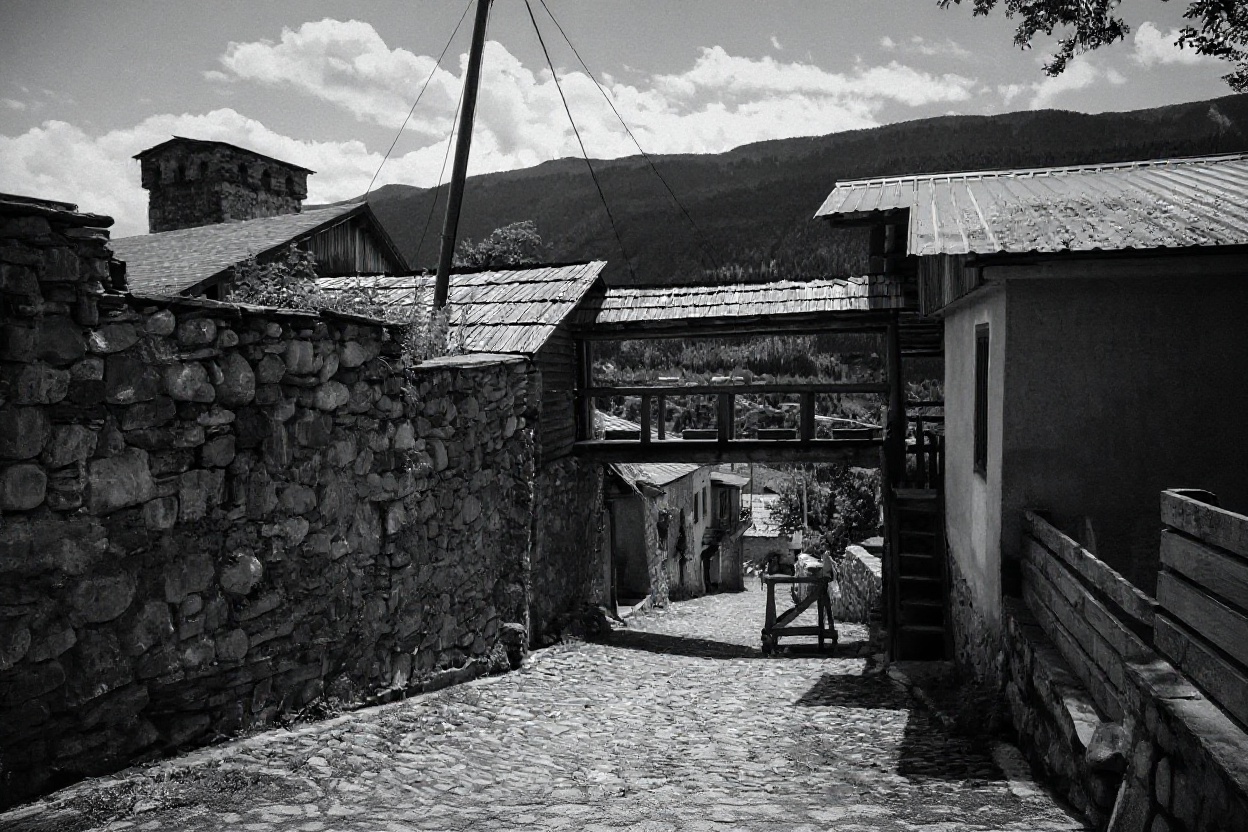
Svaneti is the part of Georgia that makes people rearrange their flights home. The medieval stone towers, the Caucasus ridge at close range, Ushguli at 2,100 metres with Mt. Shkhara filling the sky behind it — none of this photographs the way it looks in person. Plan at minimum four days. Five is better. The people who plan two days and then extend to eight are not doing anything wrong.
What Svaneti Actually Is (and Why It’s Different)
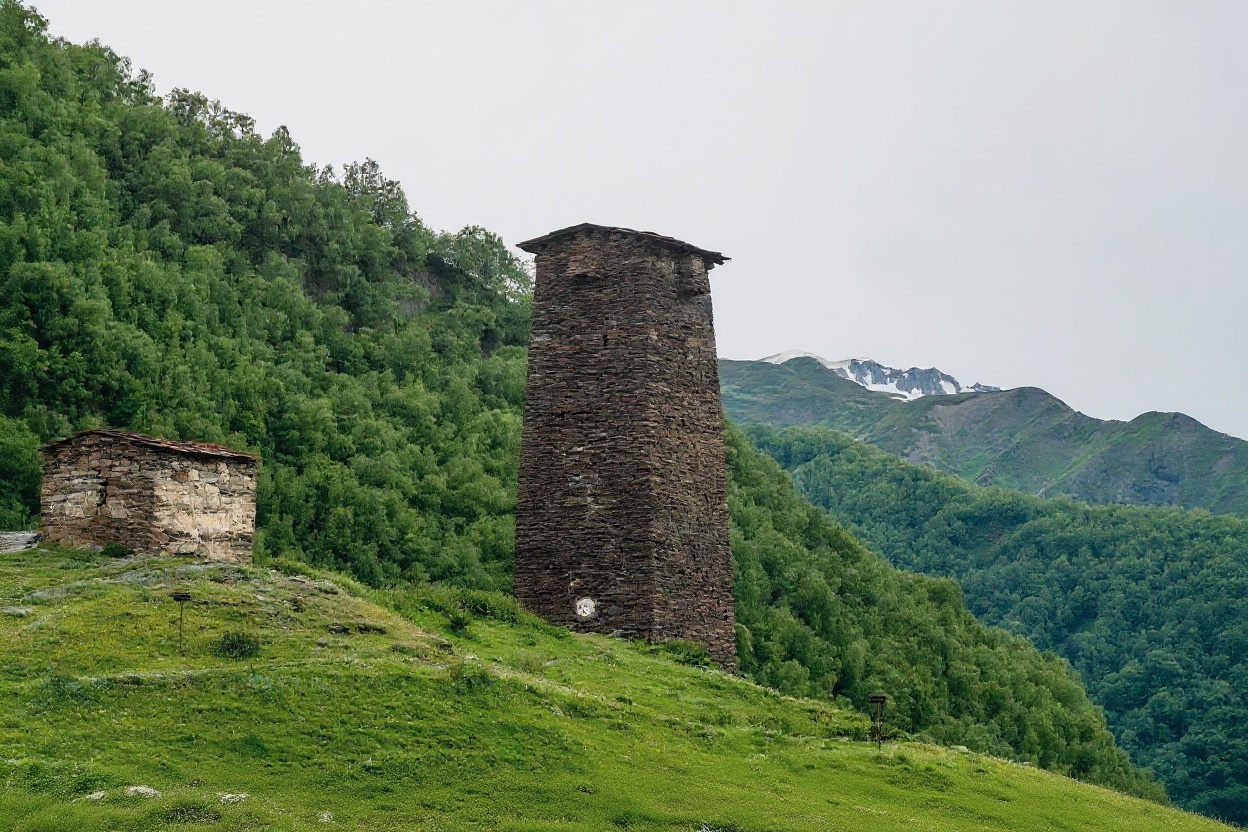
Upper Svaneti is a high mountain region in northwestern Georgia, historically isolated enough that the Svans — a distinct ethnic and linguistic group within Georgia — developed their own culture, architecture, and language. Svan towers (koshki) date from the 9th to 13th centuries and were built for defensive purposes: hide the family valuables at the top, pull up the ladder, wait for the raiders to leave. Several hundred still stand.
The isolation was geographic as much as cultural. Svaneti sits between the Greater Caucasus ridge to the north — peaks above 4,000 and 5,000 metres — and the Egris Range to the south. The main road from Kutaisi to Mestia has only been properly paved in the last decade. Before that, access was genuinely difficult for much of the year.
The geography teacher in me needs to say this clearly: Svaneti is not the same as Kazbegi. Both are Georgian mountain regions with extraordinary scenery and a famous church. The differences matter. Kazbegi is 3 hours from Tbilisi, easier to reach, and has been heavily touristed for longer — it’s polished. Svaneti takes more effort to reach, the infrastructure is rougher, the trekking is more serious, and the whole experience is less mediated. Which you prefer depends on what you’re after. This guide is about Svaneti.
Mestia: The Base You’ll Stay Longer Than Planned
Mestia is the main town in Upper Svaneti — population around 2,500, administrative centre, and the place where you stay while organising everything else. It sits at 1,500 metres and on a clear day you can see 4,000-metre peaks from the main square. In July, the square has outdoor cafés and the energy of a mountain town that knows it’s having a moment. In January, those same cafés are serving people in ski gear. Both versions work.
The town is compact enough to walk in 20 minutes, but that walk takes you past a dozen intact medieval towers, a museum with medieval icons worth the detour from anywhere in Georgia, and enough guesthouse families offering churchkhela (walnut-stuffed grape juice candy) that you’ll be in sugar surplus by day two.
What Mestia is not: a polished tourist resort. The roads between guesthouses are often unpaved. The town centre has one main drag and several streets that tail off into residential neighbourhoods. The wifi is variable. The power goes out occasionally. None of this is a problem if you’ve calibrated your expectations correctly.
| Mestia & Svaneti at a Glance (2026) | |
|---|---|
| Mestia altitude | 1,500m |
| Ushguli altitude | 2,100m — highest permanently inhabited village in Europe |
| Distance Tbilisi → Mestia | 430km — 8–10 hours by marshrutka / 50 min by flight |
| Flight cost (Tbilisi → Mestia) | 50–85 GEL one way (~£14–24 / $18–31) — book weeks ahead |
| Marshrutka cost | 40–50 GEL (~£11–14) — leaves Didube terminal ~7–8am |
| Mestia → Ushguli (4WD) | 45km — 2.5–3 hours on rough road. Shared 4WD ~60–80 GEL/person |
| Mestia → Ushguli (trek) | 4–5 days — 75km, guesthouses en route |
| Guesthouse (B&B) | 40–70 GEL per person (~£11–20) — includes breakfast, often dinner |
| Best months | June–September for trekking; January–March for skiing |
| Currency | GEL — 1 GEL ≈ £0.28 / $0.36 |
The Svan Towers and the Museum
The towers are the visual signature of Svaneti and the reason most people have seen a photo of this place before arriving. There are around 175 intact towers scattered across Upper Svaneti, with the densest concentrations in Mestia itself and in the Ushguli village complex at the end of the valley.
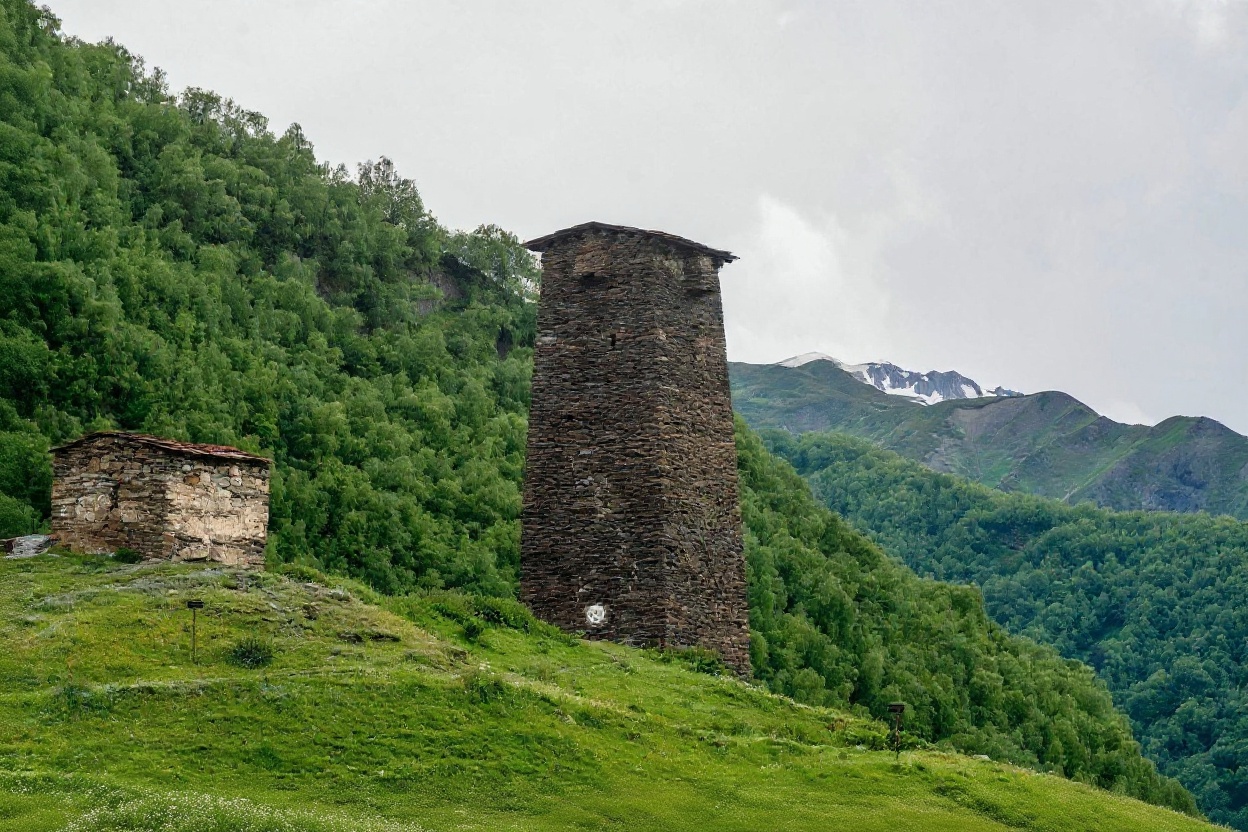
They’re built from rough-hewn stone — local limestone and schist — and rise 20 to 25 metres from ground level. The internal layout was functional: ground floor for animals, middle floors for the family, top floors as a refuge in times of raid. The building technique involves no mortar in some sections — interlocking stone held by gravity alone, which explains why they’re still standing after nine centuries.
Walking the tower district in Mestia takes about 45 minutes if you’re moving slowly and looking properly. Several towers are on private property — the families who own them may invite you up for a fee (5–10 GEL) or let you photograph from outside. Ask before entering.
Svaneti Museum of History and Ethnography (central Mestia, near the main square) is worth 90 minutes of your time. Entry is 10 GEL (£2.80 / $3.60). The collection includes medieval icons painted on wood (8th–12th century), gold and silver religious crowns, illuminated manuscripts, and traditional Svan weapons. The medieval icon collection alone is extraordinary — the craftsmanship is from a period before this region had any significant outside contact, which makes the quality more remarkable.
BEN’S PICK: The museum has an icon of the Archangel Gabriel from the 12th century that I’ve spent probably a combined hour in front of across four visits. It’s small, the gold is tarnished, and it’s in a modest case in a regional museum in a town of 2,500 people. It would be in the British Museum if the Svans hadn’t hidden it well enough during various invasions. Go slowly through this museum.
Koruldi Lakes: The Day Hike That Earns Everything
The Koruldi Lakes are at 2,700 metres above Mestia — a 14km round trip with 1,200 metres of elevation gain from the town. It is a serious hike. It’s also the best day walk in Georgia.
The trail starts from the Mestia cable car (which you can take up to save 600 metres of ascent — 15 GEL each way) or directly from town. Above the cable car station the path climbs through alpine meadows, past a summer shepherd’s camp at around 2,400 metres, and emerges above the treeline to views of the main Caucasus ridge that will make you stop walking and just stand there for a while.
The lakes themselves sit in a glacial cirque at 2,700 metres. In June they’re still partially frozen — blue-green water under a skin of ice at the edges. In September they’re clear and cold enough to stop you wanting to swim for more than 30 seconds. The mountains above them — Ushba (4,710m), Laila (4,008m), and the full Caucasus ridge — are at close enough range that you can see the individual snowfields.
Allow 5–7 hours for the full round trip on foot. Bring more water than you think you need, sun protection at altitude, and a layer for the top — the temperature drops significantly even in summer. The trail is waymarked but the upper section requires basic navigation. Don’t do this in mist or rain — the path gets slippery above 2,500m and the views are the whole point.
REAL TALK: I did the Koruldi hike in late September on a day that started clear and clouded over by 1pm. I was at the lakes when the cloud came in, got thoroughly wet on the descent, and arrived back in Mestia looking like someone who’d fallen in the Enguri river. The views at the top had been extraordinary. I’d do it again immediately. Check the forecast. Start early.
Chalaadi Glacier: The Easy Win
If the Koruldi hike is too much, or if you want a second walk that doesn’t require the same commitment, the Chalaadi Glacier trail is 3km from Mestia and an easy 8km round trip with minimal elevation gain. The trail follows the Chalaadi River through forest, emerges at a moraine, and ends at the terminal face of the glacier — a wall of blue-grey ice with the sounds of meltwater running beneath it.
Entry fee: 5 GEL (£1.40). Trail time: 2.5–3 hours return at a relaxed pace. Family-appropriate. The glacier is retreating — visibly, with marked stakes showing the front position in previous years — so if you want to see a glacier at close range, go sooner rather than later. This is true of most glaciers in the Caucasus at this point.
Ushguli: The Main Event
Ushguli is 45km from Mestia at the end of the Enguri Valley, at 2,100 metres above sea level. It’s a cluster of four villages that together form a UNESCO World Heritage Site, continuously inhabited since at least the 12th century, with a concentration of towers that makes Mestia look understated. The mountains behind it include Mt. Shkhara (5,068 metres — the highest peak entirely within Georgia), close enough that you can see the line where the permanent snow begins.
Getting to Ushguli from Mestia: the road is 45km of progressively deteriorating surface that requires a 4WD. A shared 4WD jeep from Mestia costs 60–80 GEL per person (£17–22) and takes 2.5–3 hours depending on road conditions. The road crosses several river fords — in snowmelt season (May) it can be closed. Most guesthouses in Mestia can arrange a jeep the night before.
A day trip to Ushguli is possible — you’d have about 3 hours there before needing to start back for the return journey timing. It’s not ideal. If you can stay one night in Ushguli, do it. The evening and morning light on Shkhara are different from the midday version and the village empties of day-trippers by 5pm. A guesthouse in Ushguli costs 40–60 GEL per person including dinner and breakfast.
KNOW BEFORE YOU GO: I ignored advice about booking Ushguli accommodation ahead for an August visit. Arrived to find every guesthouse in all four villages full — it was peak trekking season and a group of Italian hikers had taken the last rooms two days earlier. I ended up on the floor of a family’s living room for 20 GEL. They were extremely hospitable about it. Do not replicate this. Book your Ushguli guesthouse before you leave Tbilisi, ideally a week ahead in July and August.
The walk around Ushguli itself takes about 90 minutes to do properly — the four villages are connected by rough tracks, the tower density is extraordinary (some are nearly touching), and the path that continues above the village toward the Shkhara glacier is worth an hour if you have the energy. The last section of this path brings you to the lateral moraine of the Shkhara glacier with the peak directly above. The scale is significant.
Mestia to Ushguli Trek: The Multi-Day Route
The Mestia-to-Ushguli trek is one of the iconic long walks in the Caucasus — 75km over 4 to 5 days, crossing two high passes, passing through three or four traditional Svan villages, and ending in Ushguli. If you have the time and the fitness, it’s the best way to see Svaneti.
The route crosses the Chkhunderi Pass (2,741m) and the Zagaro Pass (2,623m). Both are straightforward in clear weather and require care in mist — the paths are marked but the upper sections are remote enough that getting lost would be serious. Most people do this with a guide for the first crossing, or at minimum with a downloaded trail map and a full overnight kit.
Key practicalities: guesthouses in the intermediate villages (Zhabeshi, Adishi, Iprari) have beds for trekkers — book these ahead in summer. The guesthouses are basic — mattress on the floor in some cases — and the food is home-cooked Svan food, which is excellent. Budget 50–70 GEL per night including dinner and breakfast.
The trek can also be done in reverse (Ushguli to Mestia) if you want to end your Svaneti time in the larger town. Either direction works. What doesn’t work is starting the trek in late September without checking the forecast — both passes can get snow from early October and are not something you want to attempt in bad visibility.
Svan Food: What You’ll Actually Be Eating
Svan cuisine is distinct from Georgian food in ways that matter to the experience. The signature dishes:
Kubdari — the Svan equivalent of khachapuri but not the same thing. Thick dough filled with minced pork and beef, heavily spiced with Svan salt (a blend of garlic, blue fenugreek, coriander seed, and chilli), cooked in a wood oven. One kubdari is a meal. Costs 8–12 GEL (£2.20–3.40) at a guesthouse or café.
Tashmijabi — mashed potato with sulguni cheese melted through it, served in a clay pot still bubbling. The texture is elastic in a way that’s hard to describe and very easy to eat too much of. Standard side dish at every guesthouse dinner, usually included in the price.
Chvishtari — cornbread with melted cheese inside, fried in butter. Breakfast item, afternoon snack, something to eat while walking. Budget 3–5 GEL per piece from village shops.
Svan salt (Svanuri marili) is the spice blend that goes into or on top of almost everything. Buy a jar at the market in Mestia — 5–8 GEL, better than anything you’ll find in Tbilisi airport, and a genuinely useful souvenir. Use it on eggs. Use it on potatoes. Use it on the flight home if customs allows.
BEN’S PICK: Eat dinner at your guesthouse rather than going out. The guesthouse dinners in Svaneti are family-cooked, involve multiple dishes you won’t have seen before, and usually include homemade chacha (Georgian grape spirit — stronger than you think, given with great generosity). They’re also typically cheaper than restaurant equivalents. This is the correct approach.
Where to Stay in Mestia
Mestia’s accommodation is almost entirely family-run guesthouses — converted houses where the family lives in part of the building and rents rooms to travellers. This is the standard format and, done well, is the best way to experience Svaneti. You eat with the family, the host explains which trails are in good condition, and someone’s grandmother will have opinions about whether you’ve eaten enough kubdari.
Guesthouse Lile (on the upper side of town, 10 minutes from the museum) — one of the most consistently recommended guesthouses in Mestia. Clean rooms, excellent food, breakfast that runs to 4 courses. 60–70 GEL per person including dinner and breakfast. Book ahead — it fills in July and August.
Guesthouse Zurabi Gabliani (central Mestia, 5 minutes from the main square) — slightly smaller, equally well-run, marginally cheaper at 45–60 GEL per person with meals. The son speaks good English and knows the trail conditions better than most.
Mestia Hotel — if you want a private bathroom and reliable wi-fi without the family-home dynamic, the Mestia Hotel is the main option. 100–150 GEL per room, breakfast not always included. Fine. Not the Svaneti experience, but functional.
Whatever you book: confirm by WhatsApp before arrival, especially for July and August. The guesthouses don’t always have functioning online booking systems and relying on walk-in availability in peak season is the mistake I described earlier in this guide.
Getting to Mestia
Two realistic options: fly or marshrutka. Driving yourself is possible but the road from Kutaisi is long and sections require care — most visitors either fly or take the marshrutka.
By Plane (Recommended)
Queen Tamar Airport in Mestia handles flights from Tbilisi on small turboprop aircraft (Vanilla Sky or Georgian Airways, depending on the season). The flight takes 50 minutes and the arrival — a tiny mountain airstrip with the Caucasus ridge immediately ahead — is one of the more memorable landings in the region.
Tickets cost 50–85 GEL one way (£14–24 / $18–31). Book well ahead — the planes hold 9 to 19 passengers and sell out weeks in advance in summer. The booking website for Vanilla Sky is in Georgian but workable. If you can’t manage it, your guesthouse host can book on your behalf — ask when confirming accommodation.
Weather cancellations happen. Mountain airports and cloud are incompatible. If your Mestia flight gets cancelled, the fallback is the marshrutka, which is a full day’s journey but reliable. Build buffer days into your Svaneti itinerary if flying — don’t plan a tight connection from Mestia back to Tbilisi for an international flight.
By Marshrutka
The marshrutka (mar-SHRUT-ka — shared minibus) from Tbilisi Didube terminal leaves at roughly 7–8am and arrives in Mestia 8–10 hours later. Cost: 40–50 GEL (£11–14). The road passes through Kutaisi, then climbs through increasingly dramatic mountain scenery for the final 3 hours. The last 100km on the Svaneti Highway is genuinely impressive even when you’re stiff from 8 hours in a minibus.
The marshrutka leaves when it’s full, which usually means on or around the stated departure time. Get there early. Buy a bottle of water and food before you board — stops are brief and unpredictable.
If you’re planning the wider Georgian trip from Tbilisi first, the Tbilisi travel guide covers the Didube terminal and the logistics of getting across the city with bags.
When to Go to Svaneti
June–September is the trekking window. June has snowfields still on the upper passes but the valley trails are clear and the wildflowers are at their peak. July and August are the busiest — book everything ahead. September is the best single month: the crowds thin, the air is cold and clear, the light in the valley turns gold in the evenings, and the Koruldi hike has the best possible conditions.
January–March is ski season. Hatsvali ski resort (15km from Mestia) has limited but improving infrastructure — 4 lifts, good snow in January and February, prices considerably below European equivalents. A lift pass runs about 50–60 GEL per day (£14–17). The après-ski is guesthouse chacha rather than alpine bars. That’s fine.
May is the worst month. Snowmelt turns the roads to mud, river crossings become difficult, and the road to Ushguli may be closed. Don’t plan Svaneti in May.
October is uncertain — early October can be excellent with autumn colour in the valley, but snow comes to the passes from mid-October and the situation changes fast. If you go in October, have flexibility in your plans.
For the broader picture on Georgia by season — Kakheti for the harvest, Tbilisi in autumn, the best time for the mountain regions — the Georgia best time to visit guide has the full breakdown.
Is Svaneti Safe?
Yes. The historic reputation of Svaneti as remote and occasionally lawless comes from the Soviet and early post-Soviet period, when the isolation combined with economic collapse created real problems. That period is 30 years ago. Mestia and the surrounding villages are safe for travellers.
The practical risks in Svaneti are weather-related: altitude sickness if you ascend too fast, getting caught in afternoon thunderstorms on high ridges, and attempting difficult trails in poor conditions. These are hiking risks, not security risks. Take them seriously in the way you’d take any mountain environment seriously, and they’re manageable.
Georgia overall is extremely safe for international visitors. The Georgia safety guide covers the full picture including the border situation with Russia (the South Ossetia administrative boundary runs through northern Georgia — it’s not relevant to Svaneti, but worth understanding before you travel).
- How long should I spend in Mestia and Svaneti?
- Minimum four days for Mestia town, the museum, Koruldi Lakes, and a day trip to Ushguli. Five days is better. Seven to ten if you’re doing the full Mestia-to-Ushguli trek. The people who plan two days and stay eight are doing it correctly.
- Do I need a 4WD to get to Ushguli?
- Yes. The 45km road from Mestia to Ushguli includes river crossings and rough sections that will ground a regular car — this is enforced by the road itself, not by a checkpoint. Take a shared 4WD jeep (60–80 GEL per person) arranged through your guesthouse, or hike the 4–5 day route.
- Should I fly or take the marshrutka to Mestia?
- Fly if you can book a seat — 50 minutes versus 8–10 hours, and the landing is an experience in itself. Book weeks ahead in summer. The marshrutka is the reliable fallback: 40–50 GEL, leaves Tbilisi Didube at 7–8am, genuinely spectacular scenery in the final 3 hours. Both options work — flying is just better.
- What is kubdari and how is it different from khachapuri?
- Kubdari is a Svan meat bread — thick dough filled with spiced minced pork and beef (not cheese). It’s cooked the same way as khachapuri but the filling is completely different. It’s the dish you’ll eat in Svaneti that you can’t get properly anywhere else in Georgia. Order it as soon as you arrive.
- Is the Mestia-to-Ushguli trek suitable for beginners?
- Not really. It’s 75km over 4–5 days with two mountain passes above 2,700 metres. You need to be comfortable with full day hikes carrying an overnight pack and navigating in mountain terrain. If that’s not your baseline, the day hike to Koruldi Lakes is serious enough to be satisfying and doesn’t require multi-day experience.
- Can I visit Svaneti in winter?
- Yes — Hatsvali ski resort operates January to March, the guesthouses stay open, and Mestia in snow is a different but equally good experience. The road to Ushguli may be closed in deep winter. Flights from Tbilisi continue year-round, weather permitting.
Svaneti earns its reputation the hard way — it takes effort to get to and it gives back proportionally. The towers have been standing for nine centuries. Ushguli has been inhabited continuously for longer. The Caucasus ridge from the Koruldi Lakes is the kind of view that recalibrates your sense of scale. Give it the time it needs. Safe travels. Drink the chacha carefully.