Last updated: June 2026 — prices verified June 2026.
Georgia remains one of the best-value countries in Europe, and that’s not spin — I’m paying ₾800/month for a one-bedroom flat in Vera district, Tbilisi. What’s changed is that Tbilisi itself has gotten noticeably more expensive since 2022, driven partly by Russian emigres with money and partly by digital nomads who moved here when the exchange rates were favourable. The city is no longer the $30/day bargain of 2019. Outside Tbilisi — Kakheti, Kazbegi, Svaneti, the Black Sea coast — value is still exceptional. Here’s what it actually costs.
The Quick Budget Tiers
Three realistic daily budgets for Georgia in 2026:
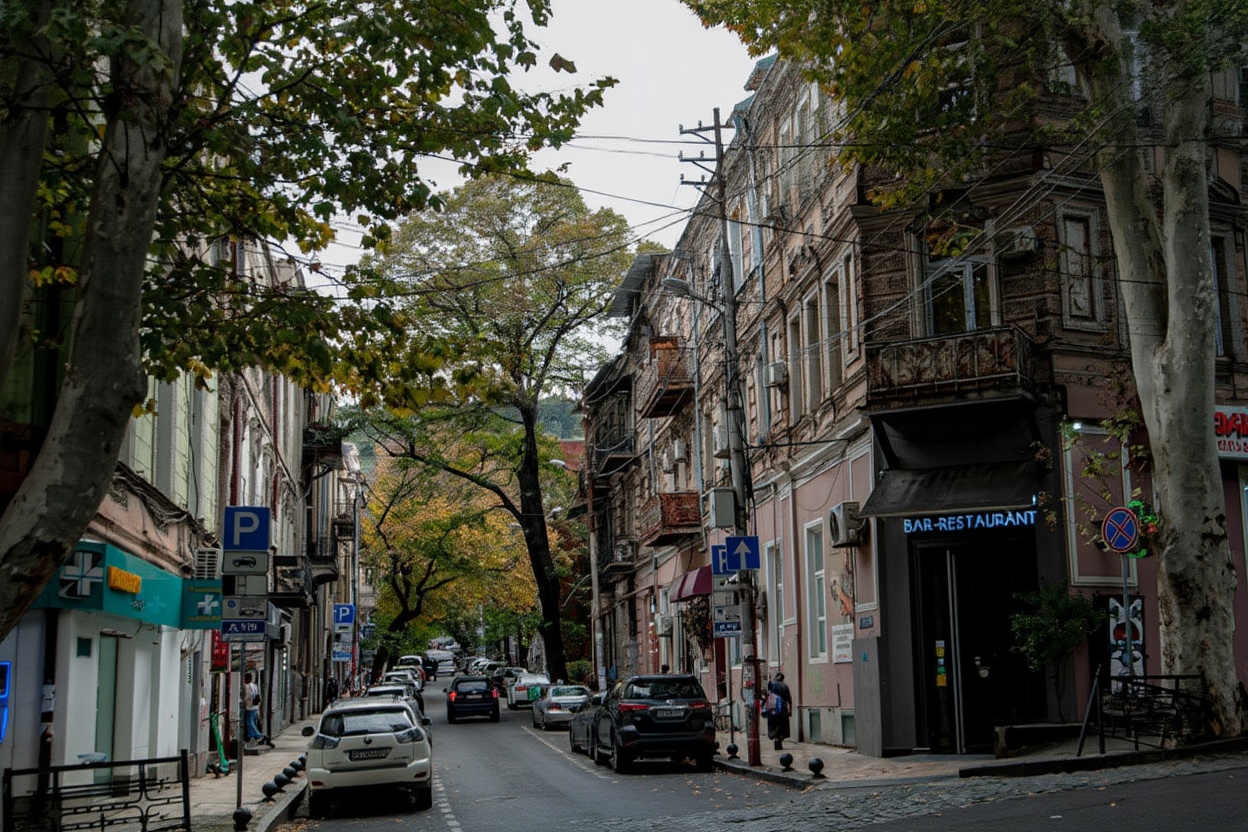
Dorm beds (25–35 GEL), local Georgian food (3–8 GEL/meal), marshrutkas for transport, free national parks and most outdoor activities. Achievable in Tbilisi with discipline; easy in Kazbegi, Kakheti, and the mountains where local guesthouses and home-cooked meals are the norm.
Private rooms at guesthouses (70–100 GEL), mix of local and restaurant meals, occasional taxi or private transport, wine tastings in Kakheti, guided hikes. The comfortable independent travel tier. Real traveller-reported averages come in around $56–85/day for mid-range Georgia based on 2024 trip data.
Good hotels, better restaurants, private wine tours in Kakheti, guided mountain treks. Excellent quality at this level — Georgia offers genuine luxury experiences at Eastern European prices.
•Ben’s Honest Take
The “$30/day budget Georgia” figure was accurate before 2022. Tbilisi has repriced upwards. Guesthouse rooms that cost 40 GEL in 2021 are now 70–90 GEL. Good restaurants that charged 15 GEL for a main now charge 25–35 GEL. The budget floor has risen. Outside Tbilisi, less so — village guesthouses in Svaneti and Kazbegi still offer home-cooked dinner, bed, and breakfast for 60–80 GEL/person. That’s still exceptional value.
Accommodation Costs
Tbilisi:
– Dorm beds: 25–40 GEL/night (~£7–11). The better hostels in the Old Town and Vera district are at 35–40 GEL. Below 25 GEL and you’re gambling on the state of the bathroom.
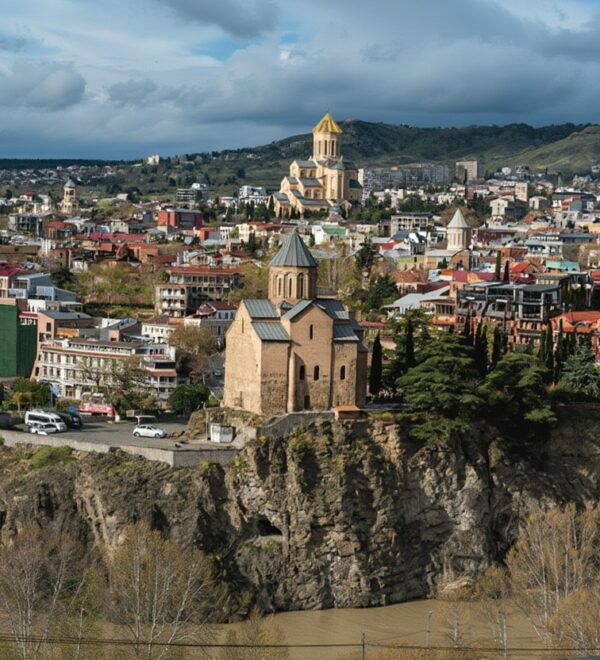
– Private rooms at guesthouses: 70–110 GEL/night (~£20–31). A clean, central private room with en-suite in Vera or the Old Town.
– Mid-range hotels: 140–200 GEL/night (~£39–56). Proper hotels with breakfast, often in the Old Town.
Kazbegi:
– Guesthouses: 50–80 GEL/person including dinner and breakfast (~£14–22). The mountain village guesthouses run by local families are genuine value — the food is home-cooked and the views from the table are the Caucasus ridge.
– Book 4–8 weeks ahead for July and August. In October, you can often show up and find a room.
Kakheti (wine country):
– Village guesthouses: 40–70 GEL/person with meals. Giorgi’s family in Kvareli charges 60 GEL/person including the evening wine — for a qvevri wine cellar tour and breakfast, that is not expensive.
– Guesthouses in Sighnaghi (the hilltop wine town): 60–90 GEL for a private room.
Svaneti / Mestia:
– Guesthouses: 60–90 GEL/person with meals. The remoteness keeps tourism from fully pricing it yet.
– Book ahead for July–August; Mestia fills up.
Batumi (Black Sea coast):
– More variable — prices spike in summer. Budget guesthouse: 50–80 GEL/night. Off-season (April, October): 35–50 GEL.
Food and Drink Costs
Georgian food is one of the best arguments for visiting, and it’s still cheap relative to quality.
Local Georgian restaurants:
– Khinkali (the soup dumplings): 1.5–2 GEL each. A normal portion is 5–8 dumplings. Total: 8–16 GEL (~£2.25–4.50). This is lunch.
– Full meal (khachapuri + salad + meat main): 20–35 GEL at a mid-range local restaurant (~£5.60–9.80).
– Local canteen-style (stolova): 8–15 GEL for a full plate with soup (~£2.25–4.20).

Wine:
– Qvevri wine by the glass at a Tbilisi wine bar: 5–12 GEL (~£1.40–3.35).
– A bottle of decent Georgian wine from a supermarket: 12–25 GEL.
– Wine tasting at a Kakheti winery: 15–30 GEL for 5–6 wines, often with cheese and bread.
The geography teacher in me needs to say: Georgia has been making wine in qvevri clay amphorae for 8,000 years. Giorgi in Kvareli charges 10 GEL for a cellar tour and tasting of four wines including his amber. This is not expensive for what it is.
Coffee:
– Turkish-style or espresso at a local café: 2–4 GEL (~£0.56–1.12).
– Specialty coffee at Tbilisi’s third-wave cafés (Fabrika, Stamba Hotel area): 5–8 GEL (~£1.40–2.25).
Street food:
– Churchkhela (walnut-and-grape-juice candy): 3–5 GEL.
– Lobiani (bean bread from a bakery): 2–3 GEL.
– Fresh lavash from a tone (clay oven) bakery: 1 GEL.
Transport Costs
Georgia’s transport is cheap if you use the Georgian options rather than tourist-facing services.
Within Tbilisi:
– Metro: 1 GEL/ride (~£0.28). Covers most of the city.
– Bus: 1 GEL/ride.
– Bolt/Yandex Go/GG (ride-hailing apps): 5–15 GEL for most city trips. Use these rather than hailing a taxi on the street — on-street taxis in tourist areas will quote 3–4x the app price.
Tbilisi to Kazbegi (marshrutka):
– 15 GEL (~£4.20) from Didube bus station. Leaves when full, usually 8–10am. 3 hours. Get there early and sit near the front for the mountain view.
– I once got on the wrong marshrutka at Didube and ended up 40km east of where I intended. Check the destination board before boarding. Check it again.
Tbilisi to Sighnaghi (Kakheti wine country):
– Marshrutka: 12 GEL (~£3.35). 2 hours.
Tbilisi to Batumi:
– Train (overnight): 25–45 GEL (~£7–12.60) for a standard berth. 5 hours.
– Marshrutka: 35 GEL. Faster but less comfortable.
Tbilisi to Mestia (Svaneti):
– Overnight train Tbilisi to Zugdidi: 25–30 GEL. Then marshrutka Zugdidi to Mestia: 35 GEL. Total: ~60 GEL and 8–10 hours.
– Or fly with Vanilla Sky from Natakhtari airfield: 80–120 GEL each way, 30 minutes. Worth it if time is short.
Cross-border — Georgia to Armenia:
– Train (4-berth kupe sleeping car): 95–110 GEL (~£26.60–30.80). 12 hours overnight. Excellent value.
– Marshrutka via Sadakhlo: 25–35 GEL to Yerevan (6–8 hours).
Paid Activities and Attractions
Most of what makes Georgia extraordinary costs nothing — the landscape, the driving through mountain passes, walking to Gergeti Trinity Church (45 minutes, free), hiking in Svaneti (free). The paid attractions are modestly priced.
Tbilisi:
– Georgian National Museum: 15 GEL (~£4.20). The treasury section with the gold artifacts is worth it.
– Sulfur baths in Abanotubani: 10–15 GEL/hour for a private bath (~£2.80–4.20). The Orbeliani baths are the photogenic ones. The baths smell of sulfur — this is correct and expected.
– Narikala Fortress cable car: 2.5 GEL each way (~£0.70).
Outside Tbilisi:
– Prometheus Cave (near Kutaisi): 40 GEL (~£11.20). Stalactite cave, boat ride inside. Worth doing if you’re passing through Kutaisi.
– Martvili Canyon: 40 GEL (~£11.20). The boat ride through the gorge is the activity. Genuinely beautiful.
– Sataplia Nature Reserve (dinosaur footprints + canyon): 30 GEL (~£8.40).
– Okatse Canyon: 30 GEL (~£8.40).
– National parks (Kazbegi, Borjomi-Kharagauli): free entry.
•BEN’S PICK
Skip Prometheus Cave if you’ve seen other European cave systems. Go to Martvili Canyon instead — the boat through the gorge is one of the most underrated 30 minutes in the Caucasus and the canyon walls are extraordinary. 40 GEL, no queue if you arrive before 10am.
Sample Daily Budgets
Hostel dorm 30 GEL · Breakfast (bakery, coffee) 5 GEL · Lunch (khinkali at a local spot) 12 GEL · Dinner (local Georgian restaurant) 20 GEL · Metro + 1 Bolt 8 GEL · Wine (glass in the evening) 7 GEL · Miscellaneous 3 GEL
Guesthouse private room 85 GEL · Meals (mix, including one restaurant dinner) 60 GEL · Transport (Bolt for main journeys) 20 GEL · Wine + museum entry 25 GEL
Guesthouse with dinner + breakfast 70 GEL · Lunch (packed from guesthouse or local) 8 GEL · Transport to Kazbegi (marshrutka split) 5 GEL · Gergeti hike (free), water 5 GEL. Kazbegi is cheaper than Tbilisi — the guesthouse meals are home-cooked and included.
Money Practicalities
Currency: Georgian lari (GEL). 1 GEL ≈ £0.28 / $0.36. A hundred lari note feels significant; it’s about £28. Keep this conversion handy — it’s easy to lose track.
ATMs: widely available in Tbilisi, Batumi, Kutaisi, and Kazbegi. In Svaneti (Mestia), there is one ATM and it occasionally runs out. Withdraw in Zugdidi before going up.
Best exchange: TBC Bank and Bank of Georgia have competitive rates. The exchange kiosks on Rustaveli Avenue in Tbilisi are typically the best for cash exchange (GBP, EUR, USD). Avoid airport exchange.
Cards: accepted at most Tbilisi restaurants, hotels, and shops. Not accepted at markets, village guesthouses, marshrutka drivers, or most rural businesses. Carry GEL cash for anything outside Tbilisi.
Revolut/Wise: both support GEL and give good rates. Useful for topping up before you go.
Tipping: not expected at local Georgian restaurants. At tourist-facing restaurants in Tbilisi, 10% is becoming more common. For guides (Gergeti hike guide, Kakheti winery guide), tip if you felt it was worth it — 10–20 GEL is appropriate and meaningful. Marshrutka drivers: no tip expected.
SIM card: a local Georgian SIM from Magti or Geocell costs 5–10 GEL and gives you cheap mobile data — useful for Bolt, offline maps, and the Tbilisi transit apps. Buy at the airport or any phone shop. Far cheaper than roaming.
Best Value Experiences in Georgia
Georgia has a high ratio of extraordinary-to-expensive. Here’s where the money genuinely earns its keep.
A Kakheti winery cellar visit with qvevri tasting (10–30 GEL). Georgia invented wine — or at least the oldest evidence of wine production (8,000-year-old residue in clay vessels) is Georgian. A visit to a family winery in Kvareli or Sighnaghi for a cellar tour and tasting of four or five amber and red wines from qvevri amphorae runs 15–30 GEL and typically includes bread, cheese, and a legitimate conversation with the winemaker. The commercial Telavi wineries (Kindzmarauli, Badagoni) do polished tours at 40–60 GEL with more wines. The family wineries are better value and more interesting. Giorgi in Kvareli charges 10 GEL for a cellar tour and four wines. That is an instructive 10 GEL.
The Gergeti Trinity Church hike from Kazbegi (free). The 14th-century church at 2,170 metres above sea level, with the Caucasus ridge behind it and the Dariali Gorge below, is one of the more photographed views in the region for a reason. The hike from Kazbegi village takes 45 minutes up, passes through open meadow and then rocky slope, and costs nothing. You can hire a jeep to drive part of the way (15–20 GEL) but the walk is the right way to arrive. In July and August, go at dawn to avoid both the jeep convoys and the afternoon cloud that often obscures the mountain.
The Abanotubani sulfur baths in Tbilisi (10–15 GEL/hour). These are working public baths, not a tourist attraction that happens to use sulfur water. The domed bathhouses in the old district have been here since the 5th century in one form or another. A private bath — a tiled room with a large tub filled with 37–38°C sulfurous spring water — rents for 10–15 GEL/hour. The Chreli Abano and Orbeliani baths are the photogenic ones. The smell is real and correct — sulfur compounds from the natural spring. Budget an hour and go before noon.
Tbilisi’s Fabrika complex (cost: a coffee). Fabrika is a former Soviet sewing factory converted into a cultural space — hostels, cafés, studios, a weekend flea market, outdoor seating that becomes a social evening hub in summer. Entry is free. A specialty coffee costs 5–8 GEL. An evening beer on the courtyard: 6–9 GEL. This is where Tbilisi’s creative scene actually happens rather than where it’s performed for tourists. The Sunday market sells local crafts, Soviet-era objects, and Georgian ceramics at flea market prices.
The overnight train to Batumi or Armenia (25–110 GEL). Georgian Railways is underrated as an experience. The overnight kupe sleeping car — a four-berth closed compartment — to Batumi takes 5 hours and costs 25–45 GEL. The overnight train to Yerevan, Armenia (95–110 GEL for a kupe berth) crosses the border through the Debed Canyon in the early morning and is one of the better rail journeys available in the region. You wake up in a different country having saved a night’s accommodation. The value is obvious; fewer people take it than you’d expect.
What Catches Tourists Out
Georgia’s tourist economy is relatively honest by regional standards — the prices are what they are, and aggressive touting is less common than in many other countries. But there are still consistent patterns where visitors overspend.
Hailing taxis on Rustaveli Avenue. Tbilisi’s main boulevard has unofficial street taxis that will quote you whatever they think you’ll pay. The going rate for a short city journey in a Bolt or Yandex Go is 5–12 GEL. A street taxi for the same journey: 15–30 GEL. The apps take 30 seconds to confirm a price. Use them. The drivers are the same people.
Airport exchange bureaux. Tbilisi’s Shota Rustaveli International Airport has exchange kiosks in arrivals that offer rates approximately 5–8% worse than the exchange offices on Rustaveli Avenue or the TBC/Bank of Georgia ATMs. You arrive at 11pm and exchange £100 at the airport: you’ve lost £5–8 versus waiting 20 minutes to reach the city. If you need emergency lari at the airport, take the minimum — withdraw properly from a city ATM.
Booking a private driver to Kazbegi without checking the marshrutka. Private drivers to Kazbegi quote 80–150 GEL and offer comfort and flexibility. The marshrutka from Didube costs 15 GEL and takes the same 3-hour route on the same Georgian Military Highway. The marshrutka stops at the same points you’d ask a driver to stop — Ananuri Fortress, the Zhinvali Reservoir viewpoint — if you ask the driver (they speak limited English but understand hand signals for “stop here”). Save the private car for the return if you need a specific departure time, or for Svaneti where the marshrutka-to-Mestia connection is more complicated.
Overbuying wine in Kakheti. The Kakheti wine region is intoxicating in every sense. I’ve watched people buy eight bottles at a winery and then face the logistics of transporting them through the marshrutka system for the next two weeks. Georgian wine is available in Tbilisi supermarkets (Goodwill, Carrefour) at normal retail prices: a decent Rkatsiteli or Saperavi from a recognisable producer costs 12–25 GEL. Buy a bottle or two at the winery as a memento; buy the rest in Tbilisi where you can carry it to the airport easily.
Eating at the tourist-facing restaurants near the Narikala cable car station. The Old Town restaurants visible from the cable car arrival point — on Leselidze and the surrounding streets — charge 20–40% more than restaurants 200 metres away. The stolova-style restaurants on the back streets of the Old Town serve full Georgian meals at canteen prices (8–15 GEL). Tbilisi has genuinely excellent restaurants at all price points; the ones capitalising on foot traffic from the cable car station are not among the better ones.
Budget by Trip Length — Worked Examples
Georgia rewards slow travel — the country is small enough that you don’t spend much on getting around, and the regions are different enough from each other that two weeks barely scratches the surface.
7 days: Tbilisi + Kazbegi + Kakheti (budget)
Tbilisi dorm 3 nights 90 GEL · Marshrutka to Kazbegi 15 GEL · Kazbegi guesthouse 2 nights with meals 150 GEL · Marshrutka back to Tbilisi 15 GEL · Marshrutka to Sighnaghi 12 GEL · Sighnaghi guesthouse 1 night 70 GEL · Marshrutka back 12 GEL · Food outside guesthouse meals 100 GEL · Wine + activities 60 GEL · Metro/Bolt Tbilisi 25 GEL. Total: ~550 GEL (~$198). Add Gergeti hike, sulfur baths, winery: ~$235 total.
Tbilisi private room 3 nights 270 GEL · Transport marshrutkas 54 GEL · Kazbegi guesthouse with meals 2 nights 160 GEL · Sighnaghi guesthouse 1 night 80 GEL · Food (restaurants + wine) 250 GEL · Activities (museum, baths, winery tour) 100 GEL · Bolt/taxis 80 GEL. Total: ~994 GEL (~$358). With sundry: ~$455.
10 days: Tbilisi + Kazbegi + Kakheti + Batumi (mid-range)
7-day budget above ~$455 · Add: overnight train to Batumi 35 GEL · Batumi guesthouse 2 nights 130 GEL · Food Batumi 2 days @15 GEL 30 GEL · Return marshrutka or train 35 GEL · Sundry 50 GEL. Total add-on: ~280 GEL (~$100). The Batumi leg lowers the daily average — the beach town is cheaper for food and the night train means one free night’s accommodation.
Svaneti (Mestia) 3 nights adds: overnight train Zugdidi 30 GEL + marshrutka Zugdidi→Mestia 35 GEL + guesthouse with meals 3 nights 240 GEL + hikes (free) + marshrutka back 35 GEL. Add ~340 GEL (~$123) to the 10-day budget. The Svaneti leg is cheaper per day than Tbilisi — guesthouses include meals, and there’s nothing to spend money on in Mestia except the occasional café and one gear shop.
Digital Nomad Budget — One Month in Tbilisi
Tbilisi is one of the most popular digital nomad bases in Europe and Central Asia, and the infrastructure justifies the reputation. Fast internet is standard, the visa situation is remarkably permissive, and the lifestyle-to-cost ratio remains strong even after the post-2022 price rises.
Visa: Citizens of 95+ countries can stay in Georgia for up to 365 days without a visa. No application, no fee, just arrive. This is the most permissive visa arrangement available to most nationalities in any country of Georgia’s economic development level, and it’s the primary reason Tbilisi became a nomad hub after 2022.
Accommodation: A furnished one-bedroom flat in Vera district (walkable to the old town, the best cafés, the park): ₾800–1,200/month (~£224–336). In Vake (the upmarket residential quarter): ₾1,000–1,500/month. My flat in Vera is ₾800 — that’s the realistic bottom of the furnished market for a proper flat rather than a studio. Rooms in shared flats: ₾400–600/month. The availability via Facebook groups (“Tbilisi Expats”, “Tbilisi Apartments”) is generally better than on international listing sites.
Food: Cooking from Goodwill or Carrefour: ₾400–500/month for a good diet including decent Georgian wine (₾15–25/bottle retail). Mix of cooking and eating out at local Georgian restaurants: ₾600–800/month. Eating out predominantly in Tbilisi’s mid-range restaurant scene (not tourist-facing): ₾800–1,100/month. The honest observation: Tbilisi’s restaurant scene has improved significantly since 2021 and prices have risen to match quality. Budget ₾700–900/month for food if you’re eating well.
Coworking: Impact Hub Tbilisi is the main option: ₾200–350/month for a hot desk. Fabrika has a coworking section. Several café-coworking hybrids operate in Vera and Vake: ₾150–250/month with coffee included. Internet speeds in Tbilisi apartments are generally good (50–200 Mbps via Silknet or Magti) — many nomads work from home and use coworking spaces for social contact rather than infrastructure.
Flat in Vera ₾900 · Food (cooking + eating out mix) ₾750 · Coworking ₾250 · Transport (Bolt + metro) ₾150 · SIM (Magti 20GB plan) ₾25 · Activities/wine/sundry ₾300. One of the best value cities in Europe for nomad living — below Lisbon, below Barcelona, below Warsaw, and with a wine culture and landscape access that none of those cities match.
Mountain guesthouse monthly rate (negotiate directly — weekly and monthly rates exist) ₾1,000–1,200 with meals · Transport (marshrutka to Tbilisi for work trips) ₾150 · Sundry ₾200. A minority option but worth knowing: several guesthouses in Kazbegi offer monthly rates for nomads who want to work against the backdrop of the Caucasus ridge. Internet is slower than Tbilisi; the trade-off is obvious from the window.
Armenia and Azerbaijan: Budget Comparison
So here’s the thing — most people doing the South Caucasus circuit want to know how Georgia compares to its neighbours. The honest answer: Georgia sits in the middle.
Armenia (currency: AMD — 1 USD ≈ 390 AMD / 1 GBP ≈ 500 AMD):
– Budget accommodation in Yerevan: from $15–25/night for a guesthouse private room (~7,800–12,500 AMD)
– Local restaurant meal: 3,000–5,000 AMD (~£6–10), broadly comparable to Tbilisi
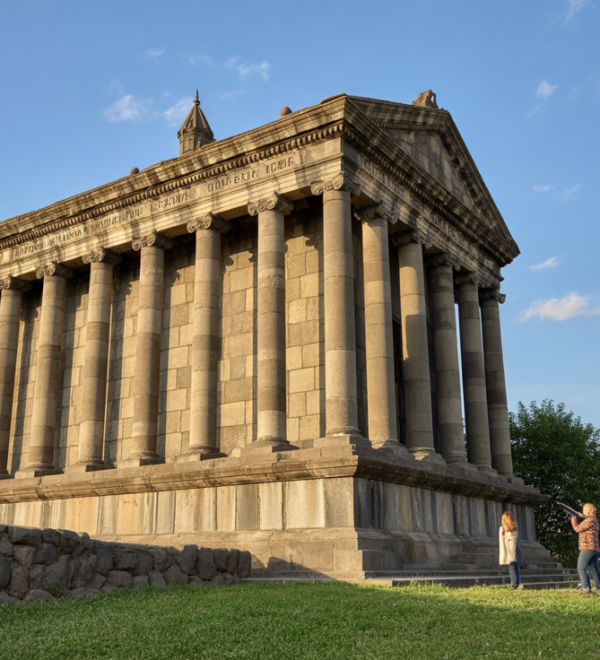
– Marshrutka Yerevan to Garni: 250 AMD (~50p) — astonishingly cheap
– Ararat brandy from a supermarket: 8,000–12,000 AMD for a 10-year bottle (~£16–24)
Armenia is marginally cheaper than Georgia for accommodation, roughly comparable on food. The main budget advantage: transport within the country is extremely cheap by any standard.
Azerbaijan (currency: AZN — 1 AZN ≈ £0.44 / $0.57):
– Budget guesthouse in Baku’s Old City area: 25–45 AZN/night (~£11–20)
– Restaurant meal (proper plov at a traditional restaurant): 15–25 AZN (~£6.60–11)
– Metro ride in Baku: 0.50 AZN (~£0.22) — cheaper than Tbilisi’s 1 GEL
– Gobustan full-day taxi hire: 40–50 AZN (~£17–22)
Azerbaijan is similar to Georgia on mid-range costs, slightly higher for accommodation in Baku’s tourist areas. The Manat is fairly stable and ATMs are abundant.
The honest comparison: Georgia offers the best food-to-cost ratio of the three countries, and the guesthouse-with-meals tradition in the mountain regions makes budget travel genuinely excellent. Armenia and Azerbaijan are comparable for city-based travel. None of the three will break the budget of anyone accustomed to Western European travel costs.
What Ben Got Wrong About Budgeting in Georgia
My first month in Tbilisi, I budgeted like I was still in Sheffield. I thought: similar price level to Eastern Europe, should be fine. I was wrong in two specific ways.
Wine. The first mistake is assuming the wine is a negligible line item. It isn’t, once you’ve been to Kakheti. I went to Giorgi’s cellar in Kvareli for the afternoon and bought four bottles at 20–35 GEL each. Then I found a natural wine bar in Sighnaghi and ordered three more glasses at 15 GEL each. Transport back to Tbilisi. An impromptu winery dinner. The day that was budgeted at 80 GEL came in at 320 GEL. This was entirely my own fault and I have no regrets. But budget the wine region separately from your daily average.
Restaurant creep in Tbilisi. The second mistake is Tbilisi’s restaurant scene, which has improved dramatically since 2021 and has repriced accordingly. There are excellent restaurants in the Old Town and Vera district where a dinner with natural wine runs 80–120 GEL per person without difficulty. This is still cheap by London standards. It is not cheap relative to the 25 GEL I expected to spend.
The fix for both: set a daily wine budget as a separate line item, and distinguish between Tbilisi restaurant spend and everything-else spend. The 35–50 GEL/day budget figure is achievable in Kazbegi and Kakheti village guesthouses where meals are included. In Tbilisi, eating well costs more. Which brings me to the approach I’d actually recommend.
The Smart Way to Budget a Georgia Trip
Rather than one daily average across the whole trip, budget by zone. Georgia has essentially three cost zones:
Zone 1 — Tbilisi: The most expensive. Budget 100–150 GEL/day for accommodation, food, and a wine bar evening. Mid-range 200–350 GEL/day. This is the zone where coffee is 5–8 GEL and restaurant dinners run 50–80 GEL/person.
Zone 2 — Kakheti wine country: Moderate. The guesthouses with meals bring the accommodation-plus-food cost down to 80–140 GEL/person/day. The wineries add to this, but you’re choosing that expenditure.
Zone 3 — Mountain regions (Kazbegi, Svaneti): Cheapest in practice. Guesthouses with home-cooked dinner and breakfast at 60–90 GEL/person mean your accommodation-plus-food cost is under £25/day. The main expenses are transport (marshrutka 15 GEL to Kazbegi; overnight train to Zugdidi plus marshrutka to Mestia ~65 GEL) and any guided activities. Once you’re there, you’ll find you spend very little day-to-day — there is one café in Kazbegi and the guesthouse feeds you.
The practical implication: a 14-day Georgia trip will average out cheaper than the Tbilisi zone-1 figure, because Kazbegi and Kakheti guesthouses bring the daily cost down significantly. Build the itinerary to include mountain time and your average daily spend will be lower than any purely-Tbilisi calculation suggests.
- How much does Georgia cost per day in 2026?
- Budget travel: $35–50/day (95–135 GEL) — dorms, local food, marshrutkas. Mid-range independent: $70–120/day (190–330 GEL) — private rooms, restaurant meals, occasional taxi. Real traveller-reported averages from 2024 trips come in around $56–85/day for a mix of Tbilisi and the regions. Tbilisi has gotten more expensive since 2022; the mountain regions (Kazbegi, Svaneti) and wine country (Kakheti) remain excellent value.
- Is Georgia cheap to travel?
- Compared to Western Europe, yes — significantly. Compared to the “Georgia is $30/day” reputation from 2019, less so. Tbilisi has repriced upward. Outside Tbilisi, value is still exceptional: a Kazbegi guesthouse with home-cooked dinner and breakfast for 70 GEL/person (~£20) is genuine value. Khinkali for 2 GEL each and qvevri wine at 5–12 GEL a glass mean the food and drink budget stays manageable.
- How much is accommodation in Georgia?
- Tbilisi dorm: 25–40 GEL/night (~£7–11). Tbilisi private room (guesthouse): 70–110 GEL (~£20–31). Kazbegi guesthouse with meals: 50–80 GEL/person (~£14–22). Kakheti village guesthouse with meals: 40–70 GEL/person. Svaneti/Mestia guesthouse with meals: 60–90 GEL/person. Budget further from Tbilisi: the mountain and wine regions are notably cheaper than the capital for equivalent quality.
- How much is the marshrutka from Tbilisi to Kazbegi?
- 15 GEL (~£4.20) one way from Didube bus station in Tbilisi. The marshrutka leaves when full — usually between 8am and 10am. Arrive early for a front seat and the mountain views. Journey time: 3 hours on the Georgian Military Highway through the Dariali Gorge. Check the destination board before boarding — the same station also runs marshrutkas to other northern destinations. I once boarded the wrong one. Don’t do that.
- Is Tbilisi budget-friendly in 2026?
- More expensive than it was, but still budget-friendly by Western European standards. A dorm bed costs 25–40 GEL (~£7–11). A full meal at a local Georgian restaurant runs 20–35 GEL (~£5.60–9.80). Metro and bus rides are 1 GEL. Wine by the glass starts at 5 GEL. The inflation since 2022 is real — restaurant prices have risen noticeably — but the baseline is still low enough that budget travel in Tbilisi is entirely possible.
- How much spending money do I need for 2 weeks in Georgia?
- Budget traveller: $500–700 for 2 weeks, excluding flights and visa (Georgia is visa-free for most nationalities). Mid-range: $1,000–1,500. This covers accommodation, food, transport within Georgia (marshrutkas, Bolt), entry fees, and wine. Key variable: whether you do Svaneti (add transport cost — marshrutka from Zugdidi or a small plane) and how many winery visits you do in Kakheti. Add ₾50–100 (GEL) buffer per day if you’re not optimising every decision.